+91 9898181101
 +1 (647) 971-4687
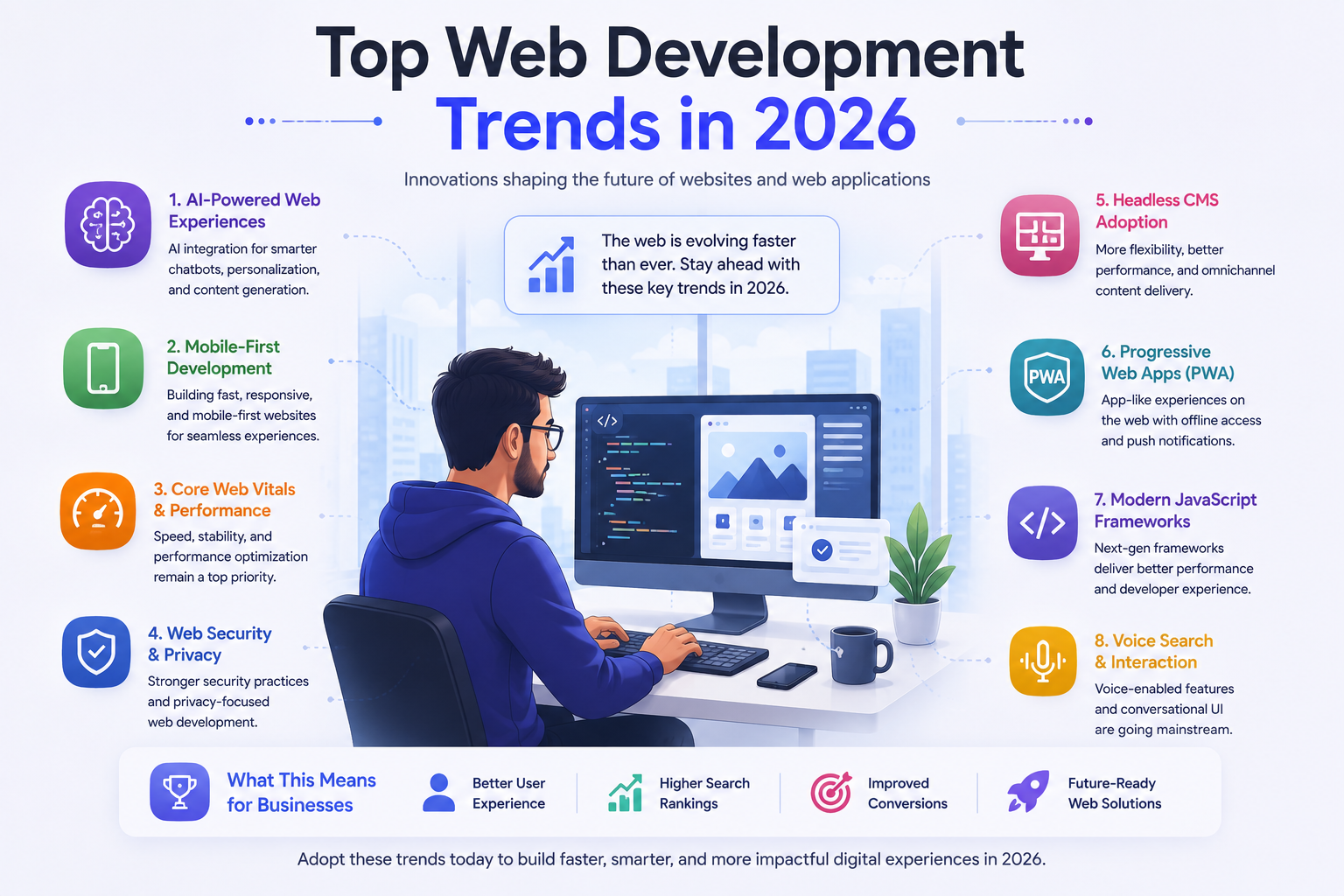
Top Web Development Trends in 2026
The web development landscape is evolving faster than ever. As businesses accelerate digital transformation initiatives, customer expectations continue to rise, pushing organizations to invest in faster, smarter, and more secure digital experiences.
In 2026, web development is no longer just about building websites. It has become a strategic business function that directly impacts customer engagement, operational efficiency, revenue growth, and competitive advantage. From AI-powered development tools to immersive user experiences, emerging technologies are reshaping how businesses approach web applications.
For startups, SMEs, enterprises, CTOs, and business leaders, understanding these trends is essential for making informed technology decisions. Companies that embrace innovation early often gain significant advantages in performance, customer satisfaction, and market positioning.
Let’s explore the most important web development trends that are defining 2026 and what they mean for modern businesses.
Why Web Development Trends Matter in 2026
Digital experiences have become the primary touchpoint between businesses and customers. Whether it’s an ecommerce platform, SaaS application, corporate website, or customer portal, users expect seamless experiences across devices and channels.
According to industry research, more than 70% of consumers judge a company’s credibility based on its website experience. Additionally, website performance and user experience continue to play an important role in search engine rankings and conversion rates.
As technology evolves, businesses must continuously adapt their web strategies to remain competitive. The following trends are shaping the future of web development in 2026.
1. AI-Powered Web Development Becomes Mainstream
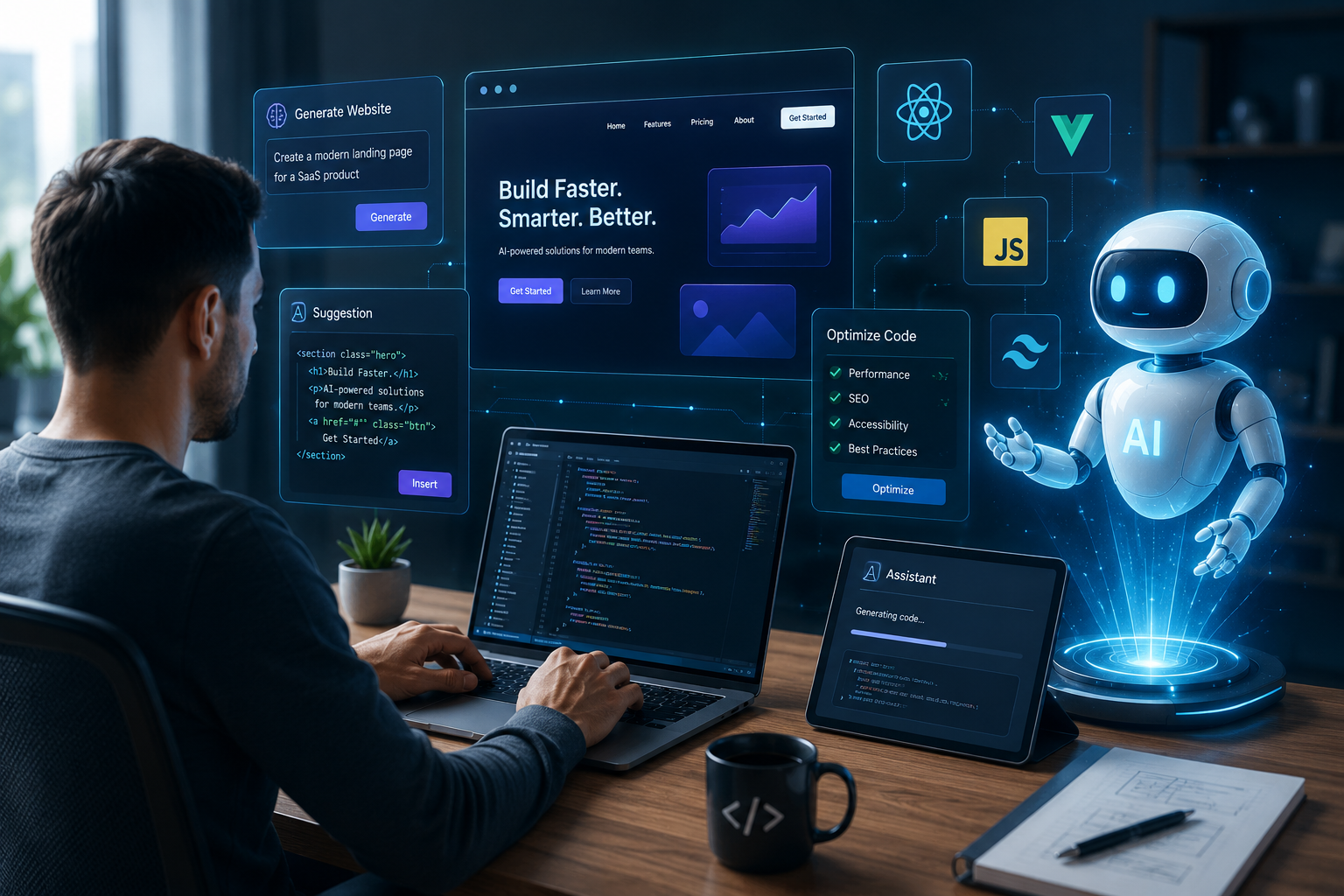
Artificial Intelligence has moved beyond being a buzzword and has become a practical tool in modern web development. Developers are increasingly using AI-powered coding assistants, automated testing tools, and intelligent design systems to accelerate development cycles.
AI can generate code snippets, detect bugs, optimize performance, and even recommend UX improvements. This allows development teams to focus more on solving business problems rather than repetitive coding tasks.
Business Impact
Organizations adopting AI-assisted development are reducing development timelines while improving software quality. Faster releases help businesses respond quickly to changing market demands and customer expectations.
Businesses looking to modernize existing applications can also integrate AI capabilities into customer portals, ecommerce platforms, and internal systems to improve efficiency and user engagement.
2. Progressive Web Applications (PWAs) Continue Growing
Progressive Web Applications remain one of the most influential trends in 2026. PWAs combine the best features of websites and mobile applications, offering users fast loading times, offline functionality, and app-like experiences without requiring installation from an app store.
As mobile traffic continues to dominate online interactions, businesses are increasingly adopting PWAs to improve customer engagement while reducing development and maintenance costs.
Key Benefits of PWAs
- Improved website performance and speed
- Enhanced mobile user experience
- Offline functionality and reliability
- Lower development costs compared to native apps
- Better user retention and engagement
Major brands have already demonstrated significant improvements in conversion rates after implementing Progressive Web Applications, making them a smart investment for businesses of all sizes.
3. Serverless Architecture Gains Wider Adoption
Serverless computing is transforming how modern web applications are built and deployed. Instead of managing physical servers or infrastructure, developers can focus entirely on writing application logic while cloud providers handle scaling and maintenance.
This approach allows businesses to reduce operational complexity, improve scalability, and optimize infrastructure costs.
Why Businesses Prefer Serverless Solutions
Serverless architecture enables organizations to launch products faster and scale automatically based on demand. Startups particularly benefit because they can avoid large upfront infrastructure investments while maintaining enterprise-level performance.
As cloud platforms continue evolving, serverless development is expected to become a standard approach for many web applications in 2026.
4. Cybersecurity-First Development
Cybersecurity is no longer an afterthought in web development. With increasing cyber threats, stricter compliance regulations, and growing customer concerns about privacy, security must be integrated into every stage of development.
Organizations are adopting secure coding practices, advanced authentication systems, real-time monitoring, and automated vulnerability detection tools to strengthen their digital assets.
Modern Security Priorities
Businesses are focusing on zero-trust security models, multi-factor authentication, encrypted communications, and proactive threat detection to reduce risks and maintain customer trust.
Resources from OWASP continue to provide valuable guidance for implementing secure web development practices and protecting applications from common vulnerabilities.
5. WebAssembly Expands Web Application Capabilities
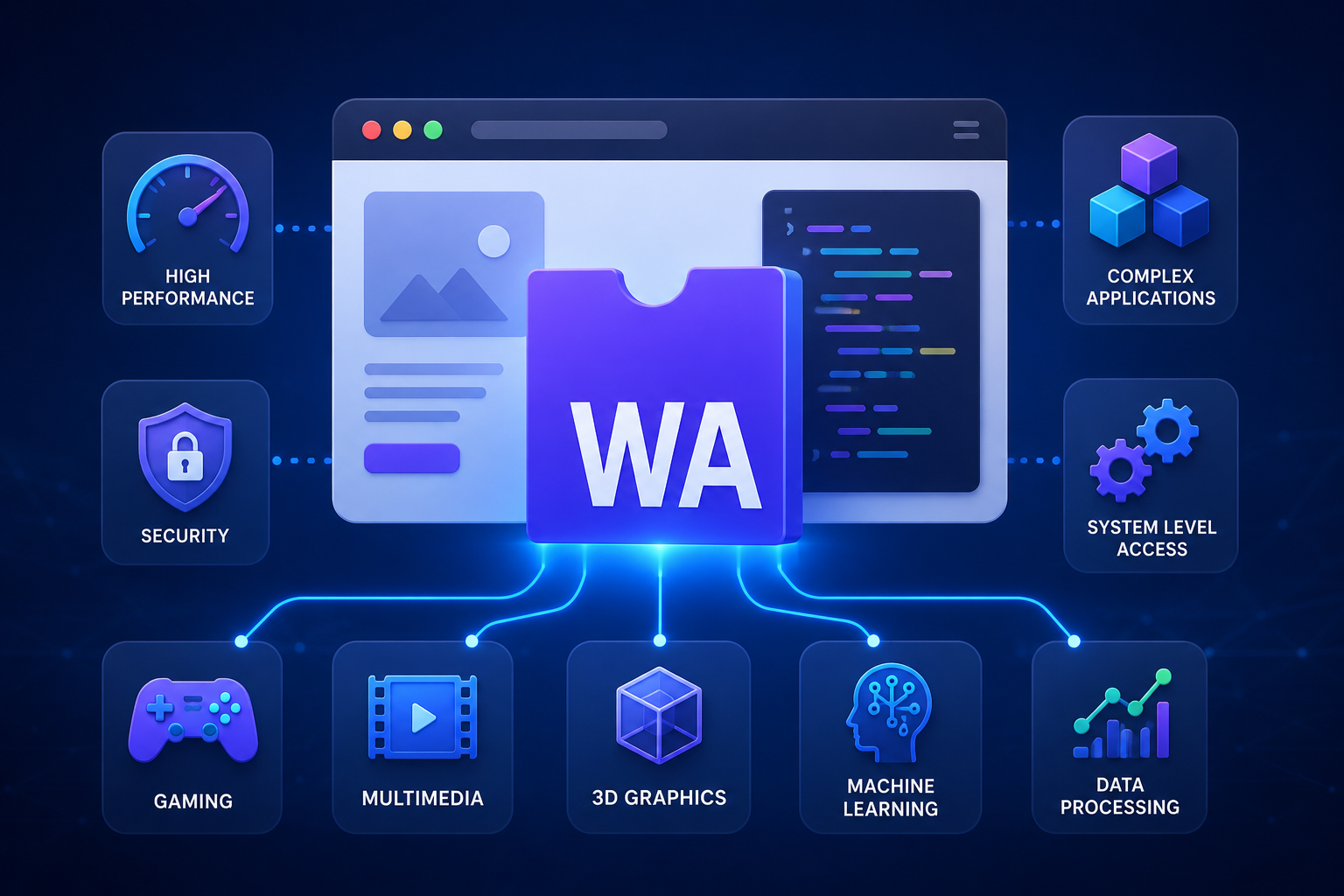
WebAssembly, often referred to as Wasm, is enabling developers to create high-performance web applications that previously required desktop software or native applications.
Complex workloads such as video editing, 3D rendering, gaming, and scientific computing can now run directly within web browsers with near-native performance.
As businesses seek richer digital experiences, WebAssembly is becoming increasingly valuable for applications that demand speed, responsiveness, and advanced functionality.
6. API-First Development Strategy
Modern businesses rely on multiple digital platforms, including websites, mobile applications, IoT devices, customer portals, and third-party integrations. This has increased the importance of API-first development.
An API-first approach ensures systems are designed for integration from the beginning, creating greater flexibility and scalability.
Advantages of API-First Development
Businesses can launch new digital products faster, improve system interoperability, and support omnichannel customer experiences. APIs also enable organizations to leverage external services and emerging technologies more effectively.
This trend aligns closely with modern software ecosystems where connectivity and integration are critical success factors.
7. Headless Architecture Becomes the New Standard
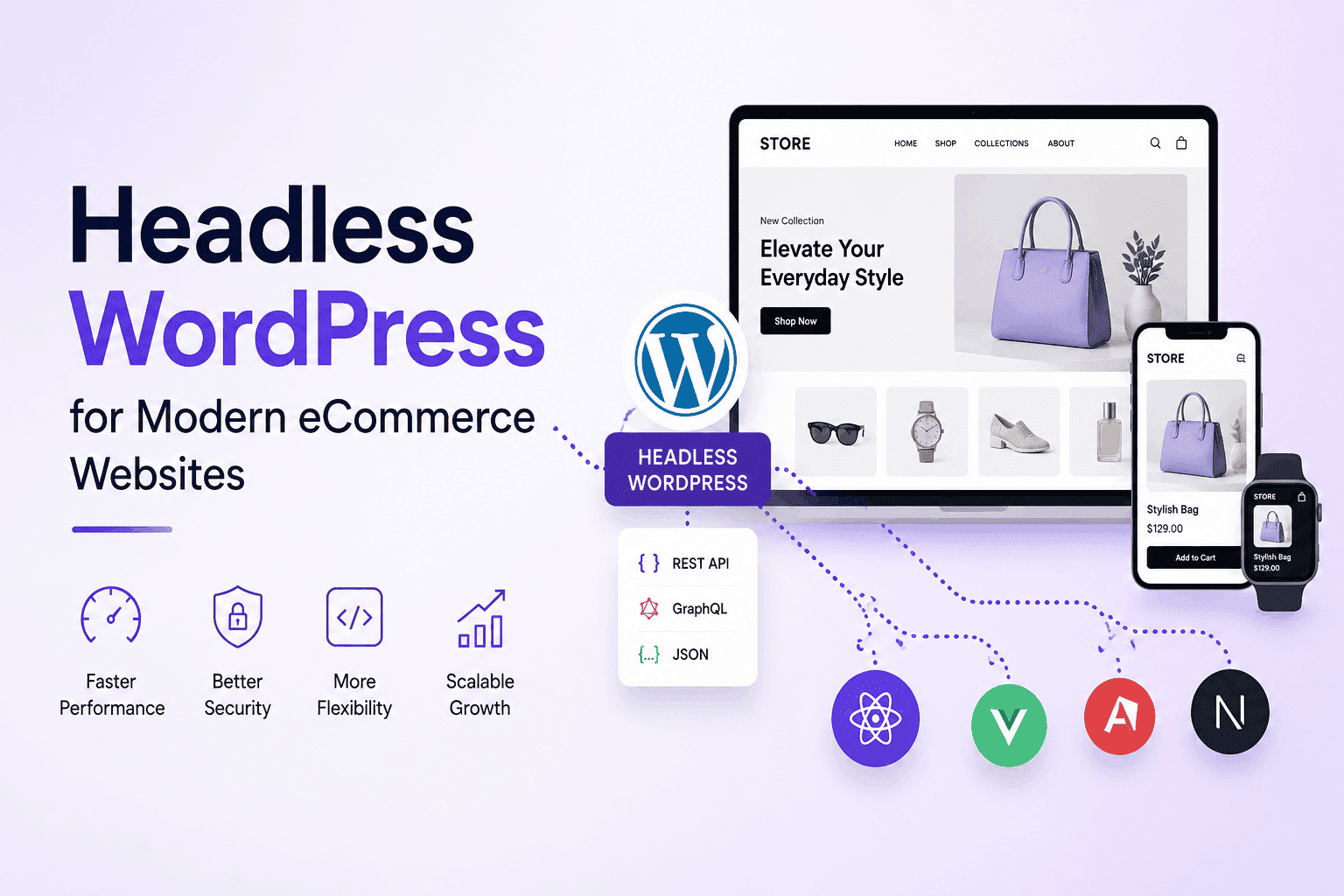
Headless architecture separates the frontend presentation layer from backend content management and business logic. This provides greater flexibility in delivering content across websites, mobile apps, smart devices, and emerging digital channels.
Many organizations are moving toward headless solutions because they allow teams to innovate independently while improving performance and scalability.
Why Businesses Are Adopting Headless Solutions
Companies can create personalized customer experiences, accelerate content delivery, and future-proof digital platforms. Headless architecture is particularly valuable for ecommerce businesses and enterprises managing large volumes of content.
Businesses exploring scalable backend technologies often combine headless architectures with robust solutions such as PHP Development Services to create powerful and flexible web ecosystems.
8. Voice Search Optimization and Conversational Interfaces
Voice-enabled devices continue to influence how users interact with digital platforms. As voice search adoption grows, websites must be optimized for conversational queries and natural language interactions.
Businesses are increasingly integrating AI-powered chatbots, virtual assistants, and voice-enabled interfaces to improve accessibility and customer engagement.
This trend is particularly important for customer service, ecommerce, healthcare, and enterprise applications where quick access to information improves user satisfaction.
9. Sustainable and Green Web Development
Sustainability is becoming a priority across industries, and web development is no exception. Organizations are focusing on reducing digital carbon footprints through efficient coding practices, optimized hosting environments, and lightweight website architectures.
Green web development not only supports environmental goals but also improves website performance, loading speed, and operational efficiency.
Businesses that embrace sustainable development practices often benefit from stronger brand perception while reducing infrastructure costs over time.
10. Hyper-Personalized User Experiences
Personalization continues to evolve beyond basic recommendations. Modern web applications now leverage AI, behavioral analytics, and real-time data to deliver highly customized experiences for individual users.
Customers increasingly expect content, products, and interactions tailored to their preferences and behaviors. Businesses that successfully implement personalization often see higher engagement rates and stronger customer loyalty.

The Future of Personalization
Advanced personalization engines can dynamically adapt interfaces, content, offers, and customer journeys in real time. This capability is becoming a significant competitive differentiator across industries.
Technology leaders continue to explore AI-driven personalization frameworks, with resources available through organizations such as Gartner and other leading technology research firms.
Emerging Technologies to Watch Beyond 2026
While the trends above are already influencing web development today, several emerging technologies are expected to gain momentum in the coming years.
Extended Reality (XR)
Augmented Reality and Virtual Reality experiences are becoming more accessible through web browsers, creating new opportunities for retail, education, healthcare, and training applications.
Edge Computing
Processing data closer to users helps reduce latency and improve performance, making edge computing increasingly important for global applications and real-time services.
Composable Architecture
Businesses are moving toward modular systems that allow organizations to select and integrate best-in-class technologies rather than relying on monolithic platforms.
How Businesses Should Prepare for These Trends
Adopting every new technology is rarely the right approach. Instead, organizations should evaluate emerging trends based on business objectives, customer needs, operational requirements, and long-term growth strategies.
Technology investments should focus on delivering measurable business value, improving customer experiences, and creating scalable foundations for future innovation.
Partnering with experienced development teams can help businesses navigate technological changes while minimizing risks and maximizing return on investment.
Conclusion
The web development industry in 2026 is being shaped by artificial intelligence, serverless computing, cybersecurity, headless architectures, WebAssembly, personalization, and sustainable development practices. These innovations are helping businesses create faster, smarter, and more engaging digital experiences.
For startups, SMEs, enterprises, and digital-first organizations, staying ahead of these trends is no longer optional. Companies that embrace modern web technologies will be better positioned to improve customer satisfaction, accelerate growth, and maintain a competitive edge in an increasingly digital marketplace.
The future belongs to organizations that continuously evolve their digital capabilities while aligning technology decisions with business objectives.