+91 9898181101
 +1 (647) 971-4687
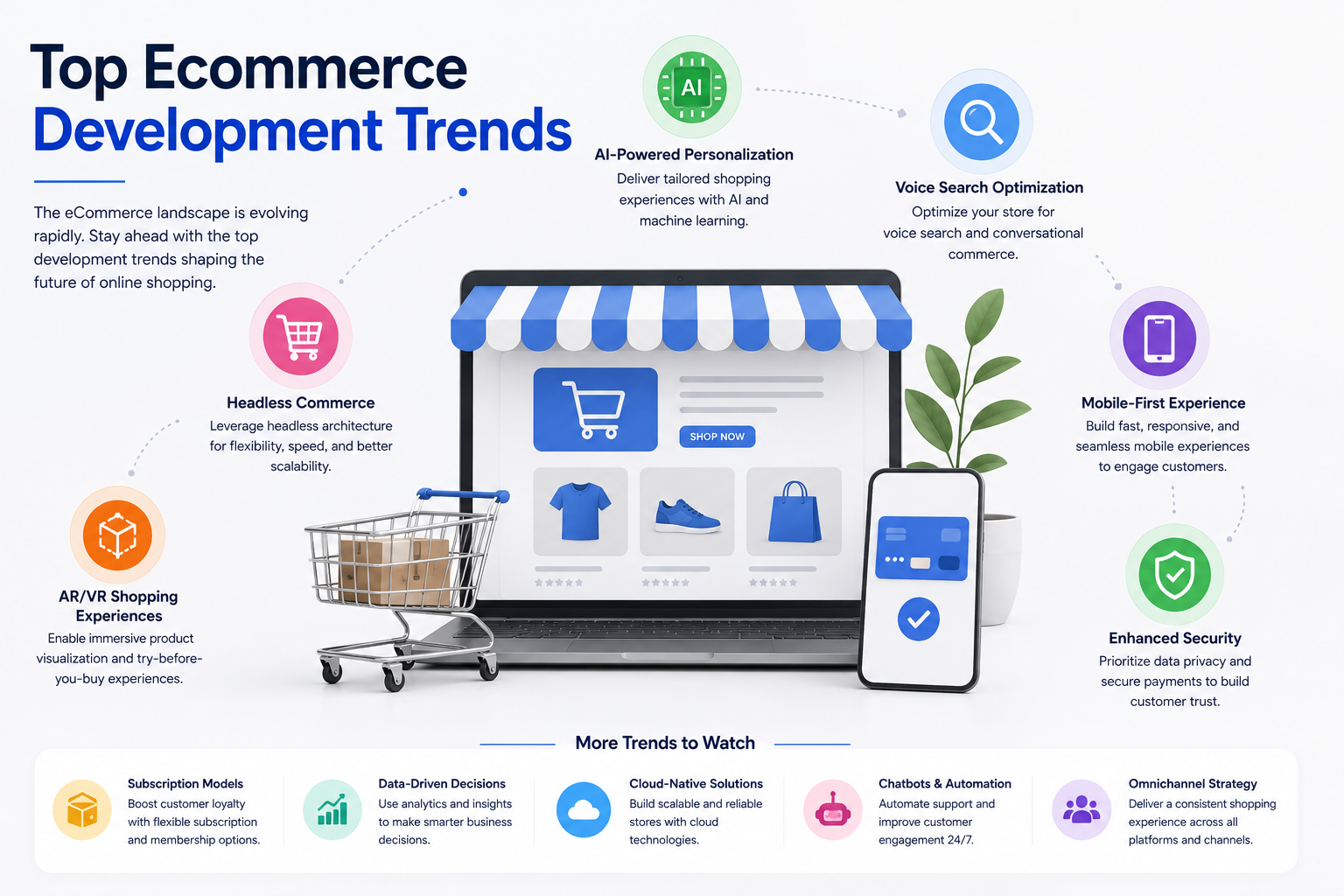
Top Ecommerce Development Trends in 2026
The ecommerce industry continues to evolve at an extraordinary pace. What worked for online stores just a few years ago is no longer enough to meet rising customer expectations, changing technologies, and increasing competition. As we move through 2026, businesses are investing heavily in smarter, faster, and more personalized digital commerce experiences.
Today’s consumers expect seamless shopping journeys across devices, instant support, personalized recommendations, and frictionless checkout experiences. Companies that fail to adapt risk losing customers to competitors that embrace innovation more effectively.
For startups, SMEs, enterprises, CTOs, and business leaders planning digital transformation, understanding emerging ecommerce trends is essential. These innovations are not simply technology upgrades—they directly impact customer satisfaction, operational efficiency, revenue growth, and long-term competitiveness.
In this article, we’ll explore the most important ecommerce development trends shaping 2026 and how businesses can leverage them to stay ahead in an increasingly digital marketplace.
Why Ecommerce Innovation Matters More Than Ever
Global ecommerce sales continue to grow steadily, with online shopping becoming the preferred purchasing method for millions of consumers worldwide. According to industry forecasts from Statista, ecommerce remains one of the fastest-growing sectors in the global economy.
At the same time, customer expectations are rising. Shoppers want personalized experiences, rapid delivery, secure transactions, and intuitive interfaces. Businesses must continuously improve their platforms to remain relevant and competitive.
The ecommerce brands leading the market in 2026 are not necessarily the largest. They are the companies leveraging technology strategically to deliver better customer experiences and operational excellence.
1. AI-Powered Personalization Becomes the Standard
Artificial Intelligence is no longer a competitive advantage—it has become a necessity. Modern ecommerce platforms are increasingly powered by AI engines capable of analyzing customer behavior in real time.
These systems evaluate browsing history, purchase patterns, demographics, and engagement data to create highly personalized shopping experiences. Customers receive product recommendations, promotions, and content tailored specifically to their interests.
How AI Improves Ecommerce Performance
AI-driven personalization significantly increases conversion rates because customers are shown products they are more likely to purchase. It also improves retention by creating more engaging shopping experiences.
Many businesses are now integrating advanced recommendation engines, predictive search functionality, and dynamic pricing strategies powered by machine learning algorithms.
2. Headless Commerce Continues to Accelerate
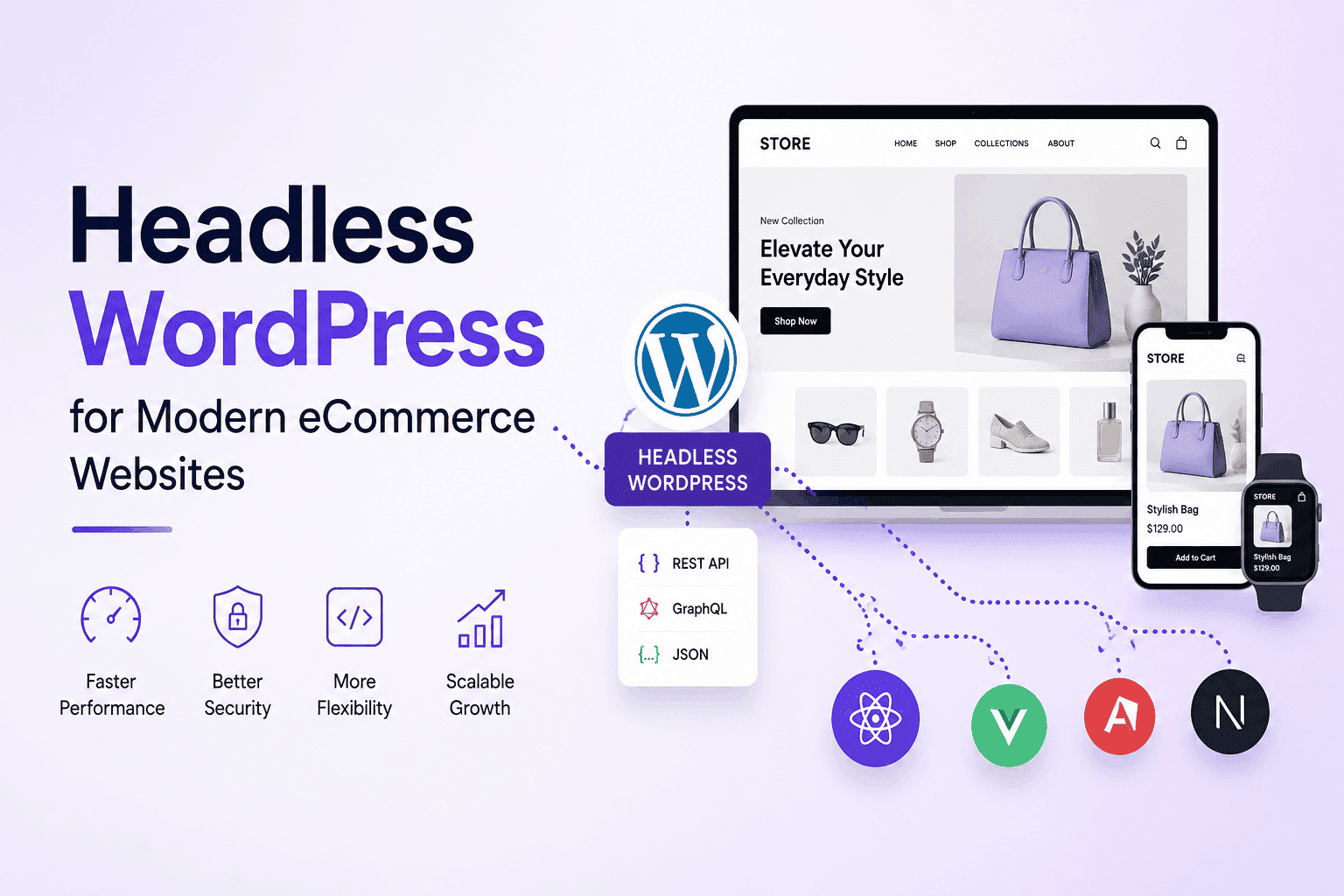
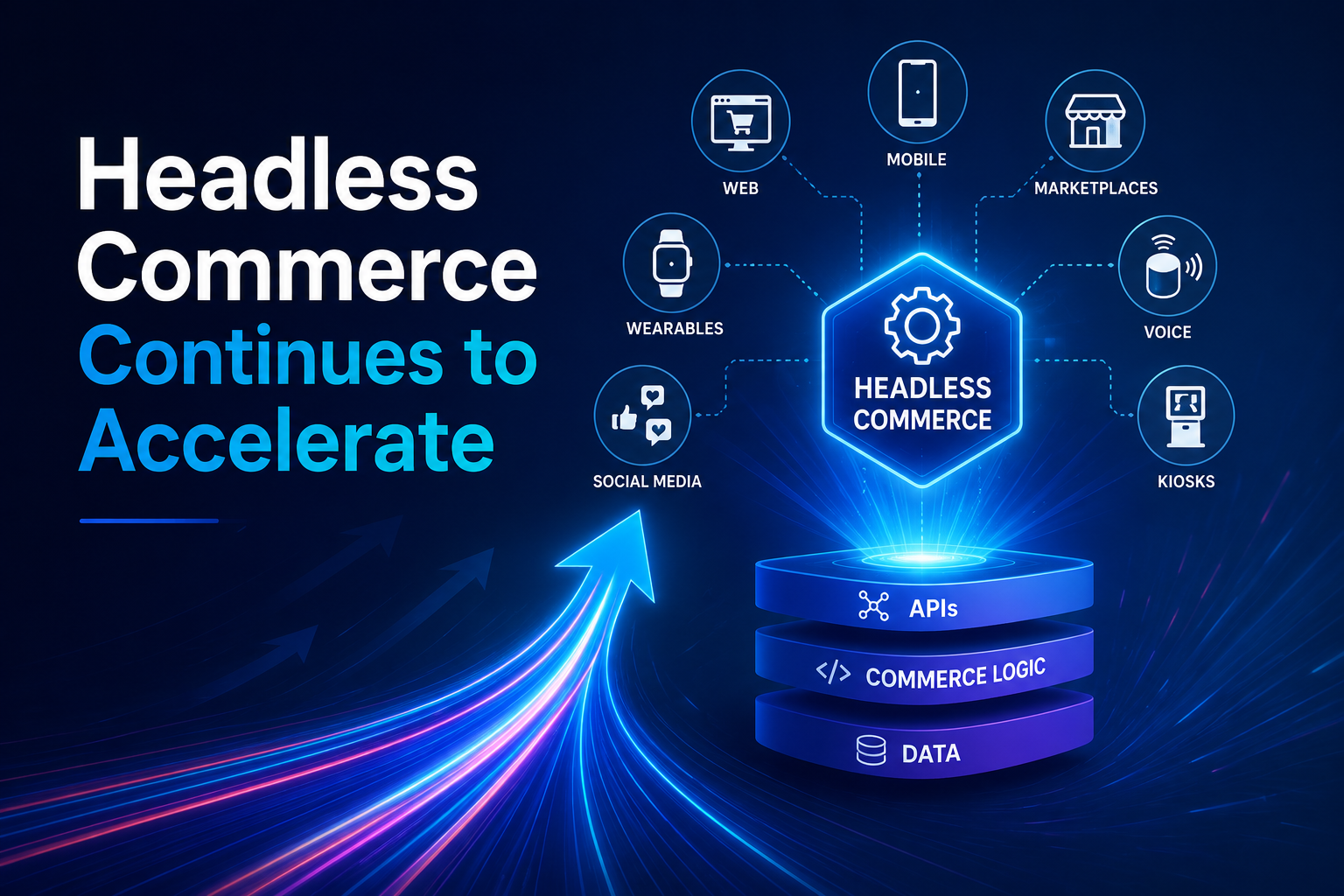
One of the most significant ecommerce development trends in 2026 is the widespread adoption of headless commerce architecture. Traditional ecommerce platforms often limit flexibility because the frontend and backend are tightly connected.
Headless commerce separates these components, allowing businesses to create unique customer experiences across websites, mobile applications, smart devices, and emerging digital channels.
Benefits of Headless Commerce
- Faster website performance and loading speeds
- Greater design flexibility and customization
- Improved scalability for growing businesses
- Seamless omnichannel experiences
- Easier integration with modern technologies
Organizations investing in ecommerce development services are increasingly choosing headless solutions to support long-term growth and innovation.
3. Composable Commerce Gains Momentum
Composable commerce extends the headless concept by allowing businesses to build ecommerce ecosystems using best-in-class components rather than relying on a single monolithic platform.
Instead of purchasing one large solution, companies can select specialized services for payments, search, inventory management, customer relationship management, and analytics.
This modular approach provides greater flexibility and enables organizations to adapt quickly as customer expectations and market conditions evolve.
Why Businesses Prefer Composable Architecture
Companies can introduce new features faster, reduce vendor dependency, and optimize individual components without disrupting the entire ecommerce ecosystem.
For enterprises undergoing digital transformation, composable commerce offers a future-ready foundation capable of supporting rapid innovation.
4. Voice Commerce Becomes More Mainstream
Voice-enabled shopping continues to gain traction as smart speakers, virtual assistants, and connected devices become increasingly common in households and workplaces.
Consumers are now using voice commands to search for products, compare prices, reorder previous purchases, and track shipments. Ecommerce businesses are responding by optimizing their platforms for conversational interactions.
Voice Search Optimization Matters
Voice searches are often longer and more conversational than traditional text searches. Ecommerce websites must adapt their content and product information accordingly.
Businesses investing in voice commerce today are positioning themselves for a future where hands-free shopping becomes a normal consumer behavior.
5. Hyper-Personalized Customer Experiences
While personalization has existed for years, 2026 is defined by hyper-personalization. Businesses are leveraging real-time customer data to create highly relevant experiences at every stage of the buying journey.
Instead of showing generic promotions, ecommerce platforms can now generate individualized product recommendations, content experiences, and targeted offers based on customer intent.
This level of personalization helps brands build stronger relationships and increase customer lifetime value.
Examples of Hyper-Personalization
Dynamic homepages, personalized email campaigns, AI-generated product bundles, predictive recommendations, and location-specific offers are becoming increasingly common across modern ecommerce stores.
6. Faster and Frictionless Checkout Experiences
Cart abandonment remains one of the biggest challenges in ecommerce. In response, businesses are simplifying checkout processes to reduce friction and improve conversions.
One-click purchasing, digital wallets, biometric authentication, and express payment methods are becoming standard features across ecommerce platforms.
Research consistently shows that reducing checkout complexity directly impacts revenue growth and customer satisfaction.

The Rise of Embedded Payments
Embedded payment solutions allow customers to complete purchases without leaving the shopping environment. This streamlined process reduces interruptions and increases conversion rates.
Platforms integrating modern payment ecosystems are seeing measurable improvements in overall transaction success rates.
7. Sustainability-Focused Ecommerce Development
Consumers are becoming increasingly conscious of environmental responsibility. As a result, sustainability is influencing ecommerce development strategies more than ever before.
Businesses are introducing eco-friendly shipping options, sustainable packaging information, carbon footprint tracking, and transparent sourcing practices directly within ecommerce platforms.
Technology is helping brands communicate sustainability initiatives more effectively while giving customers greater visibility into purchasing decisions.
8. Advanced Data Analytics and Predictive Insights
Data continues to be one of the most valuable assets in ecommerce. However, the focus is shifting from simply collecting information to generating actionable insights.
Modern analytics platforms use AI and predictive modeling to forecast demand, identify customer trends, optimize inventory, and improve marketing performance.
Businesses that effectively utilize predictive analytics gain a significant advantage by making smarter decisions faster than competitors.
Predictive Commerce in Action
Predictive systems can anticipate purchasing behavior, identify potential churn risks, and recommend optimal pricing strategies. These capabilities help businesses maximize profitability while improving customer satisfaction.
9. Enhanced Cybersecurity and Privacy Protection
As ecommerce transactions continue to grow, cybersecurity remains a top priority. Customers expect businesses to protect their personal and financial information at all times.
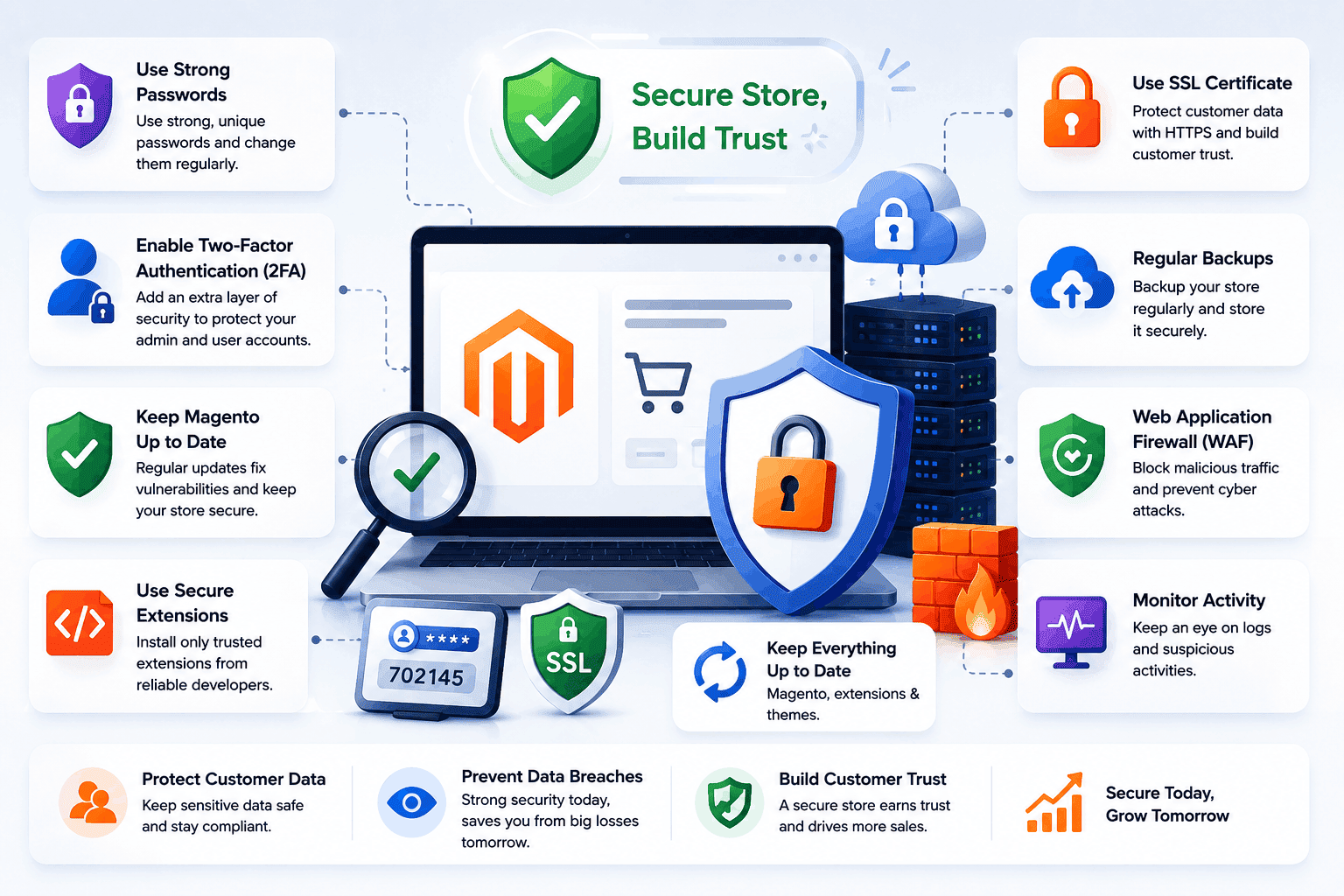
In 2026, ecommerce platforms are implementing stronger security frameworks, advanced fraud detection systems, multi-factor authentication, and real-time threat monitoring.
Privacy regulations are also becoming stricter worldwide, making compliance an essential aspect of ecommerce development.
Organizations that prioritize security not only reduce risk but also build trust with customers—a critical factor in long-term success.
10. Omnichannel Commerce Reaches New Levels
Customers no longer distinguish between online and offline shopping experiences. They expect consistency across websites, mobile apps, social media channels, marketplaces, and physical stores.
Omnichannel commerce enables businesses to provide seamless customer journeys regardless of where interactions occur.
According to insights shared by Gartner, organizations that successfully integrate multiple customer touchpoints often achieve stronger engagement and retention outcomes.
The Connected Customer Journey
A customer may discover a product on social media, research it on a website, visit a physical store, and complete the purchase through a mobile app. Successful ecommerce businesses ensure these experiences remain connected and consistent.
11. AR and Immersive Shopping Experiences
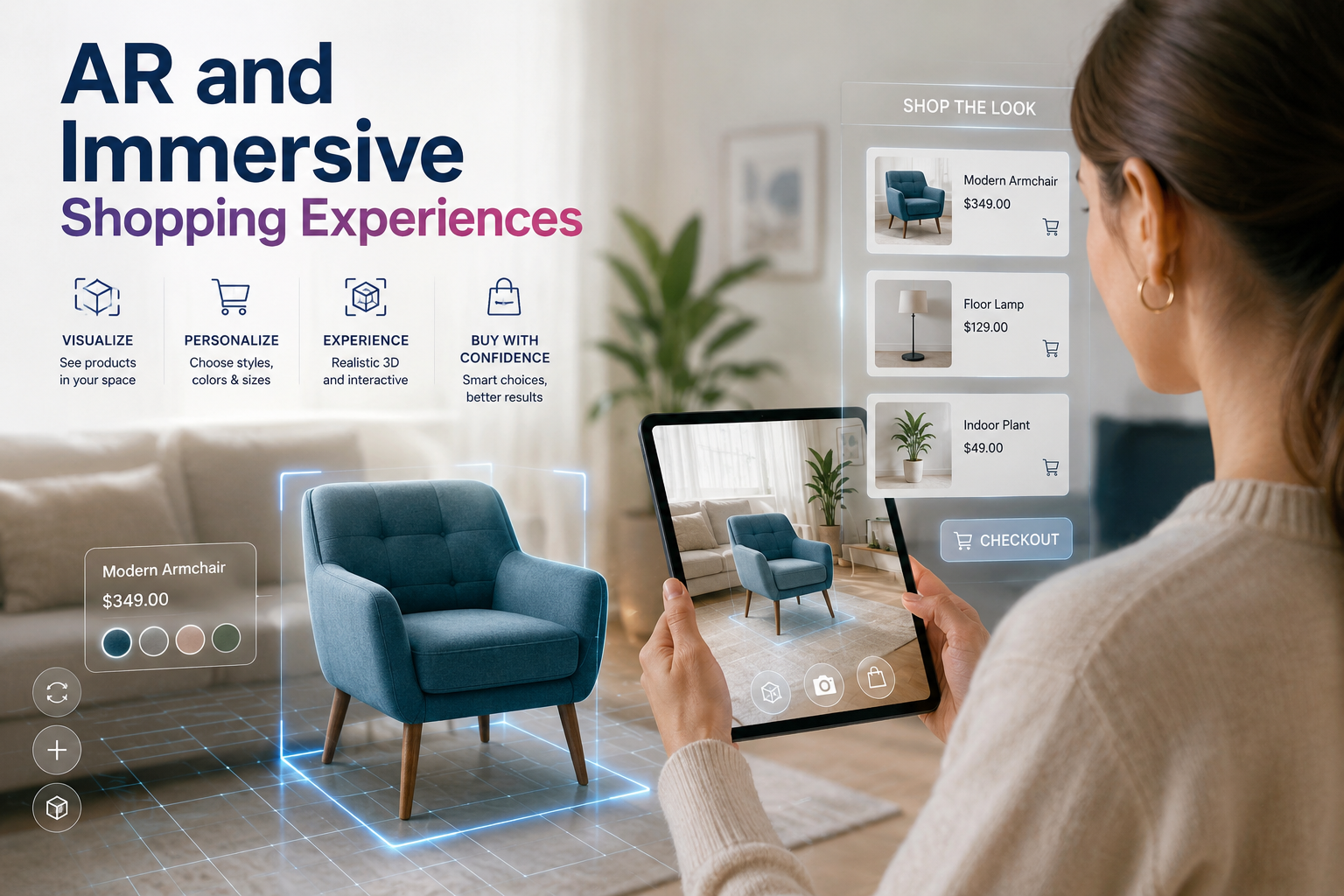
Augmented Reality is becoming more accessible and practical for ecommerce businesses. Customers increasingly want to visualize products before making purchasing decisions.
AR technology enables shoppers to virtually try products, preview furniture in their homes, or explore items in interactive 3D environments.
These immersive experiences reduce uncertainty and improve purchasing confidence, leading to higher conversion rates and fewer returns.
Major technology trends highlighted by Forrester suggest immersive commerce will continue expanding as devices and platforms become more capable.
How Businesses Should Prepare for These Trends
The rapid pace of ecommerce innovation can feel overwhelming. However, businesses do not need to implement every trend simultaneously. The key is identifying technologies that align with organizational goals, customer expectations, and growth strategies.
A successful approach starts with evaluating existing infrastructure, understanding customer needs, and creating a long-term digital roadmap.
Investing in scalable architecture, AI capabilities, customer experience improvements, and data-driven decision-making will provide a strong foundation for future growth.
Choosing the Right Ecommerce Development Partner
Technology alone does not guarantee success. Businesses need experienced development partners who understand both technical implementation and strategic business objectives.
The right partner can help organizations select appropriate technologies, build scalable solutions, optimize customer experiences, and ensure long-term platform performance.
Whether you’re launching a new online store, modernizing legacy infrastructure, or embracing digital transformation, working with experts in ecommerce development can significantly accelerate results while reducing implementation risks.
Conclusion
The ecommerce landscape in 2026 is being shaped by artificial intelligence, headless commerce, composable architecture, advanced analytics, voice commerce, enhanced security, and immersive customer experiences. These trends are redefining how businesses engage customers, manage operations, and drive growth.
Organizations that proactively adopt these innovations will be better positioned to meet evolving customer expectations and outperform competitors. The future belongs to businesses that view technology as a strategic growth enabler rather than simply an operational tool.
As ecommerce continues to evolve, now is the ideal time to evaluate your digital commerce strategy and invest in future-ready solutions that support sustainable growth.