+91 9898181101
 +1 (647) 971-4687
Magento Security Strategies Every Store Owner Should Know
Magento Security Strategies Every Store Owner Should Know
In today’s digital marketplace, security is one of the most important aspects of running a successful eCommerce business. Online shoppers trust stores with their personal information, payment details, and purchase history. When that trust is broken through a security breach, the consequences can be severe, ranging from financial losses to long-term damage to a company’s reputation. For Magento store owners, maintaining a secure online environment is not just a technical responsibility but a business necessity.
Magento is one of the most powerful and flexible eCommerce platforms available today. Its extensive customization capabilities and scalability make it a preferred choice for businesses of all sizes. However, because Magento powers thousands of online stores worldwide, it is also a common target for cybercriminals looking to exploit vulnerabilities and gain unauthorized access to sensitive data.
Store owners often focus heavily on marketing, product management, and customer acquisition while overlooking security measures until a problem occurs. Unfortunately, security threats continue to evolve, and even a single vulnerability can lead to significant consequences. Understanding and implementing effective Magento security strategies can help businesses protect customer data, maintain compliance, and ensure uninterrupted operations.
Why Magento Security Matters for Online Businesses
Security is directly connected to customer trust. When shoppers visit an online store, they expect their personal and financial information to be protected. If customers feel that a website is not secure, they are unlikely to complete purchases or return for future transactions. Building trust starts with maintaining a secure shopping environment.
A successful cyberattack can lead to stolen customer information, unauthorized transactions, website downtime, and loss of business revenue. In many cases, recovering from a security breach costs far more than investing in preventive security measures. Businesses may also face legal consequences if customer data is exposed due to inadequate security practices.
Search engines also prioritize secure websites. Sites that experience malware infections or security incidents can suffer ranking penalties, which negatively affect organic traffic and visibility. Learn more about Google’s website security recommendations.
As eCommerce competition increases, businesses must view security as part of their overall business strategy. A secure Magento store creates confidence among customers, partners, and stakeholders while helping ensure long-term business stability.
Establish a Proactive Magento Maintenance Plan
A secure Magento store starts with consistent maintenance. Many cyberattacks occur because businesses continue running outdated software that contains known vulnerabilities. Magento regularly introduces updates that improve security, fix bugs, and strengthen overall platform performance.
Store owners sometimes postpone updates due to concerns about downtime or compatibility issues. However, delaying updates can leave the website exposed to threats that hackers actively search for. Attackers often target stores running older versions because they are easier to exploit.
Creating a structured maintenance schedule helps businesses stay ahead of potential risks. Updates should be reviewed, tested, and implemented regularly to ensure the store remains protected against newly discovered vulnerabilities. You can also explore our Magento Development Services to keep your store secure and up to date.
A practical approach involves testing updates in a staging environment before applying them to the live website. This reduces operational disruptions while ensuring the latest security protections are in place.
Strengthen Login Security Across All Accounts
Unauthorized access remains one of the biggest security threats for Magento stores. Weak passwords and poorly managed user accounts can provide attackers with an easy entry point into the system.
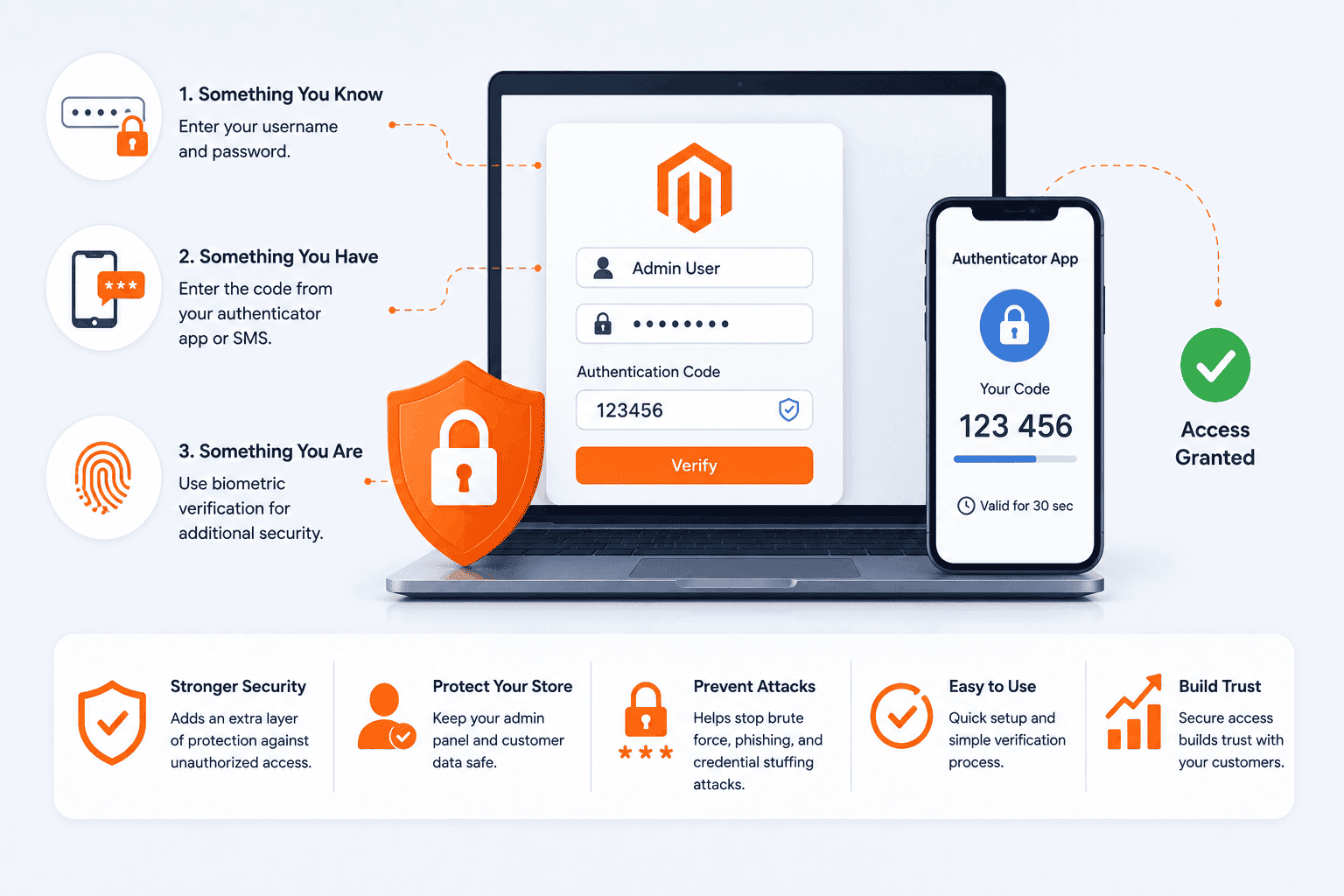
Every administrator, manager, and employee with backend access should use strong and unique passwords. Passwords should contain a mix of letters, numbers, and symbols while avoiding predictable combinations such as company names or birthdays.
Multi-factor authentication adds another layer of protection by requiring users to verify their identity through a secondary device or authentication application. This significantly reduces the chances of unauthorized access even if login credentials are compromised.
Businesses should also review user accounts regularly and remove access for former employees or inactive users. Maintaining strict account management helps reduce unnecessary security risks.
Choose Infrastructure Designed for Security
The hosting environment serves as the foundation of Magento security. Even the most secure website can become vulnerable if it operates on poorly protected servers. A secure infrastructure helps protect sensitive business and customer data from potential threats.
A reliable hosting provider should offer advanced security measures, including firewalls, malware detection, server monitoring, and automated threat prevention. Businesses should also assess backup and disaster recovery capabilities to ensure quick recovery and minimal downtime during security incidents.
Key Factors to Consider When Choosing a Hosting Provider
- Advanced firewall and malware protection systems.
- Continuous server monitoring and threat detection.
- Regular automated backups with fast recovery options.
- Proven security standards and compliance certifications.
Choosing a hosting partner based on security, reliability, and long-term performance rather than price alone can significantly reduce risks and support stable business growth.
Encrypt Customer Transactions and Communications
Customers expect their personal and payment information to remain secure throughout the shopping experience. Encryption plays a critical role in protecting sensitive data from interception.
SSL certificates enable secure HTTPS connections, ensuring information exchanged between visitors and the website remains encrypted. This protection is especially important during account registration, checkout, and payment processing.
Visible security indicators such as HTTPS and browser padlock icons help build customer confidence. Businesses should regularly monitor SSL certificates and renew them before expiration. Learn more about OWASP security best practices.
Essential Security Practices for Magento Success
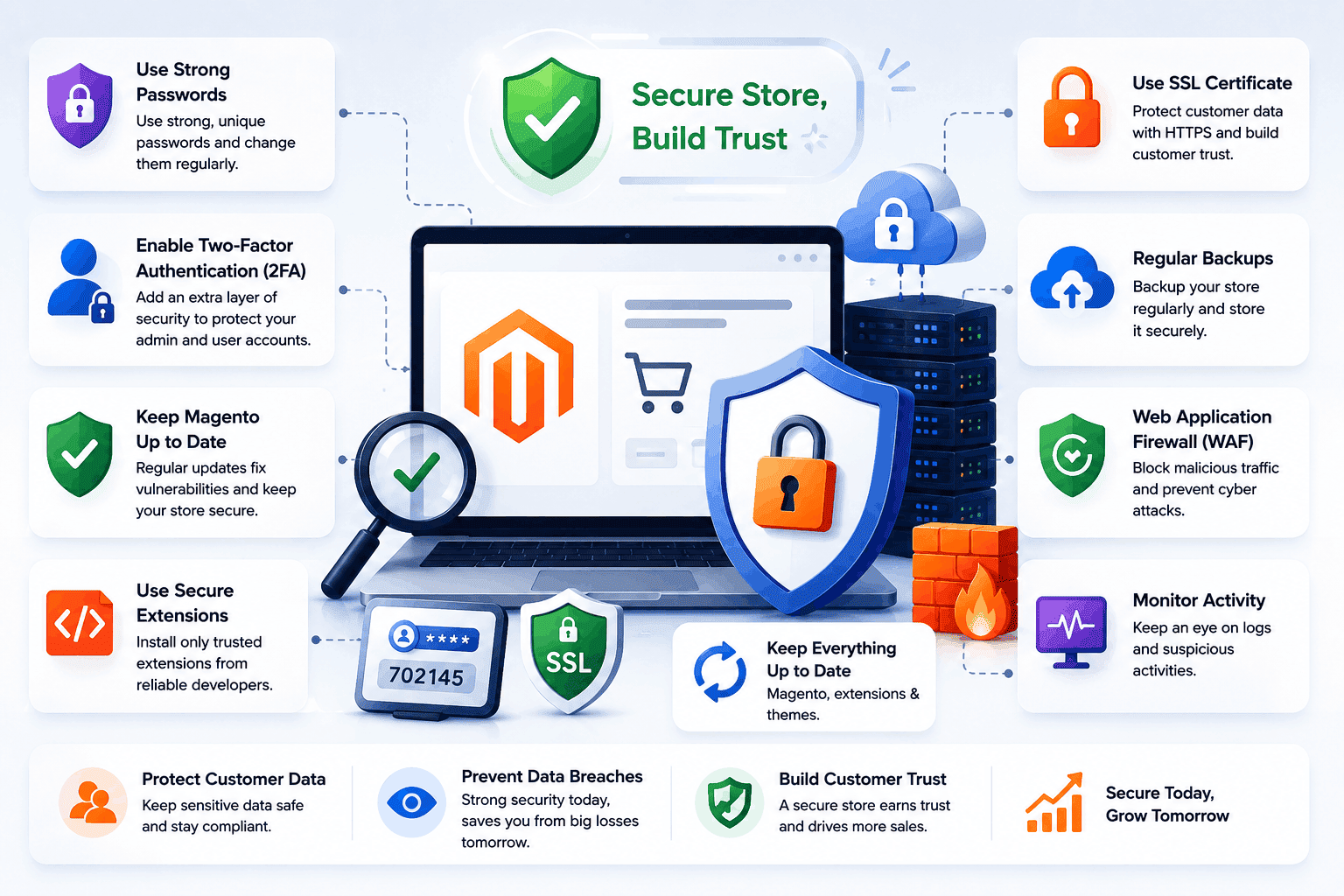
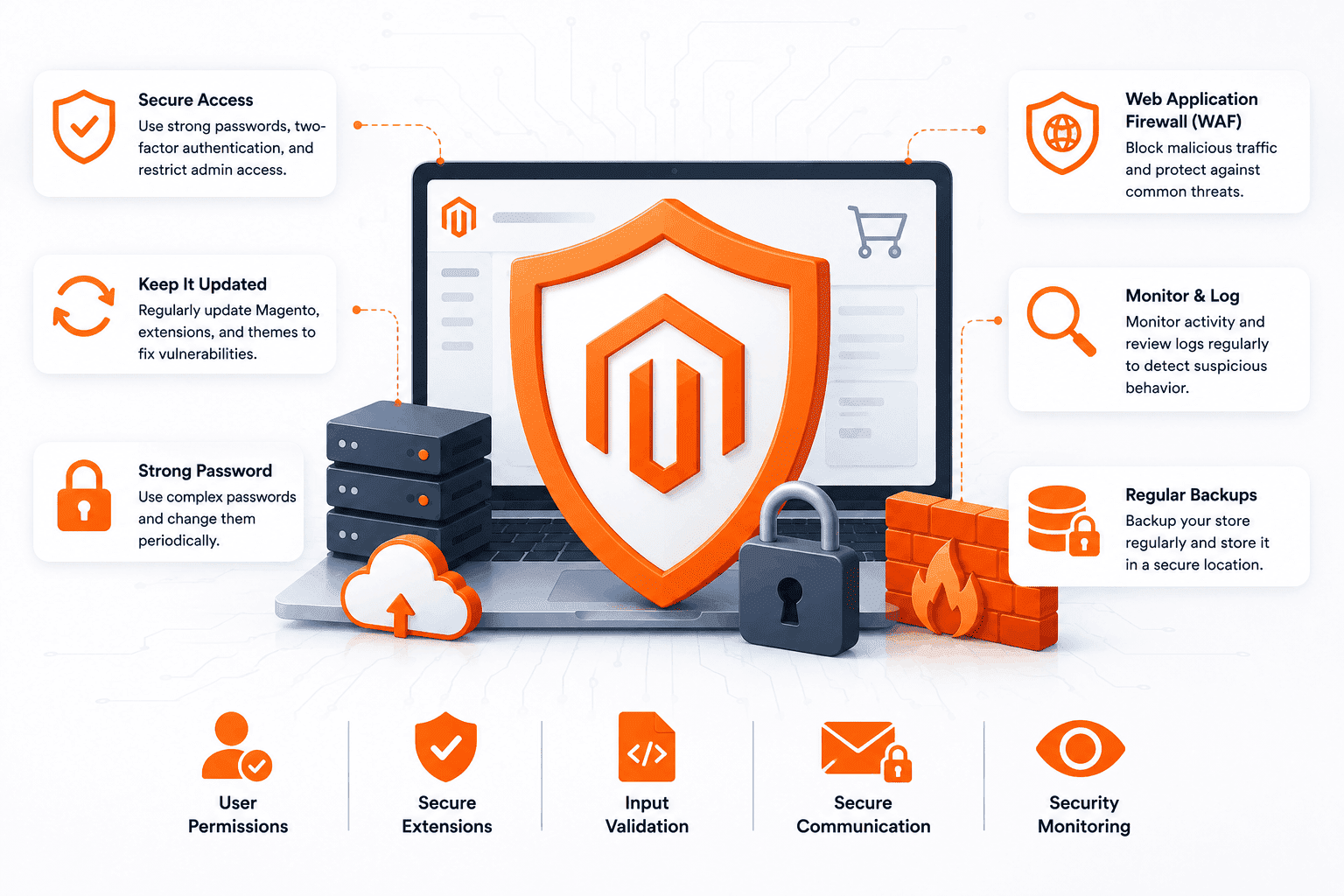
Magento security requires a proactive approach that combines regular maintenance, strong access controls, and continuous monitoring.
Key Security Measures Every Magento Store Should Prioritize
- Install Magento updates and security patches promptly.
- Enable multi-factor authentication (MFA) for administrator accounts.
- Use secure hosting with advanced protection and monitoring features.
- Encrypt all website traffic using HTTPS and SSL certificates.
- Maintain regular backups of critical business and customer data.
Evaluate Extensions Before Installation
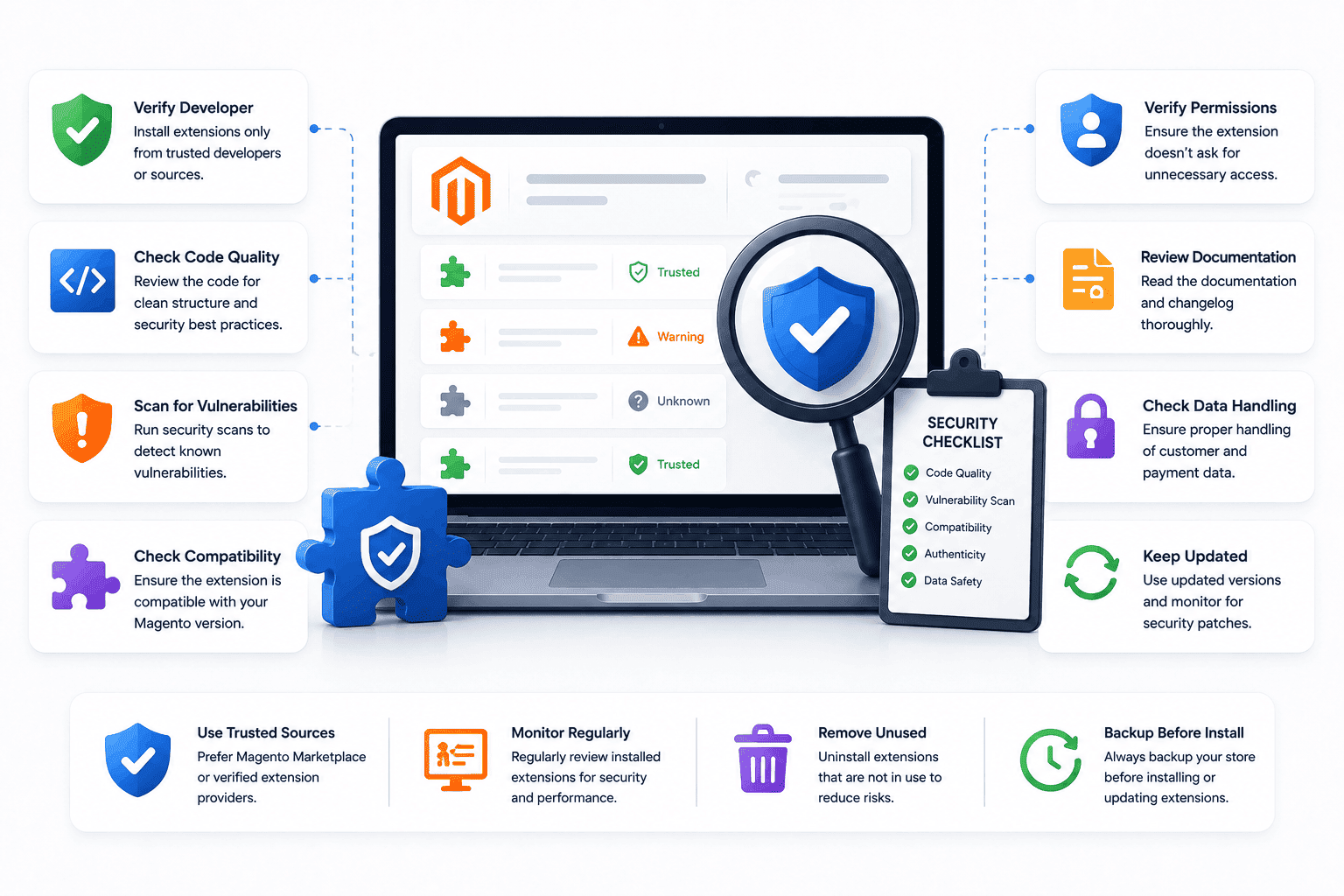
Magento extensions can improve functionality and enhance customer experiences. However, every extension added to a store introduces potential security considerations that must be carefully evaluated.
Businesses should only download extensions from reputable developers with proven track records. Trusted providers typically release regular updates and address security concerns quickly when issues arise.
Before installing any extension, store owners should review ratings, customer feedback, update history, and compatibility information. Regular audits of installed extensions are equally important. Removing outdated or unused extensions reduces complexity and minimizes potential attack points.
Detect Threats Through Continuous Monitoring
Security monitoring allows businesses to identify unusual activity before it develops into a serious problem. Magento logs can reveal suspicious login attempts, unauthorized administrative actions, unexpected file modifications, and other warning signs.
Many organizations use automated monitoring solutions that generate alerts whenever unusual activity is detected. Routine monitoring should become part of daily website management.
Warning Signs That Your Magento Store May Be Vulnerable
Magento stores often display early warning signs when security vulnerabilities or unauthorized activities are present.
Key Warning Signs to Watch For
- Frequent failed login attempts or unauthorized access attempts.
- Unexpected changes to website content, settings, or configurations.
- Slow website performance without a clear technical explanation.
- Unknown administrator accounts appearing within the system.
- Unusual spikes in server resource usage or traffic patterns.
Control Access to Sensitive Information
Protecting customer information requires careful management of employee permissions and system access. Role-based access controls allow administrators to assign permissions according to specific job responsibilities, reducing the risk of unauthorized access and accidental data exposure.
Building a Future-Ready Security Culture for Magento Stores
Magento security is no longer limited to firewalls, updates, and technical safeguards. Businesses must adopt a comprehensive security strategy that combines advanced technologies with strong organizational practices.
Key Elements of a Future-Ready Magento Security Strategy
- Implement AI-powered monitoring and automated threat detection tools.
- Adopt advanced authentication methods.
- Provide regular cybersecurity awareness training.
- Establish clear security policies.
- Continuously adapt security practices to evolving threats.
Magento Security Checklist for Store Owners
Maintaining Magento security requires ongoing attention rather than a one-time setup.
Essential Magento Security Checklist
- Verify Magento updates and security patches.
- Review administrator accounts and permissions.
- Scan for malware and suspicious activity.
- Check SSL certificate validity.
- Audit installed extensions regularly.
Conclusion
Magento security is not a one-time project but an ongoing commitment that requires attention, planning, and continuous improvement. From regular updates and strong authentication to secure hosting and proactive monitoring, every security measure contributes to protecting customer trust and business success.
Store owners who prioritize security create a safer shopping experience, reduce operational risks, and position their businesses for sustainable growth. By implementing these strategies, Magento merchants can confidently protect their stores against evolving cyber threats while maintaining a strong and reliable online presence.