+91 9898181101
 +1 (647) 971-4687

Mobile Commerce Trends Every Business Should Follow
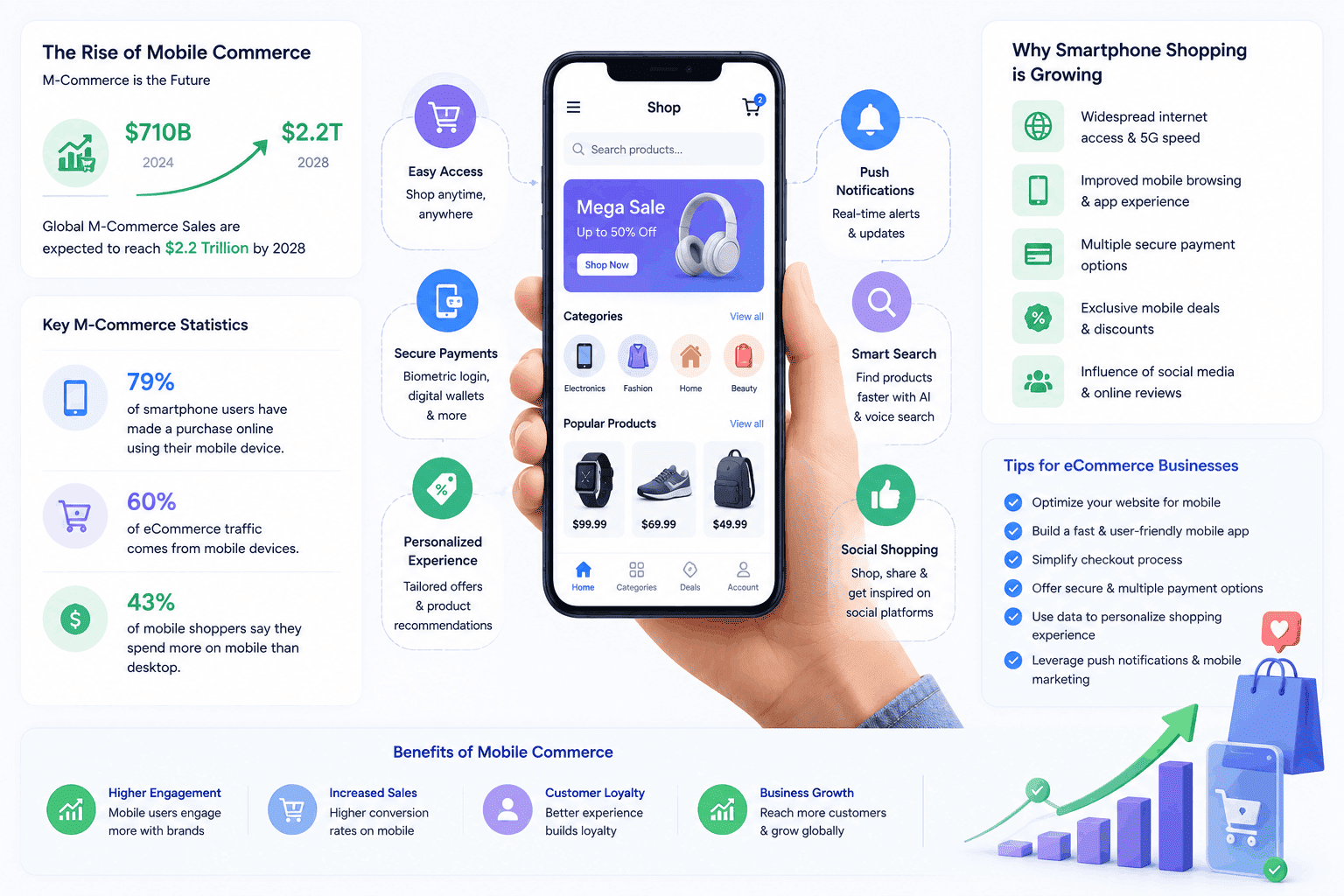
The way people shop has changed dramatically over the last decade, and mobile devices are now at the center of that transformation. Consumers no longer rely solely on desktop computers to browse products, compare prices, or complete purchases. Instead, smartphones and tablets have become powerful shopping tools that allow customers to buy products anytime and anywhere. This shift has made mobile commerce, often called m-commerce, one of the most important areas of growth for businesses across industries.
As mobile internet usage continues to rise, businesses are investing more resources into creating seamless shopping experiences for mobile users. Customers expect websites and applications to load quickly, offer easy navigation, and provide secure payment options. Companies that fail to meet these expectations often struggle with lower conversion rates and higher cart abandonment levels. Mobile commerce is no longer a future trend—it is a present-day necessity.
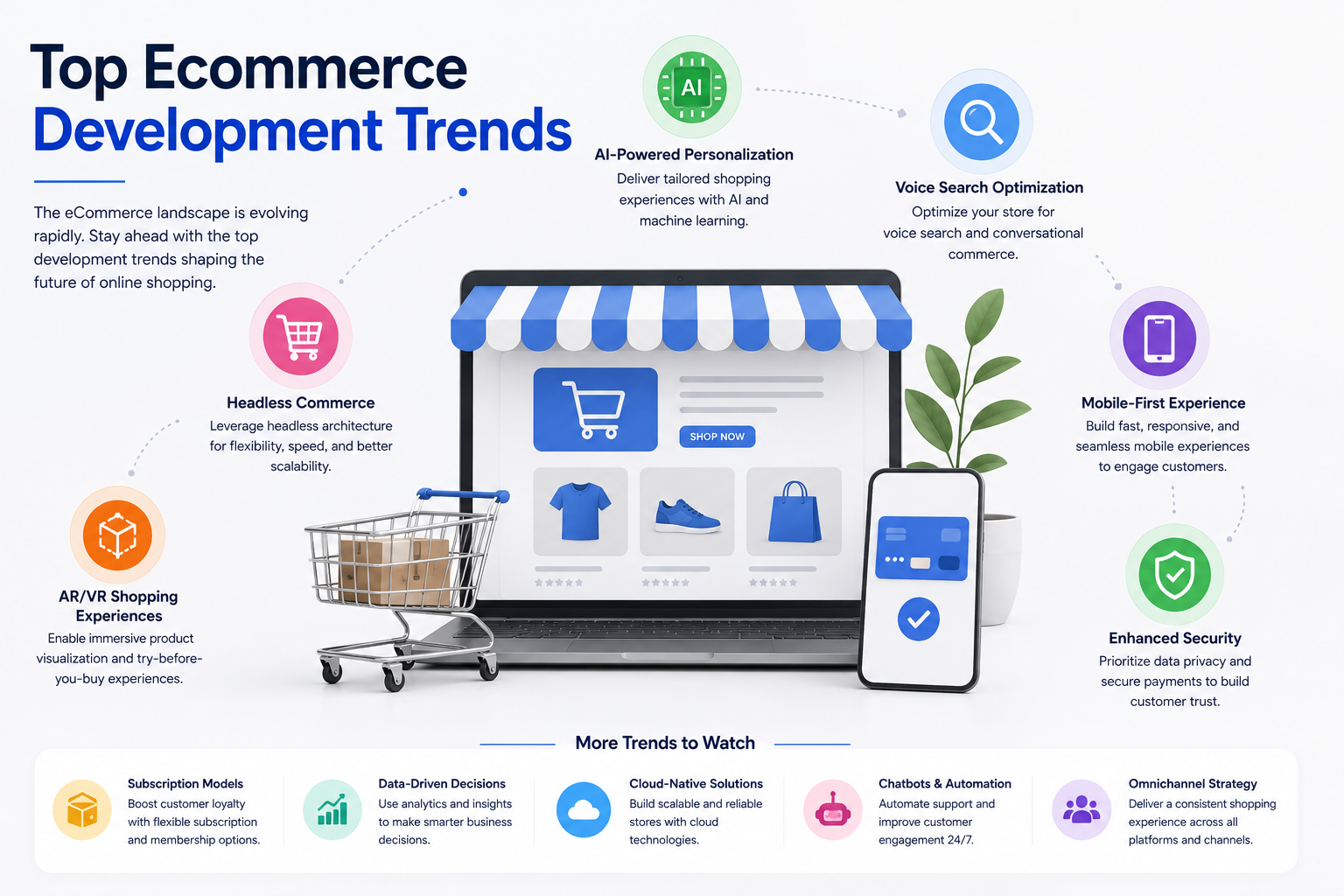
Understanding the latest mobile commerce trends helps businesses stay competitive in an increasingly digital marketplace. From mobile payment innovations to AI-powered personalization, several developments are reshaping how consumers interact with brands. Businesses that embrace these trends can improve customer satisfaction, increase revenue, and build stronger relationships with their audiences.
The Growing Importance of Mobile Commerce
Mobile commerce has evolved from being a convenient shopping option to becoming a primary sales channel for many businesses. Consumers spend a significant portion of their daily lives on smartphones, making mobile devices a natural platform for product discovery and purchasing decisions. Whether customers are shopping during a commute, while relaxing at home, or comparing products in a physical store, mobile devices influence buying behavior.
The convenience offered by mobile shopping is one of the main reasons for its continued growth. Customers can browse extensive product catalogs, read reviews, and make purchases within minutes. This ease of access has encouraged more consumers to rely on their smartphones for everyday shopping needs. Businesses that optimize their mobile experiences are often rewarded with increased engagement and higher sales.
Another factor driving mobile commerce growth is improved internet connectivity. Faster mobile networks and widespread access to high-speed internet have made online shopping smoother than ever before. Customers can view product images, watch videos, and complete transactions without experiencing frustrating delays.
The rise of digital-first consumers has also contributed to the expansion of mobile commerce. Younger generations, in particular, prefer using mobile devices for shopping because they value speed, convenience, and flexibility. Businesses targeting these audiences must prioritize mobile-friendly experiences if they want to remain relevant and competitive. To understand Google’s recommendations, visit Google’s Mobile-First Indexing Guide.
Mobile-First Website Design Is Becoming Essential
A mobile-first approach means designing websites primarily for smartphone users before adapting them for larger screens. This strategy recognizes that a significant percentage of online traffic now comes from mobile devices.
Responsive design plays a major role in mobile-first development. Websites must automatically adjust to different screen sizes while maintaining readability and functionality. Customers should not have to zoom in, scroll excessively, or struggle to find important information.
Loading speed is another critical factor in mobile-first design. Mobile users expect websites to load almost instantly. Even a few seconds of delay can lead to frustration and abandonment.
A mobile-first website also contributes to better search engine rankings. Businesses can also explore our guide to building a high-converting eCommerce website to improve user experience and conversions.
The Rise of Mobile Payment Solutions
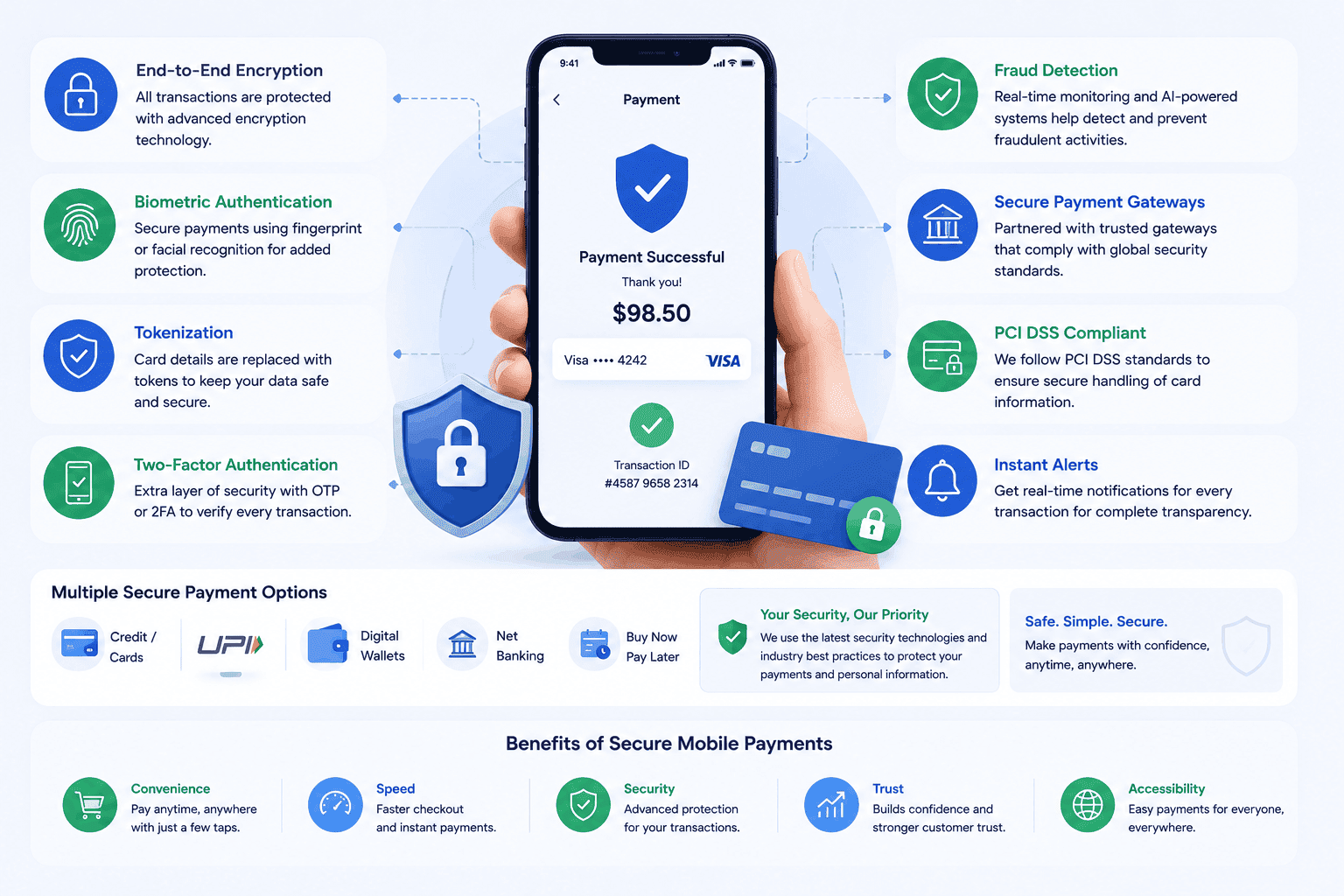
Mobile payment technologies are transforming the checkout experience by making transactions faster and more convenient. Consumers no longer want to manually enter card details every time they make a purchase. Digital wallets and contactless payment systems simplify the process, reducing friction during checkout.
Popular mobile payment methods allow customers to complete purchases with just a few taps. This convenience encourages impulse buying and reduces the likelihood of abandoned carts.
Security Features of Mobile Payment Solutions
- Advanced encryption protects customer data.
- Biometric authentication adds extra security.
- Fingerprint scanning improves transaction safety.
- Facial recognition enhances user verification.
Businesses that integrate secure payment options position themselves for long-term success. Learn more about payment security through the PCI Security Standards Council.
AI-Powered Personalization in Mobile Commerce
Artificial intelligence is becoming a powerful tool for delivering personalized shopping experiences on mobile devices. Customers increasingly expect brands to understand their preferences and provide relevant recommendations.
By analyzing browsing history, purchase behavior, and shopping preferences, AI systems can recommend products customers are more likely to purchase. Personalized notifications, tailored promotions, and dynamic content further improve engagement and customer satisfaction.
Social Commerce Through Mobile Platforms
Social media platforms have become powerful shopping destinations. Consumers frequently discover products while scrolling through their favorite social networks, making social commerce an important component of mobile commerce growth.
Social Media Impact on eCommerce Engagement
- Brands showcase products through social media platforms.
- Live demos increase real-time customer engagement.
- User-generated reviews build trust and credibility.
- Interactive content improves authenticity and influence.

Voice Search and Mobile Shopping
Voice technology is becoming increasingly popular among mobile users. Consumers are using voice assistants to search for products, compare prices, and gather information before making purchasing decisions.
Voice searches tend to be more conversational than traditional text searches. Businesses should optimize content for natural language queries to improve discoverability.
Augmented Reality Enhancing Mobile Shopping Experiences
Augmented reality is creating more interactive shopping experiences by allowing customers to visualize products in real-world environments before making a purchase.
Furniture retailers, fashion brands, and beauty companies are already benefiting from AR by helping customers make informed buying decisions while reducing return rates.
Key Factors Driving Successful Mobile Commerce
Mobile commerce success depends on creating a smooth, fast, and user-friendly shopping experience that meets the expectations of on-the-go customers.
Key Success Factors in Mobile Commerce
- Fast-loading mobile websites and applications.
- Secure and flexible payment options.
- Personalized customer experiences.
- Responsive and intuitive design.
- Seamless checkout processes.
Common Mobile Commerce Mistakes Businesses Should Avoid
Many businesses recognize the importance of mobile commerce but still make mistakes that negatively impact performance.
Ignoring Mobile Optimization
Focusing only on desktop users often results in poor navigation and lower conversions on smartphones.
Complicated Checkout Process
Long forms and mandatory account creation frequently increase shopping cart abandonment.
Lack of Mobile Testing
Regular testing across multiple devices ensures a consistent and reliable user experience.
Ignoring Analytics
Tracking user behavior helps businesses identify optimization opportunities and improve conversions.
The Future of Mobile Commerce
The future of mobile commerce looks exceptionally promising as artificial intelligence, faster mobile networks, wearable devices, and immersive shopping technologies continue to evolve.
Businesses that embrace innovation and continuously optimize their mobile shopping experiences will be well-positioned to increase customer loyalty and achieve sustainable growth.
Conclusion
Mobile commerce is reshaping the retail landscape and creating new opportunities for businesses of all sizes. Trends such as mobile-first design, AI-driven personalization, social commerce, mobile payments, voice search, and augmented reality are changing how consumers shop and interact with brands.
The businesses that succeed in the coming years will be those that treat mobile commerce as a core part of their digital strategy. By staying informed about emerging trends and continuously improving mobile experiences, organizations can strengthen customer relationships and achieve long-term growth.