+91 9898181101
 +1 (647) 971-4687
The Impact of AI Overview on E-commerce Search Traffic
1. Introduction
For e-commerce companies, this shift is crucial. Because it attracts customers, highlights products, and increases sales, search traffic is crucial for online retailers. Product pages, blog entries, and category listings may receive less clicks when AI Overviews appear at the top of search results.
This can result in fewer website visitors and less organic traffic, making it more difficult for brands to remain visible in an increasingly competitive digital arena.
For those who know how to optimize their content, AI Overviews offer additional possibilities. You may still draw attention, build brand reputation, and influence conversions by utilizing a thorough understanding of how AI analyzes information.
Digital marketing teams and firms who offer SEO services will find this especially helpful. There are opportunities as well as obstacles due to Alabama’s unique consumer trends and unique regional competitiveness.
In order to adapt their objectives to the unique needs of the region, agencies must advantageously position their clients’ e-commerce platforms in AI-based search results. This article will look at how AI Overviews affect e-commerce search traffic, how SEO techniques need to change, and how to keep and increase your organic traffic.
2. What Are AI Overviews and How Do They Work?
AI Overviews integrate information from several sources to present a single, cohesive response rather than merely displaying sites based on the search engine’s ranking of the most relevant pages.
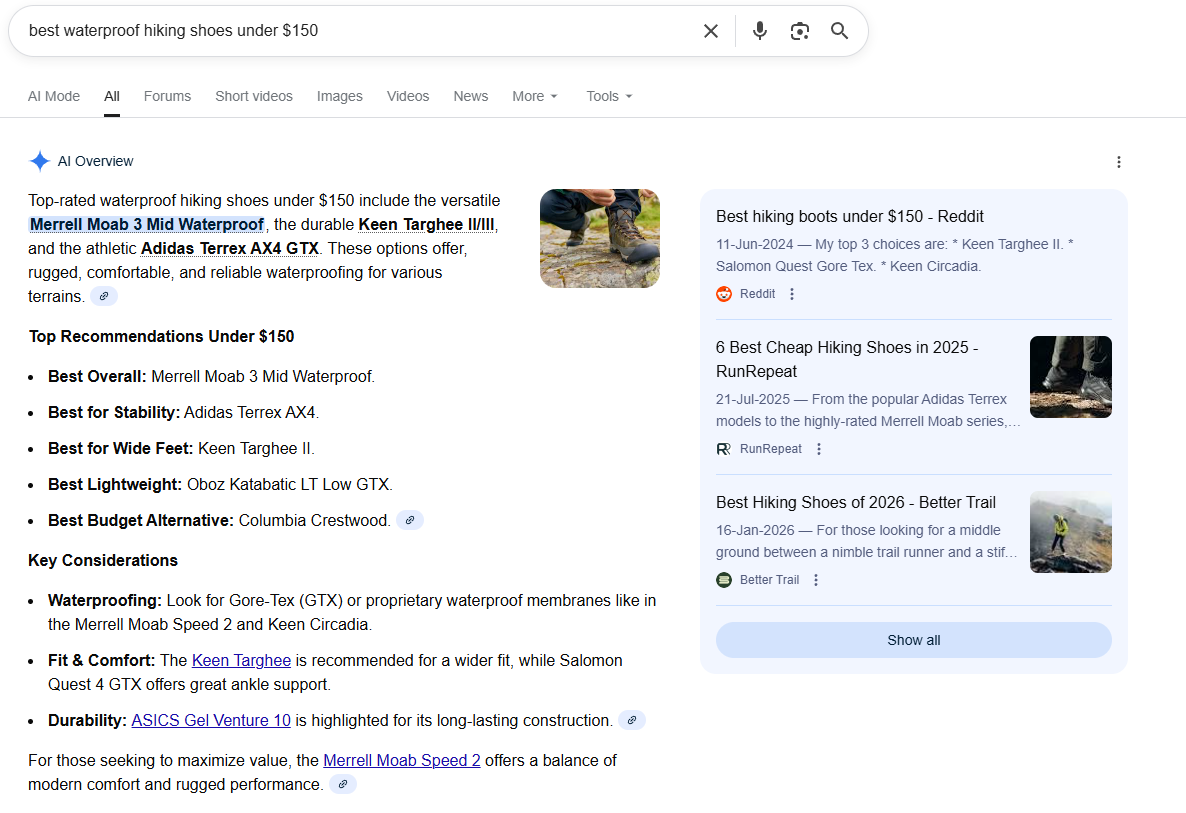
In e-commerce, AI Overviews provide users with important information, including the top-ranked products, their prices, and their features.
To respond to the query “best waterproof hiking shoes under $150,” for example, an AI Overview listing will display goods, features, and prices in a single snippet.
3. How AI Overviews Are Changing E-commerce Search Traffic
Instead, the AI search engine provides them with straight answers. In many instances, users can obtain the answer through a “no-click search,” which means they might not need to click on any links in order to obtain the information they’re looking for.
In the event that this occurs, e-commerce websites may experience a decline in visits to product pages and blogs, which could lead to a decline in sales and organic traffic revenue.
Some people think that no-click searches could boost brand demand through branded searches. Consumers will consider the brand after viewing the AI Summary, leading to a subsequent search for the brand.
Additionally, AI Summary lowers direct traffic to e-commerce websites. It allows consumers to compare goods and costs without going to multiple websites.
4. Potential Challenges for E-commerce Websites
Users are discouraged from visiting the e-commerce site to browse the products, read the blogs, or access the categories because AI Overviews provide answers on the search sites.
Smaller brands may have found it more challenging to compete with larger brands that have more reputable websites as a result.
In the worst situation, smaller firms will see a decline in website traffic, low conversion rates, or none at all.
Companies with a Domain Rating of 70 receive more traffic from AI Overviews than companies with lower Domain Ratings since AI Overviews cite websites as sources.
Put differently, the gap between smaller and larger brands will keep growing. Smaller firms will continue to face a growing risk of e-commerce failure if they are unable to create a sense of authority and confidence in their content.
Additionally, AI Overviews lessen brand awareness. Individual e-commerce brands may find it challenging to differentiate themselves from their rivals unless their material is designed to be utilized as a referenced source because machine learning systems pull from numerous sources to summarize and answer to user inquiries.
In keeping with that, when it comes to attracting visitors to an e-commerce site, traditional SEO will probably become less and less effective. Instead, organizations should be ready to use more sophisticated SEO, which is why many companies decide to collaborate with a seasoned SEO agency to improve their long-term visibility.
5. Opportunities in AI Overviews
Even if people don’t visit your website, AI discussing your store or content increases trustworthiness, increases brand awareness, and draws interest.
The main opportunities that online shops can benefit from include the following:
- Having content optimized for easy retrieval by AI
- Being listed as a Cited Source
- Being listed as a Referenced Source
- Using FAQs, product comparisons, and product descriptions
- Increasing authority and confidence in your field
Increased trust and authority for the brand. If the content is accurate and of good quality, your store becomes a legitimate reference for AI.
Over time, organic traffic is improved by AI’s long-term benefits. Additionally, it enhances your brand’s overall SEO, making it stand out as an authority in the field.
6. Optimizing Product Feeds and Content for AI Search – Subheadings
Examples of Effective Product Titles:
- ComfortFit Women’s Cushioned Running Shoes — Breathable Mesh, Black
- EcoLite Stainless Steel Insulated Water Bottle — 32 oz, Leak-Proof
- UltraClear HD Smartphone Screen Protector — Anti-Scratch, Case-Friendly
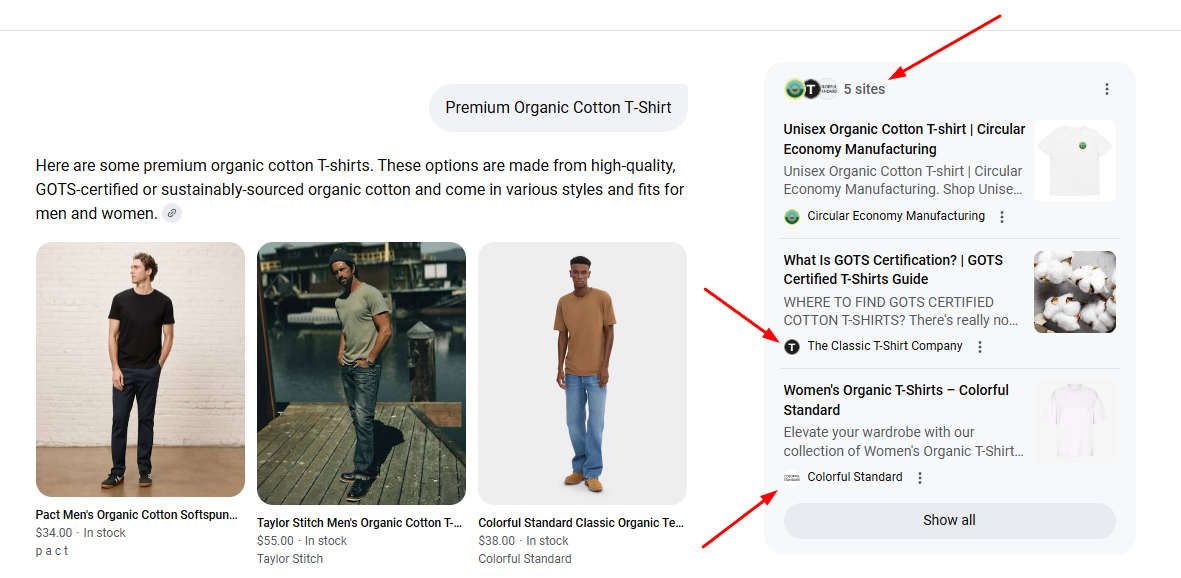
- Premium Organic Cotton T-Shirt — Unisex, Soft Fabric, White
Why These Work:
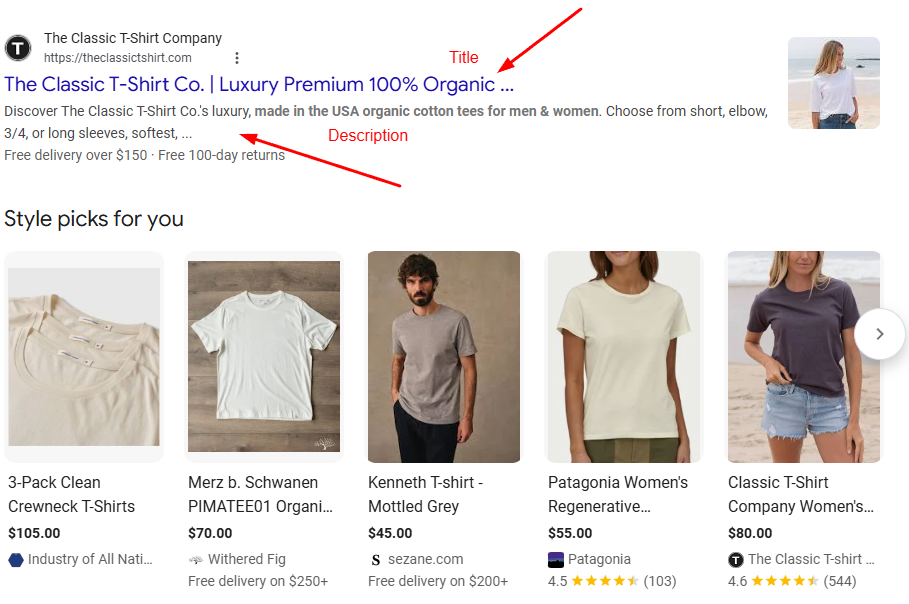
6.2 Write Detailed and Concise Product Descriptions
Important Techniques for Good Product Descriptions:
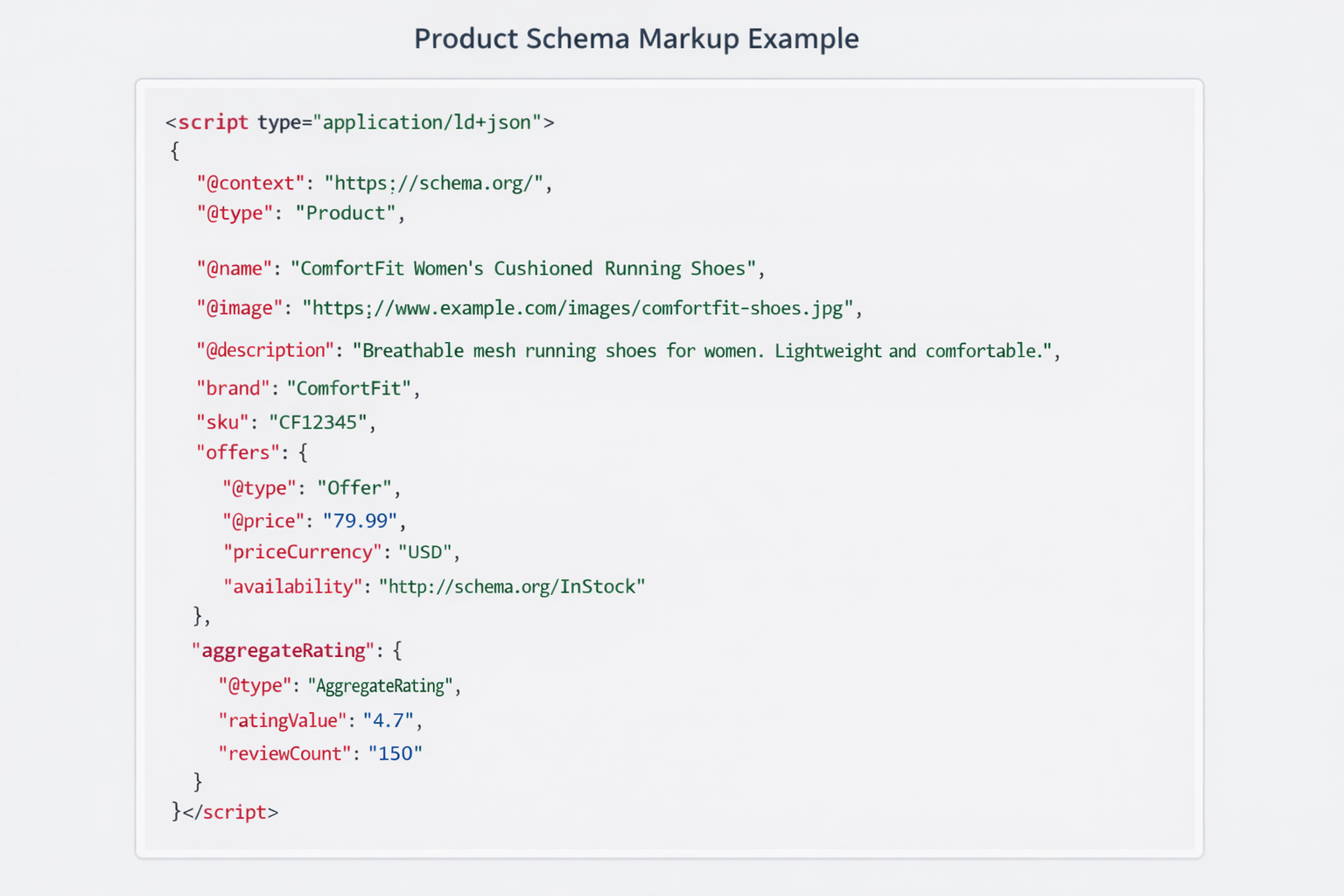
6.3 Implement Structured Data and Schema Markup
Schema Types for E-commerce:
- Product Schema: Contains the brand, SKU, name, and description of the product.
- Price Schema: Makes it simple for customers to compare products by displaying the price, discounts, or price ranges.
- Review and Rating Schema: Using average ratings and customer reviews, it fosters social proof and trust.
- Availability Schema: Increases conversions and makes product availability clear. Because it is either in stock, out of stock, or available for pre-order, confusion is prevented.
Example:
- Name: Women’s Cushioned Running Shoes with Comfort Fit
- Comfort Fit is the brand
- Cost: $79.99
- Availability: Stocked
- 4.7 out of 5 (based on 150 reviews)
6.4 Optimize Images and Multimedia Content
Why Multimedia Content Optimization?
- Improves AI Understanding: AI algorithms analyze context from visuals and videos along with text.
- Increases User Engagement: Clear product visuals help customers understand what they are purchasing.
- Increases Search Visibility: Optimized images may appear in Google Images and visual search results.
Top Strategies for Multimedia Content Optimization:
- Include Relevant Keywords in Descriptive Alt Text.
- Write alt text that clearly describes the image and includes keywords.
- Use descriptive file names like “ComfortFit-Womens-Cushioned-Running-Shoes-Black-Mesh-Size-8”.
- Make Use of High-Quality Pictures and Videos.
- Use product demo videos and multiple product angles.
- Use Visual Summaries and Infographics to highlight product features.
6.5 Keep Product Content Updated Regularly
Why Regular Updates Matter:
- AI accuracy: Outdated product information may prevent AI from featuring your products.
- Customer Trust: Accurate information builds trust and increases purchase likelihood.
- Competitive Advantage: Updating inventory and seasonal products keeps your store relevant.
Key Strategies for Maintaining Updated Content:
- Update stock and price information regularly.
- Mark items as out-of-stock or available for pre-order correctly.
- Update product descriptions and reviews.
- Remove outdated information.
- Update seasonal promotions and visuals.
- Use infographics and seasonal promotional videos.
- Monitor how AI summarizes your product pages and improve structured data if needed.
Conclusion
Zero-click searches offer a way to build brand authority, gain market share, and influence customer behavior, even if they probably result in fewer direct visits to your website.
Understanding how AI “reads” your page and its quality becomes crucial in this AI-driven world.
Every component matters, including product names and descriptions, data-structured multimedia, and the regularity of updates, all of which contribute to the credibility of your page.
AI-powered summaries will reward your brand as a reliable, reputable source. Loyalty will be encouraged and customers will come back.
AI Overviews will increase, not replace, brand traffic. When brands modify their SEO strategies to work for both humans and AI, they will endure with increased authority and a customer base.
About the author: admin