+91 9898181101
 +1 (647) 971-4687
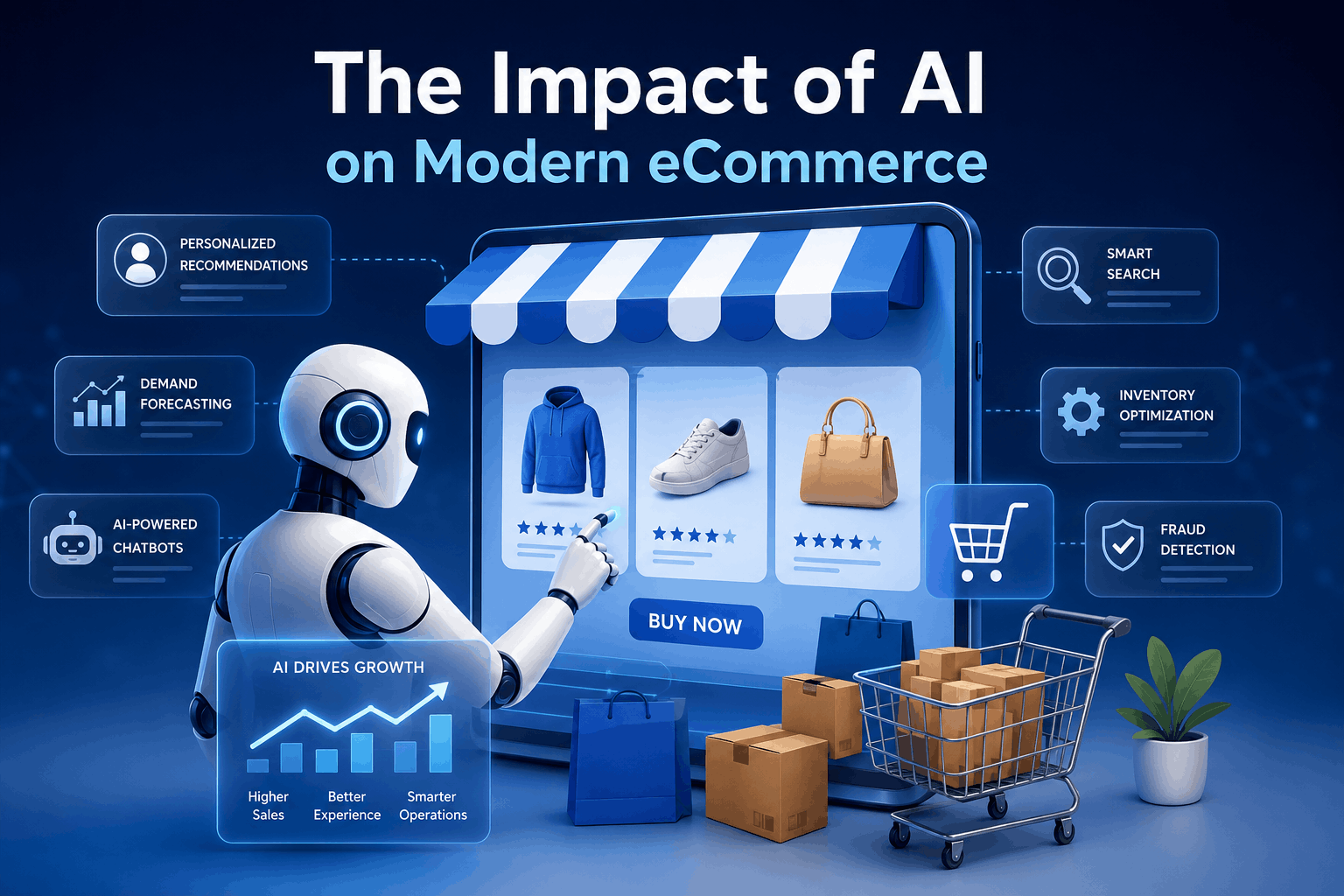
The Impact of AI on Modern eCommerce
Artificial Intelligence (AI) has transformed from a futuristic concept into a practical business tool that is reshaping industries around the world. Among the sectors experiencing the most significant changes is eCommerce. From personalized shopping experiences to intelligent inventory management, AI is helping online businesses operate more efficiently while delivering greater value to customers. As consumer expectations continue to rise, AI has become an important factor in maintaining competitiveness in the digital marketplace.
The rapid growth of online shopping has created both opportunities and challenges for retailers. Customers now expect faster service, relevant product recommendations, seamless support, and highly personalized experiences. Meeting these demands manually can be difficult, especially for businesses managing large product catalogs and growing customer bases. AI provides solutions that automate processes, improve decision-making, and enhance customer engagement across multiple touchpoints.
Today, businesses of all sizes are adopting AI-powered technologies to optimize operations and improve sales performance. Whether it is a startup launching its first online store or a global retailer managing millions of transactions, AI is becoming an essential component of modern eCommerce strategies. Businesses investing in eCommerce development services are increasingly integrating AI to deliver smarter customer experiences and scalable digital solutions.
Understanding AI in eCommerce
Artificial Intelligence refers to computer systems that can perform tasks typically requiring human intelligence. These tasks include learning from data, recognizing patterns, making predictions, understanding language, and solving problems. In eCommerce, AI uses large amounts of customer and operational data to generate insights and automate processes that would otherwise require significant human effort.
The adoption of AI in online retail has increased dramatically due to advances in machine learning, natural language processing, and predictive analytics. These technologies allow businesses to understand customer behavior more accurately and respond to market changes more quickly. Instead of relying solely on historical reports, companies can now make real-time decisions supported by AI-driven insights.
One of the most valuable aspects of AI is its ability to continuously learn and improve. As more data becomes available, AI systems become better at identifying trends and predicting outcomes. This enables online retailers to improve marketing strategies, optimize inventory, and create more personalized shopping experiences over time.
AI is no longer limited to large enterprises with substantial technology budgets. Cloud-based AI solutions have made advanced tools accessible to small and medium-sized businesses as well. Organizations can also benefit from modern AI frameworks and cloud services provided by Google Cloud AI.
How AI is Transforming Customer Experience
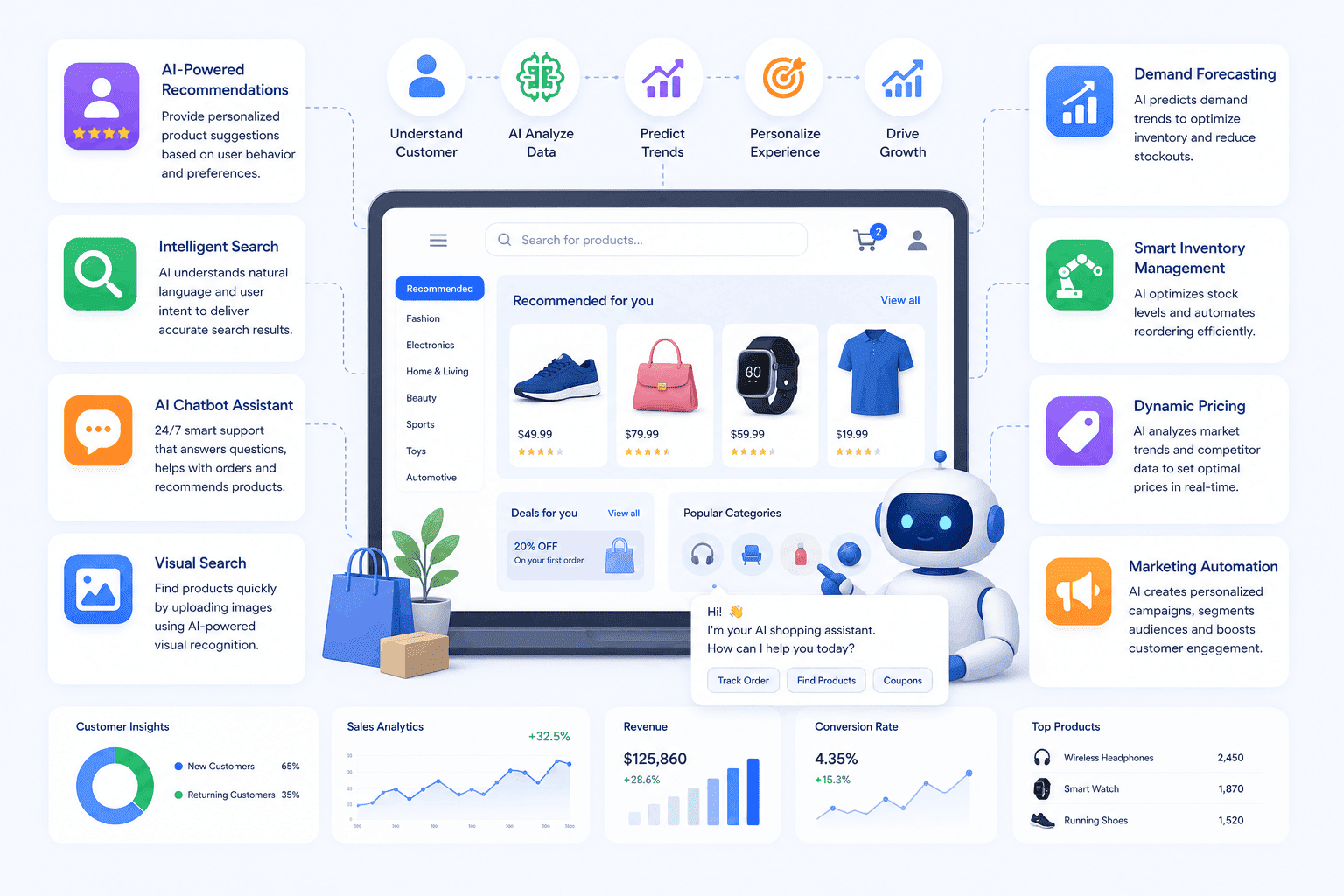
Customer experience has become one of the most important factors influencing online purchasing decisions. AI helps businesses understand customer preferences, shopping habits, and buying patterns, allowing them to create highly personalized interactions that improve satisfaction and loyalty.
Personalized product recommendations are among the most visible examples of AI in eCommerce. By analyzing browsing history, previous purchases, and customer behavior, AI can suggest products that are more likely to interest individual shoppers. This not only improves the customer experience but also increases average order value and conversion rates.
AI-powered chatbots and virtual assistants have also transformed customer support. These systems can answer common questions, guide customers through the purchasing process, and provide assistance around the clock. Customers receive immediate responses without waiting for human representatives, improving overall service quality and convenience.
Another significant advantage is the ability to deliver personalized content and marketing messages. AI analyzes customer data to determine which products, promotions, or recommendations are most relevant to each individual. This level of personalization creates stronger customer relationships and encourages repeat purchases.
AI-Powered Product Recommendations and Personalization
Personalization has become a key competitive advantage in modern eCommerce. Customers are more likely to engage with brands that understand their preferences and provide relevant shopping experiences. AI makes this possible by analyzing vast amounts of customer data in real time.
When a customer visits an online store, AI systems evaluate browsing behavior, purchase history, location, interests, and other data points. Based on this information, personalized recommendations are displayed throughout the shopping journey. These suggestions help customers discover products they may not have found otherwise.
Major eCommerce companies have demonstrated the effectiveness of AI-driven recommendations. Similar recommendation technologies are now accessible through solutions such as OpenAI, enabling businesses to build intelligent shopping experiences.
Beyond product recommendations, AI also personalizes website layouts, promotional offers, email campaigns, and search results. Customers receive experiences tailored specifically to their needs, resulting in higher engagement, increased trust, and improved conversion rates.

The Role of AI in Inventory Management
Managing inventory effectively is essential for maintaining profitability and customer satisfaction. Overstocking increases storage costs, while understocking can lead to missed sales opportunities and disappointed customers. AI helps businesses achieve a better balance through intelligent forecasting and inventory optimization.
AI-Powered Inventory Forecasting
- Analyze sales data for demand patterns.
- Use seasonal trends for accurate predictions.
- Evaluate market conditions to improve forecasting.
- Reduce excess stock and minimize waste.
Real-time inventory monitoring is another valuable application of AI. Businesses can track stock levels continuously and receive alerts when replenishment is needed. This reduces the risk of stockouts and ensures that popular products remain available to customers.
AI also supports supply chain management by identifying potential disruptions and recommending alternative solutions. Retailers can respond more quickly to changes in demand, shipping delays, or supplier issues, minimizing operational challenges and maintaining smooth business performance.
AI and Smarter Marketing Strategies
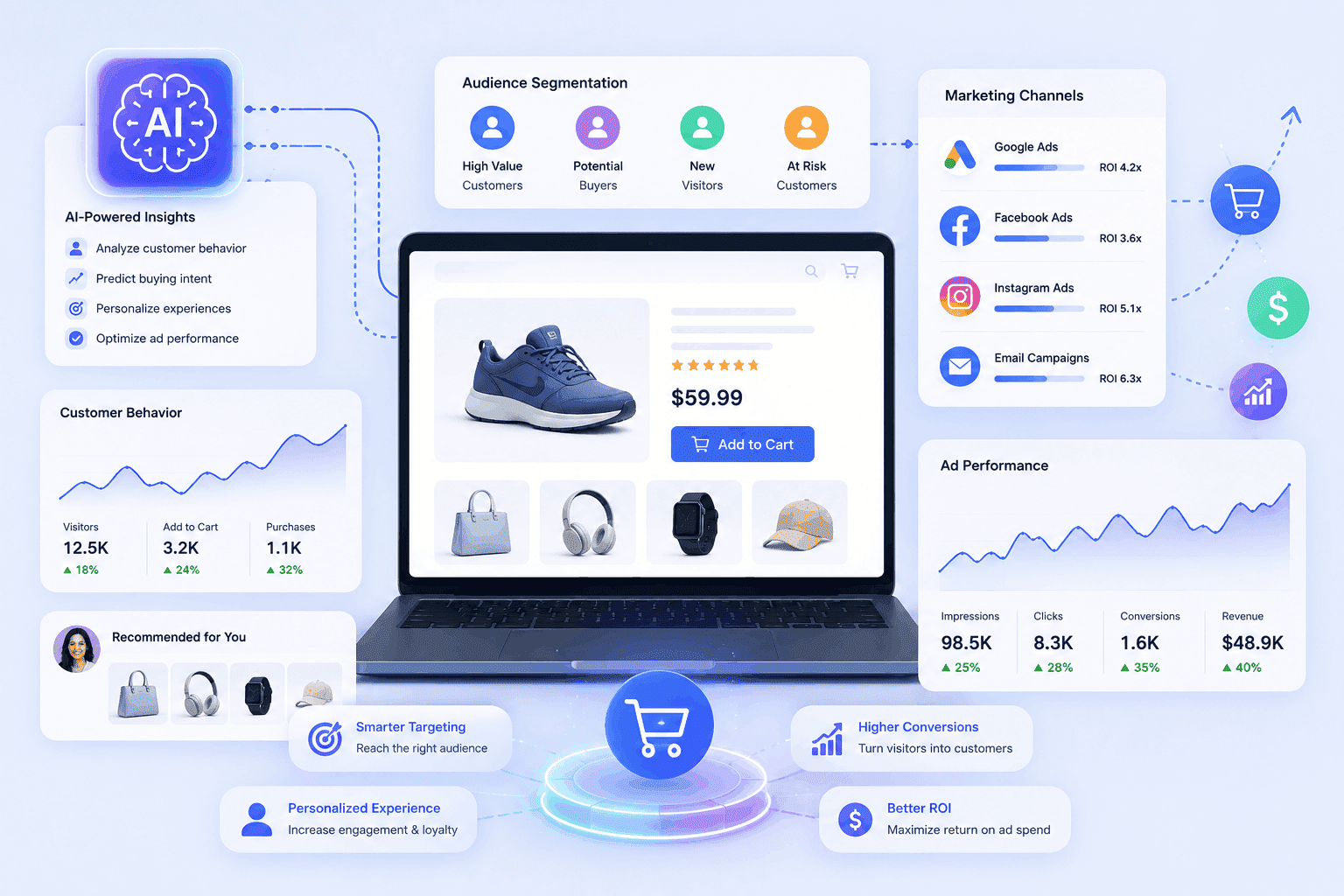
Marketing success depends on reaching the right audience with the right message at the right time. AI helps businesses improve marketing performance by analyzing customer behavior and identifying opportunities for more effective targeting.
AI-powered marketing platforms can segment customers based on demographics, purchasing patterns, interests, and engagement history. This allows businesses to create highly targeted campaigns that resonate with specific customer groups rather than using a one-size-fits-all approach.
Predictive analytics enables marketers to anticipate customer needs before they arise. AI can identify customers who are likely to make a purchase soon or those at risk of abandoning a shopping cart. Businesses can then deliver personalized offers that encourage action.
Email marketing has also benefited significantly from AI technology. AI can determine the best time to send messages, recommend personalized content, and optimize subject lines to improve open and click-through rates.
Benefits of AI in Modern eCommerce
AI is transforming eCommerce by helping businesses operate more efficiently and deliver highly personalized customer experiences. From automation to predictive analytics, AI enables smarter decision-making and improves overall performance across multiple areas of online retail.
- Enhanced customer personalization and shopping experiences.
- Improved inventory forecasting and stock management.
- Faster customer support through AI-powered chatbots.
- Better marketing targeting and campaign optimization.
Key Factors to Consider When Implementing AI
While AI offers substantial benefits, successful implementation requires careful planning and execution. Businesses should focus on several important factors before investing in AI-powered solutions.
Focus on High-Quality Data
AI systems rely on accurate and relevant data to generate reliable insights. Poor-quality data can lead to incorrect predictions and ineffective decision-making.
Define Clear Business Goals
Businesses should identify measurable objectives before implementing AI technologies, whether the goal is improving customer service, increasing conversions, or optimizing inventory.
Ensure Seamless Integration
AI solutions should integrate smoothly with existing eCommerce platforms, CRM systems, and business applications to maximize efficiency.
Train Employees
Employees should understand how AI tools function and how to apply AI-driven insights effectively within business operations.
Common Mistakes Businesses Make with AI
Many businesses are eager to adopt AI but sometimes make mistakes that limit its effectiveness. Implementing AI without a clear strategy, relying too heavily on automation, neglecting data quality, and failing to optimize AI systems over time are among the most common challenges organizations face.
AI-Powered Fraud Detection and Security
Security remains a major concern in online commerce. AI analyzes transaction data in real time to detect suspicious activity and prevent fraudulent transactions before they impact customers or businesses.
Machine learning algorithms continue improving as they process new information, helping retailers identify emerging fraud patterns while reducing false transaction declines.
The Future of AI in eCommerce
The future of eCommerce will be increasingly shaped by AI innovation, driving smarter, faster, and more personalized shopping experiences. As technology evolves, businesses will gain access to advanced tools that improve efficiency, customer engagement, and decision-making.
Emerging AI Trends in eCommerce
- Growth of voice commerce through smart assistants.
- Expansion of AI-powered visual search technology.
- Use of generative AI for product content and marketing.
- Automated customer support and personalized recommendations.
Conclusion
Artificial Intelligence has become one of the most influential technologies shaping modern eCommerce. From personalized recommendations and intelligent marketing to inventory optimization and fraud prevention, AI enables businesses to operate more efficiently while delivering superior customer experiences.
As technology continues to evolve, businesses that strategically adopt AI will be better positioned to improve performance, strengthen customer relationships, and achieve long-term growth in the competitive digital marketplace.