+91 9898181101
 +1 (647) 971-4687
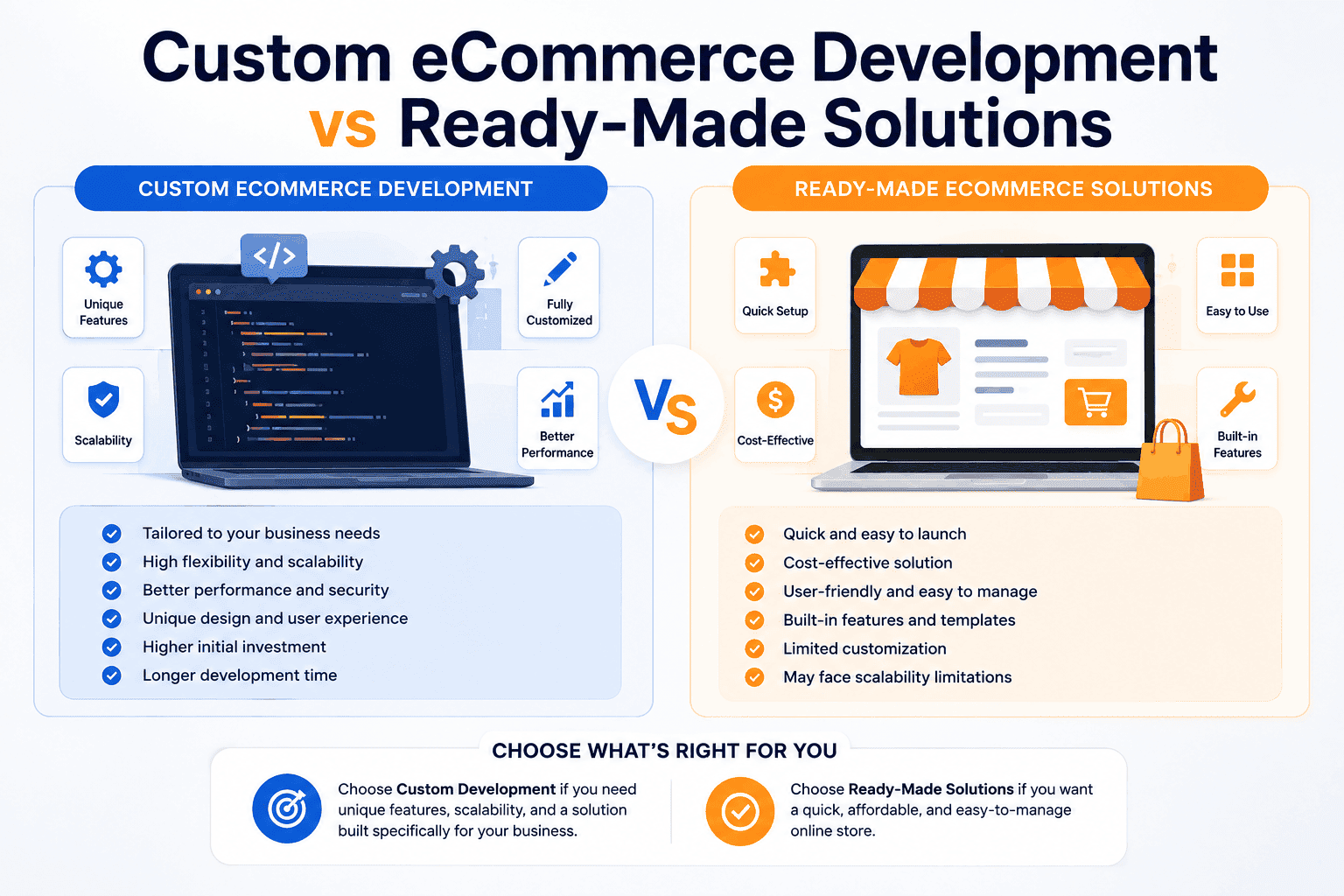
Custom eCommerce Development vs Readymade Solutions
The eCommerce industry continues to grow rapidly as businesses of all sizes move online to reach wider audiences and increase revenue opportunities. Whether launching a new online store or upgrading an existing one, one of the most important decisions business owners face is choosing between custom eCommerce development and ready-made solutions. This decision can significantly impact performance, customer experience, scalability, and long-term profitability.
Many entrepreneurs are attracted to ready-made platforms because they offer a quick and affordable way to start selling online. At the same time, larger businesses and brands with specific requirements often invest in custom eCommerce development to create unique shopping experiences and gain greater control over their operations. Both approaches have advantages and limitations that should be carefully considered before making an investment.
Understanding the differences between these options helps business owners align technology decisions with their growth objectives. Businesses looking for tailored online solutions can benefit from custom eCommerce development services that are built around their unique operational requirements. This article explores custom eCommerce development versus ready-made solutions, highlighting their strengths, challenges, costs, and long-term business impact.
Understanding Custom eCommerce Development
Custom eCommerce development refers to building an online store specifically designed around a company’s unique requirements. Instead of relying on pre-built templates and standard features, developers create customized functionality, design elements, and integrations that support specific business goals. Every component is developed with the business model, customer journey, and operational processes in mind.
One major advantage of custom development is flexibility. Businesses can create features that are not available in standard platforms and can modify every aspect of the website to match their branding and customer expectations. This level of customization helps companies stand out in competitive markets where differentiation plays a major role in attracting and retaining customers.
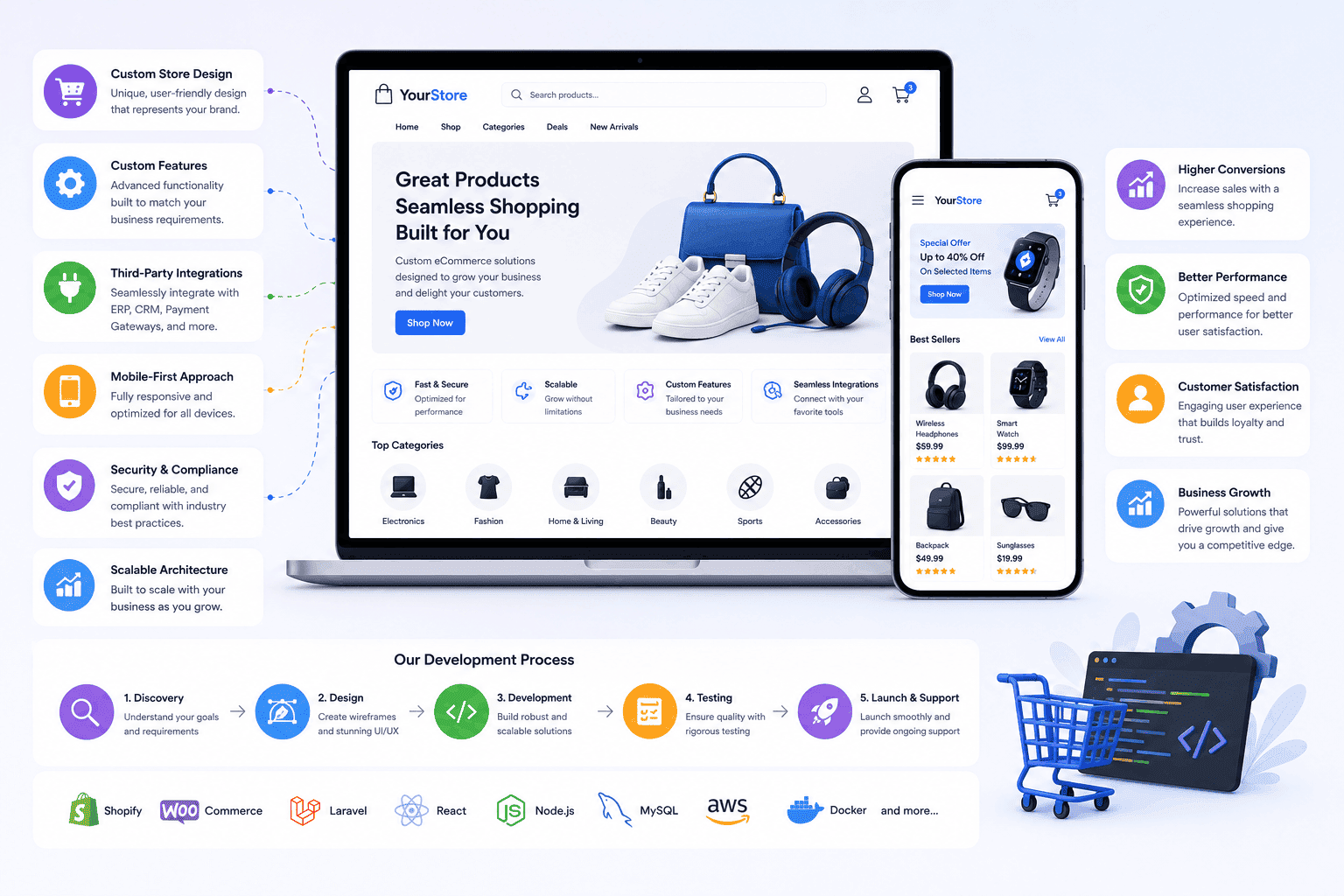
Custom solutions are particularly useful for organizations with complex product catalogs, specialized workflows, or unique customer requirements. Manufacturers selling customized products often require advanced pricing engines, product configurators, and inventory management systems that are difficult to achieve with standard platforms.
Although custom development requires a larger initial investment, many businesses consider it a long-term strategic asset. The ability to scale, adapt, and innovate without platform limitations often creates substantial business value over time.
Understanding Ready-Made eCommerce Solutions
Ready-made eCommerce solutions are pre-built platforms designed to help businesses launch online stores quickly. These platforms typically include templates, payment gateways, product management tools, and marketing features that can be configured without extensive technical expertise.
The primary appeal of ready-made solutions is convenience. Business owners can establish an online presence within days rather than months. Most platforms provide user-friendly interfaces, making it easier for non-technical users to manage products, process orders, and update website content.
Ready-made platforms are especially attractive for startups and small businesses with limited budgets. Since the infrastructure, hosting, maintenance, and software updates are managed by the provider, businesses can focus on marketing and sales activities instead of technical maintenance.
However, these solutions may present limitations as businesses grow. Advanced customization often requires premium extensions, and some business-specific features may not be available at all.
Core Differences Between Custom and Ready-Made Solutions
The distinction between custom and ready-made eCommerce platforms extends beyond visual design. These differences influence operational efficiency, customer experience, scalability, and long-term return on investment.
- Development approach and flexibility
- Initial and ongoing costs
- Scalability capabilities
- Security and compliance control
- Integration possibilities
- Performance optimization
- Ownership and customization freedom
Evaluating these areas helps organizations select the platform that aligns best with both current business needs and future expansion plans.
Cost Comparison and Budget Considerations
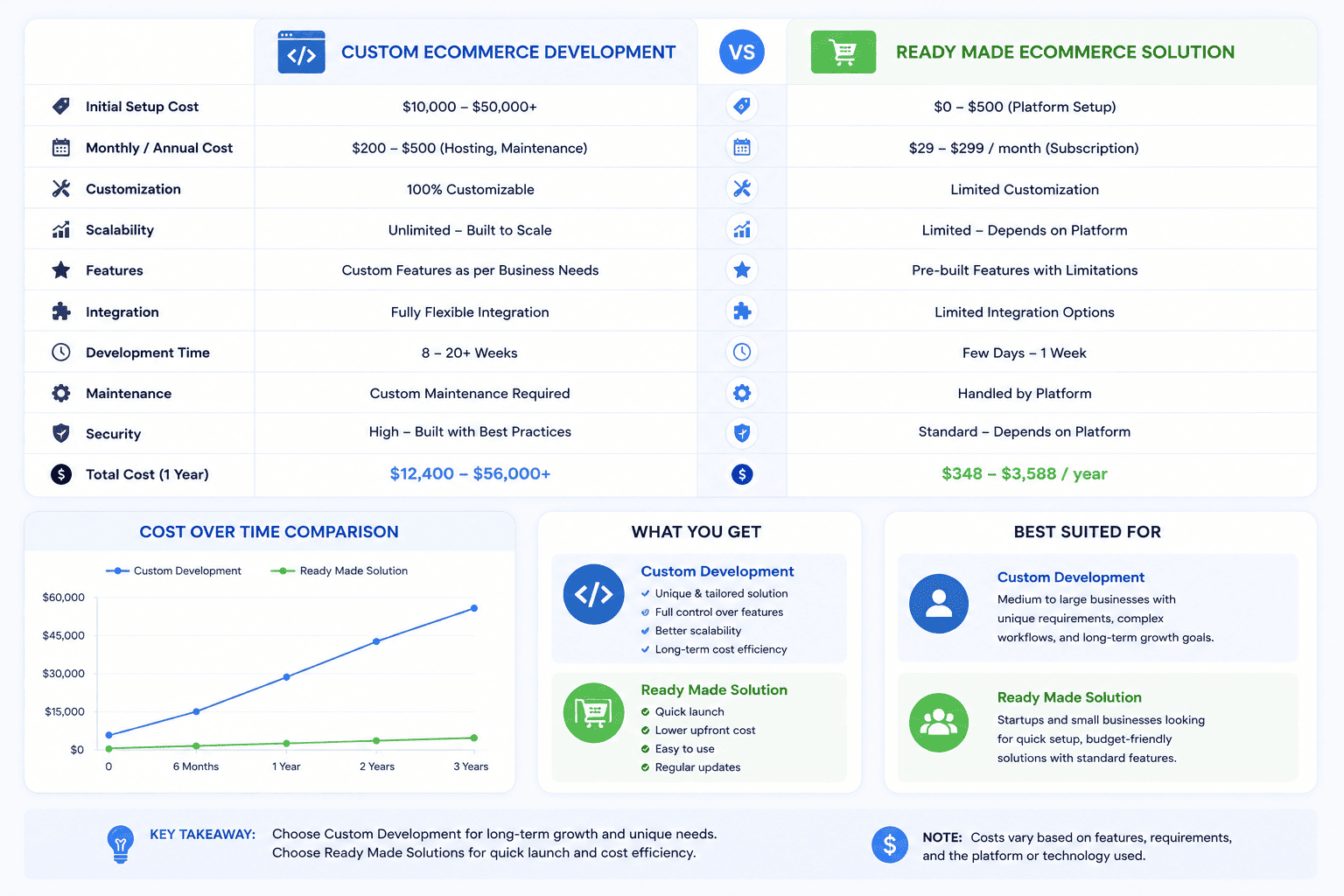
Cost is one of the first factors businesses evaluate when selecting an eCommerce platform. Ready-made solutions generally require lower upfront investments because businesses can utilize existing templates, built-in features, and subscription plans.
Custom development involves higher initial costs due to planning, UI/UX design, programming, testing, and deployment. Businesses are investing in a solution built specifically for their operations rather than adapting to predefined software.
However, focusing only on initial expenses can be misleading. Ready-made platforms often involve recurring subscription fees, premium plugins, transaction charges, and third-party integrations that can increase operational costs over time.
Businesses can also review best practices published by Google’s Helpful Content Guidelines to understand how user-focused websites contribute to long-term digital success.
Customization and Brand Identity
Brand differentiation has become increasingly important in today’s competitive online marketplace. Customers expect shopping experiences that reflect a company’s personality, products, and values.
Custom eCommerce development offers complete control over website design, navigation, checkout experiences, customer journeys, and product presentation. Every feature can be tailored to strengthen brand identity and improve customer engagement.
Ready-made solutions provide themes and design settings that allow some personalization, but businesses remain constrained by the platform’s existing architecture. As a result, many websites built on the same platform often appear similar.
Scalability and Future Growth
As businesses expand, they often experience higher traffic volumes, larger product catalogs, increasing customer data, and more sophisticated operational requirements.
Custom platforms are typically designed with scalability in mind, allowing developers to introduce new functionality, improve infrastructure, and support business expansion without significant limitations.
Ready-made solutions perform well during early growth stages but may eventually present restrictions related to customization, integrations, performance, or product management capabilities.
Performance and User Experience
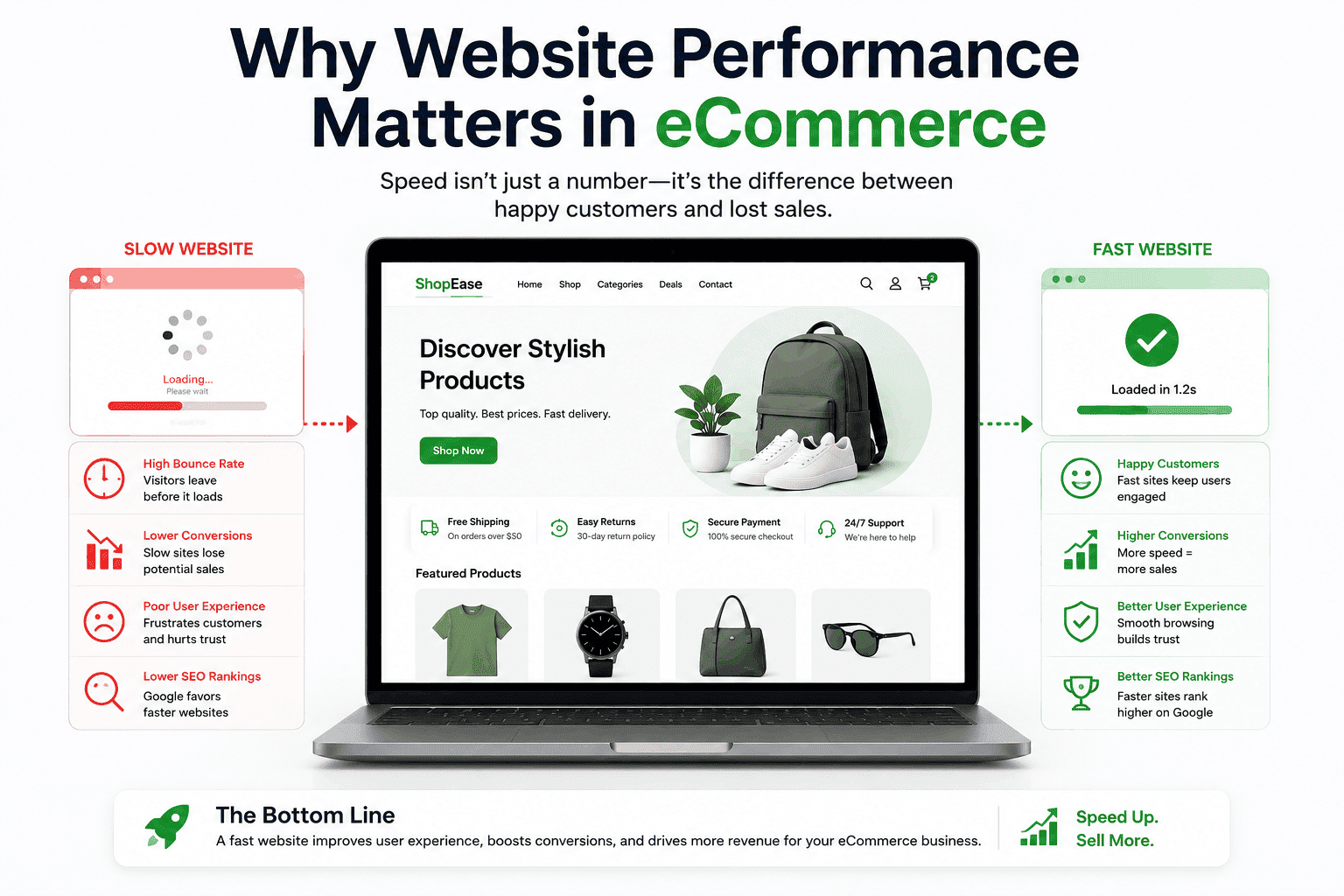
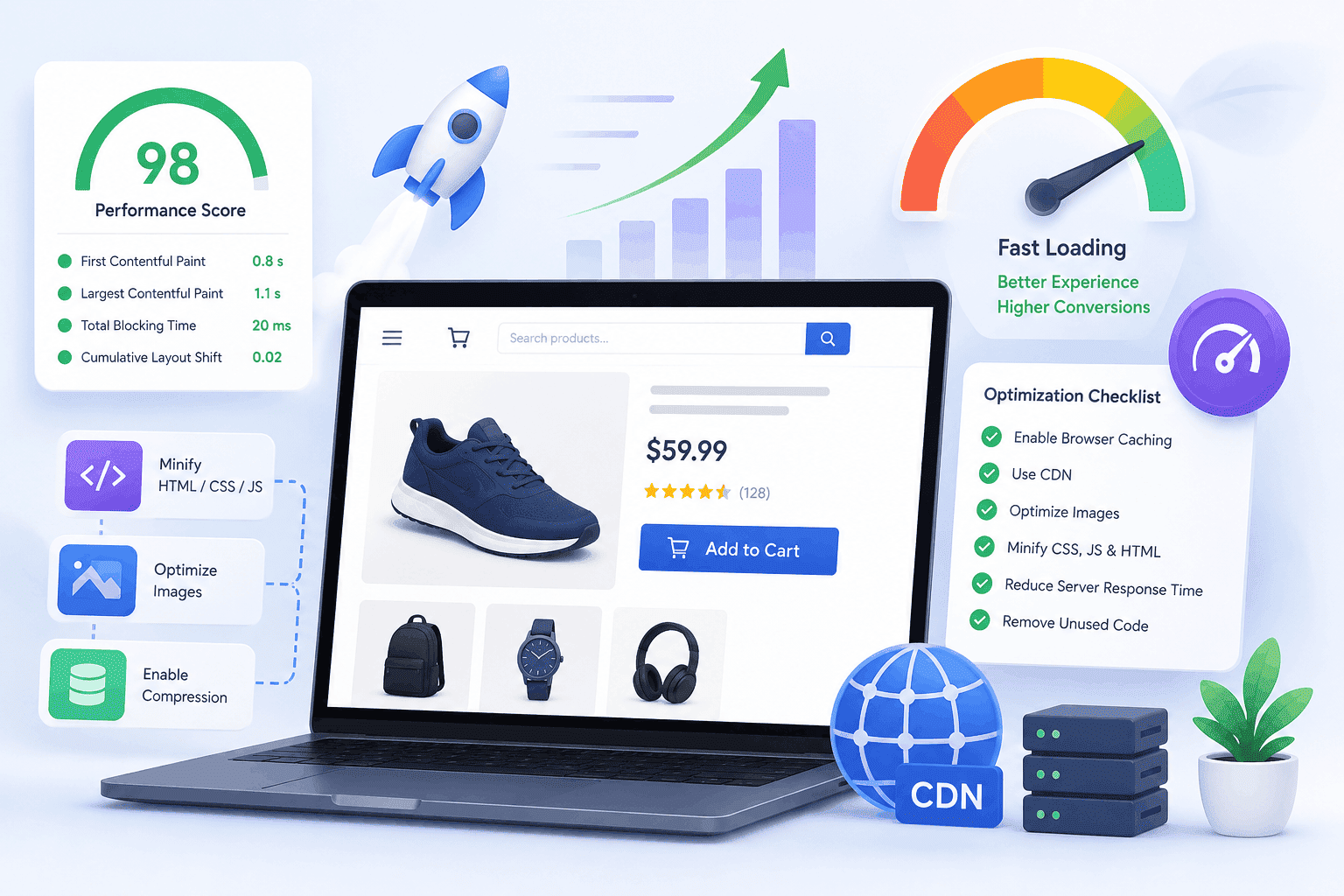
Website speed directly influences customer satisfaction, conversion rates, and search engine visibility. Slow-loading websites frequently result in abandoned shopping carts and reduced revenue.
Custom-built eCommerce platforms can be optimized specifically for business operations. Developers eliminate unnecessary code, optimize database queries, and improve page performance to deliver faster browsing experiences.
Ready-made platforms often include features designed for a wide audience. While convenient, unused functionality and additional plugins can negatively impact website speed and responsiveness.
Security and Data Protection
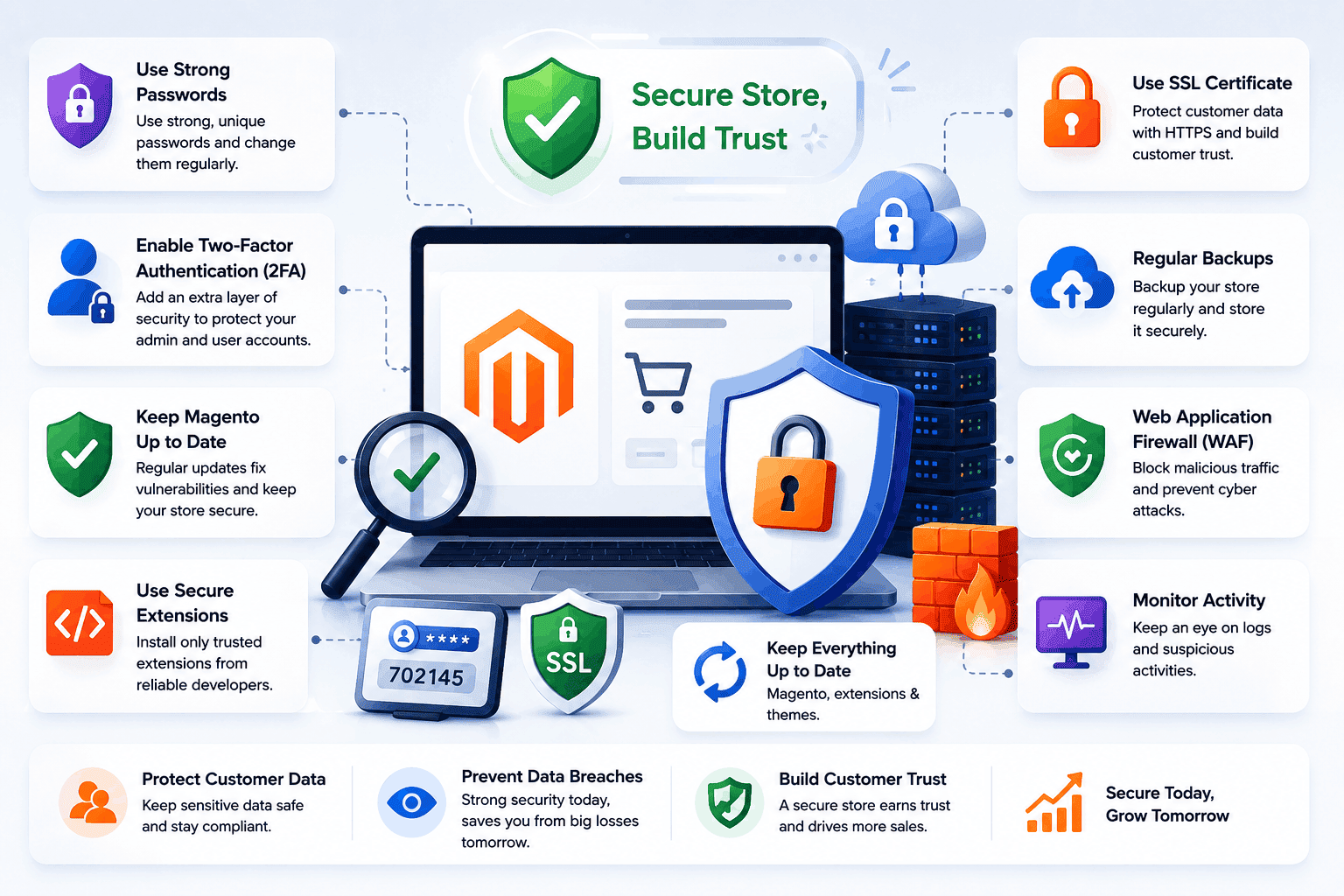
Security is essential for every eCommerce business handling customer information and online payments. A strong security strategy protects customer trust and minimizes financial and reputational risks.
Custom development enables organizations to implement security measures tailored to their compliance requirements, operational risks, and business policies. Businesses maintain greater control over authentication, access management, and data protection.
Ready-made platforms include built-in security updates and maintenance, making them attractive for businesses without dedicated technical teams. However, their widespread popularity can make them common targets for cyberattacks affecting multiple websites simultaneously.
Integration with Business Systems
Modern organizations rely on accounting software, inventory systems, CRM platforms, marketing automation tools, and logistics applications to streamline daily operations.
Custom eCommerce development supports advanced API integrations, enabling businesses to automate workflows and synchronize information across multiple departments.
Ready-made platforms generally provide integrations through plugins and extensions. While suitable for many organizations, specialized software may require custom workarounds or may not be supported.
Businesses can also follow recommendations from the NIST Cybersecurity Framework to strengthen online security and data protection practices.
Comparison Table
| Factor | Custom eCommerce Development | Ready-Made Solutions |
|---|---|---|
| Customization | Built specifically to match unique business requirements, workflows, and branding needs. | Limited to platform features, templates, and built-in customization options. |
| Development Time | Requires more planning, development, testing, and deployment time. | Can be launched quickly using existing themes and functionality. |
| Initial Cost | Higher upfront investment. | Lower startup cost. |
| Scalability | Highly scalable for future business growth. | Dependent on platform limitations and available upgrades. |
| Flexibility & Integrations | Supports custom APIs, workflows, and third-party integrations. | Limited to available plugins and extensions. |
| Maintenance & Support | Requires dedicated maintenance and technical support. | Updates and maintenance are managed by the platform provider. |
Real-World Business Scenarios
Startup Businesses
Small businesses selling a limited number of products often benefit from ready-made platforms because they offer affordable pricing and rapid deployment.
Growing Retailers
Retailers managing multiple warehouses, extensive product catalogs, and complex inventory systems generally gain greater efficiency through custom-built eCommerce platforms.
Luxury Brands
Luxury brands frequently invest in custom development to deliver exclusive shopping experiences, personalized customer journeys, and premium digital experiences that strengthen brand perception.
B2B Organizations
B2B businesses often require account-based pricing, approval workflows, quotation systems, and customer-specific catalogs that are more effectively implemented through custom development.
The Future of eCommerce Platforms
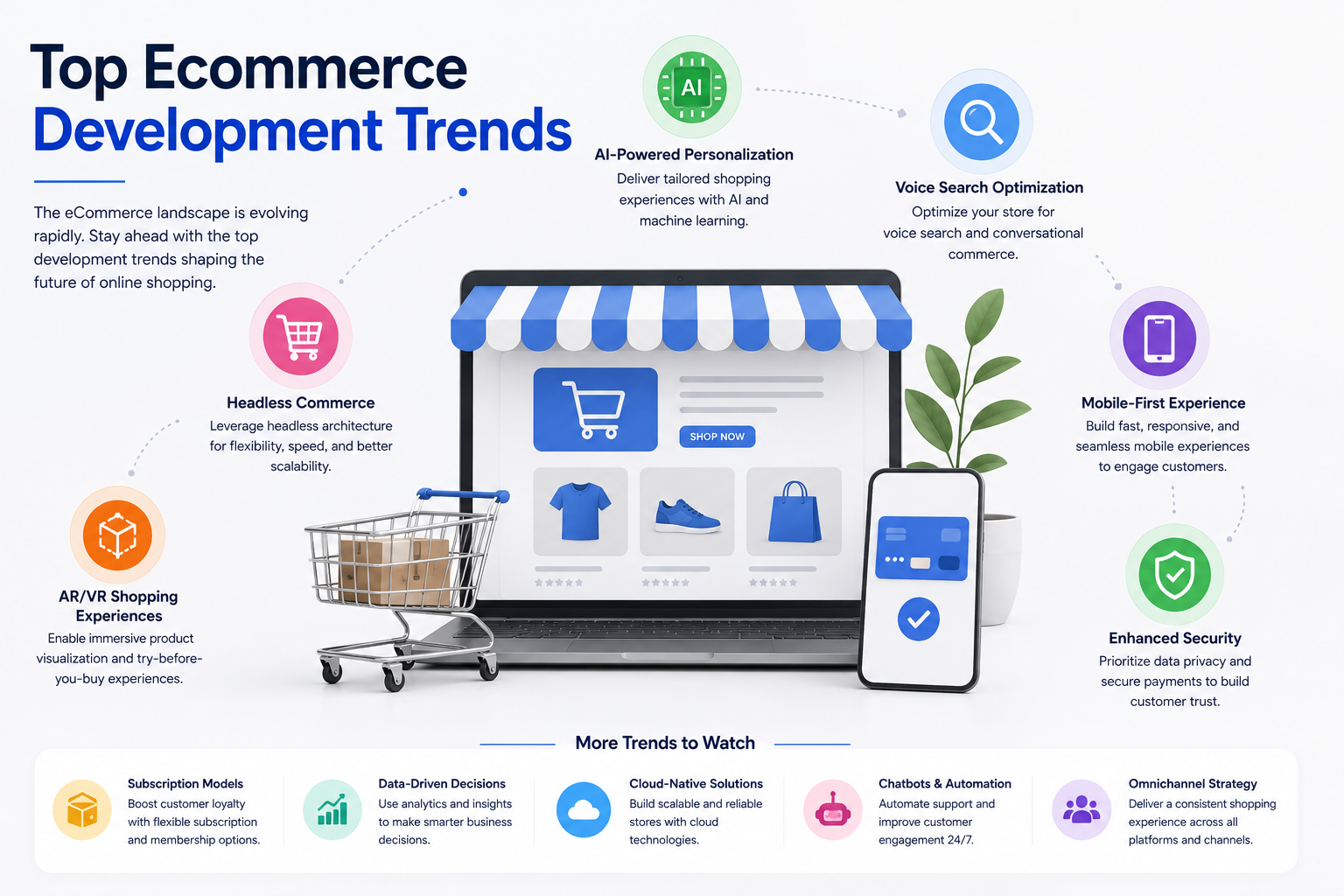
Future eCommerce growth will be driven by artificial intelligence, automation, personalized shopping experiences, and omnichannel commerce. Businesses will increasingly require flexible technology platforms capable of adapting to changing customer expectations.
Custom development will continue gaining popularity among organizations seeking competitive advantages through innovation, while ready-made platforms will evolve to offer more advanced features and improved customization capabilities.
Organizations that align platform selection with long-term business strategy rather than short-term convenience will be better positioned for sustainable growth.
Conclusion
Both custom eCommerce development and ready-made solutions provide valuable benefits depending on business size, budget, operational complexity, and long-term objectives. Ready-made platforms offer affordability, simplicity, and rapid deployment, making them ideal for startups and smaller businesses.
Custom eCommerce development delivers greater flexibility, scalability, stronger branding opportunities, advanced integrations, and long-term business value for organizations with unique operational requirements and ambitious growth plans.
By carefully evaluating customization needs, scalability goals, integration requirements, security expectations, and customer experience priorities, businesses can confidently choose the eCommerce platform that best supports sustainable growth and long-term success.