+91 9898181101
 +1 (647) 971-4687
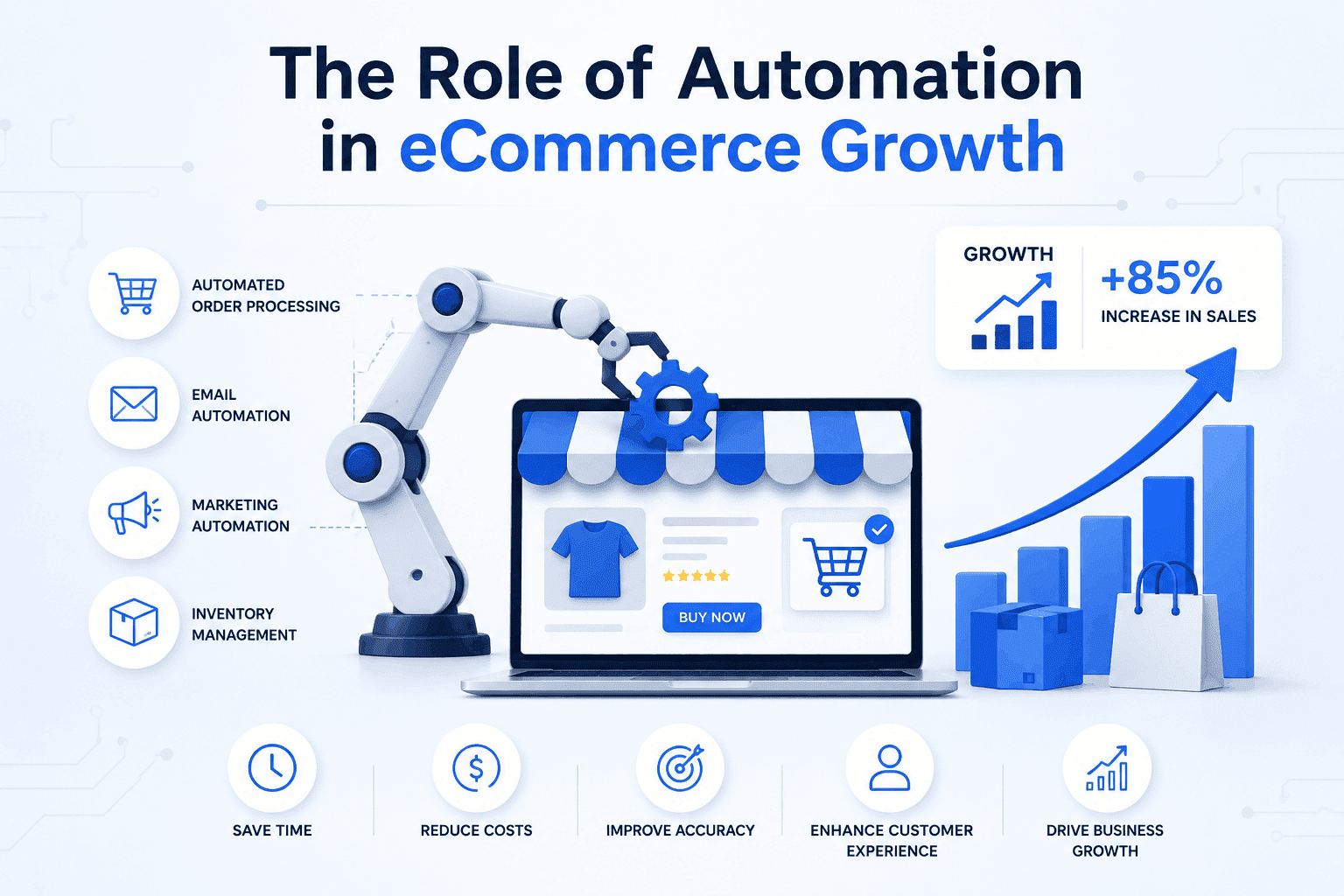
The Role of Automation in eCommerce Growth
The eCommerce industry has evolved rapidly over the last decade. Online businesses today face increasing customer expectations, intense competition, and the constant need to deliver faster and better experiences. Customers want quick responses, personalized recommendations, seamless shopping journeys, and timely deliveries. Meeting these demands manually can become difficult as a business grows.
This is where automation plays a crucial role. Automation allows eCommerce businesses to perform repetitive tasks using technology, reducing the need for constant manual intervention. From managing inventory and processing orders to handling customer communication and marketing campaigns, automation helps businesses operate more efficiently while maintaining high service standards.
As online stores continue to scale, automation is no longer a luxury but a necessity for sustainable growth. Companies that effectively implement automation can save time, reduce errors, improve customer satisfaction, and focus more on strategic business expansion. Businesses investing in professional eCommerce development services are better positioned to integrate automation into their operations and scale efficiently.
Understanding the role of automation is essential for any business owner looking to succeed in the competitive digital marketplace.
Understanding Automation in Modern eCommerce
Automation in eCommerce refers to the use of software, tools, and systems to perform business processes automatically. Instead of relying on employees to manually complete repetitive tasks, automation technology handles them according to predefined rules and workflows.
Many online stores use automation without realizing how deeply integrated it has become into daily operations. Automated order confirmations, abandoned cart reminders, inventory updates, and shipping notifications are all common examples that improve efficiency and customer experience simultaneously.
The primary goal of automation is not to replace human workers entirely. Instead, it helps employees focus on higher-value activities such as strategy, customer relationship building, product development, and business growth initiatives. This balance between technology and human expertise creates a more productive organization.
As businesses expand, the volume of transactions, customer inquiries, and operational responsibilities increases significantly. Automation provides the scalability required to manage growing workloads without proportionally increasing operational costs.
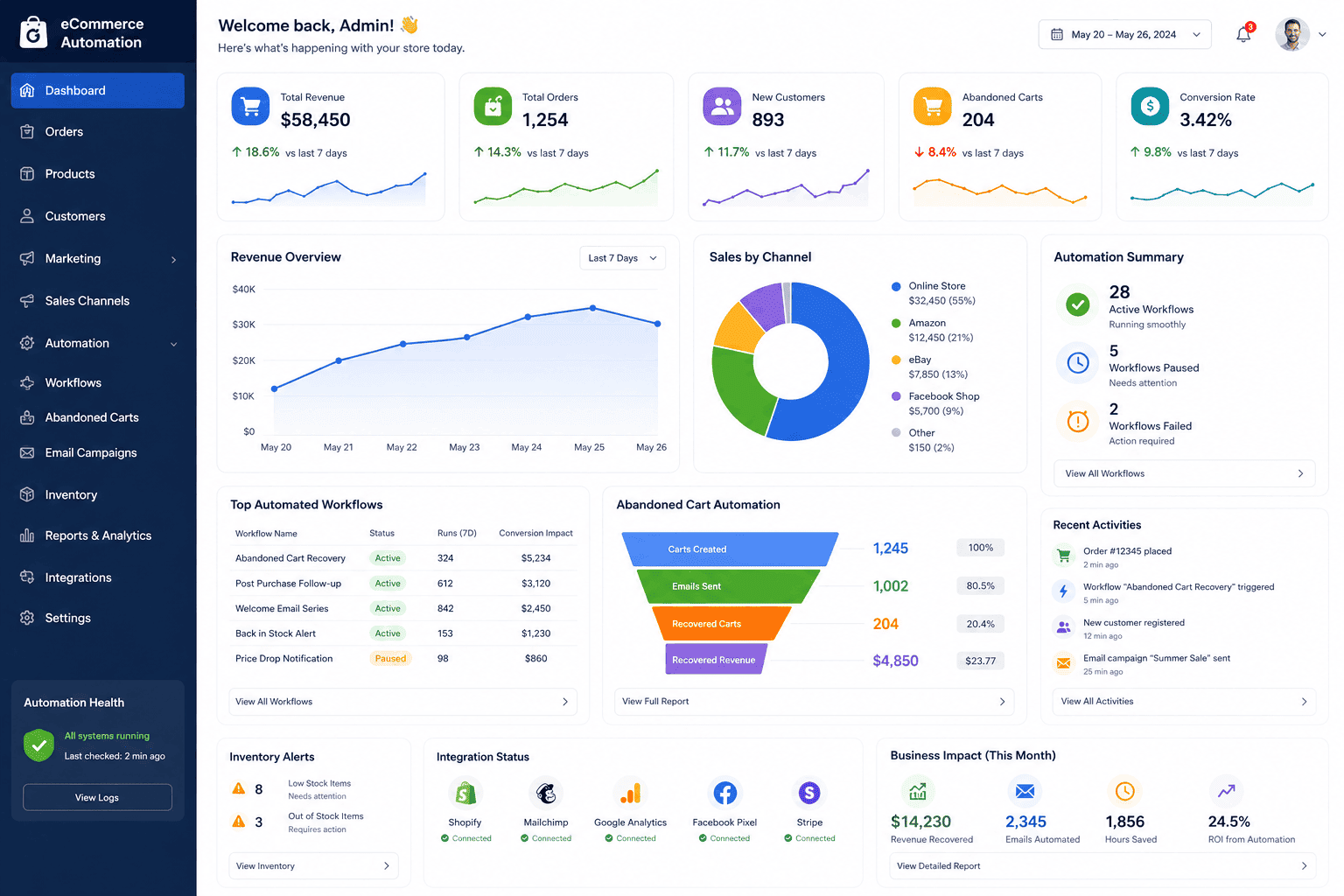
Why Automation Has Become Essential for Online Businesses
Consumer behavior has changed dramatically in recent years. Customers expect instant service and seamless experiences regardless of the time or location. Businesses that fail to meet these expectations often struggle to retain customers.
Automation helps companies maintain consistency in their operations. Whether processing ten orders or ten thousand orders, automated systems can maintain accuracy and speed. This consistency directly impacts customer satisfaction and business reputation.
The growing complexity of eCommerce ecosystems also contributes to the need for automation. Businesses now manage multiple sales channels, marketplaces, social media platforms, payment gateways, and shipping providers. Coordinating these activities manually can become overwhelming.
Furthermore, automation provides valuable business insights through data collection and reporting. Business owners can monitor performance, identify trends, and make informed decisions more effectively when data is automatically gathered and analyzed. Tools like Google Analytics help businesses measure customer behavior and optimize automated workflows.
How Automation Improves Operational Efficiency
Operational efficiency is one of the most significant benefits of automation. Repetitive tasks often consume valuable employee time that could be spent on more strategic activities. By automating these tasks, businesses can improve productivity across multiple departments.
Order processing is a perfect example. Automated systems can receive orders, verify payments, update inventory levels, generate invoices, and initiate shipping processes within seconds. This significantly reduces delays and human errors.
Inventory management also becomes more accurate with automation. Stock levels can be updated in real time, helping businesses avoid overselling products or missing sales opportunities due to stock shortages. Accurate inventory tracking improves customer trust and operational planning.
Another advantage is workflow consistency. Automated processes follow the same rules every time, reducing mistakes that often occur when tasks are performed manually under pressure or during high-volume sales periods.
Enhancing Customer Experience Through Automation
Customer experience has become one of the most important competitive advantages in eCommerce. Automation helps businesses deliver faster, more personalized, and more reliable interactions throughout the customer journey.
Automated communication keeps customers informed at every stage of their purchase. Order confirmations, shipping updates, delivery notifications, and follow-up messages provide transparency and reduce customer anxiety.
Personalization has also become more effective through automation. Modern systems analyze customer behavior, browsing history, and purchasing patterns to deliver relevant product recommendations and targeted offers. Businesses often leverage platforms like HubSpot to automate personalized customer engagement and marketing campaigns.
Major Customer Experience Improvements
- Personalized product recommendations
- Automated order updates
- Faster customer support responses
- Customized email marketing campaigns
- Loyalty program management
These automated interactions create a smoother shopping experience while helping businesses build stronger customer relationships.
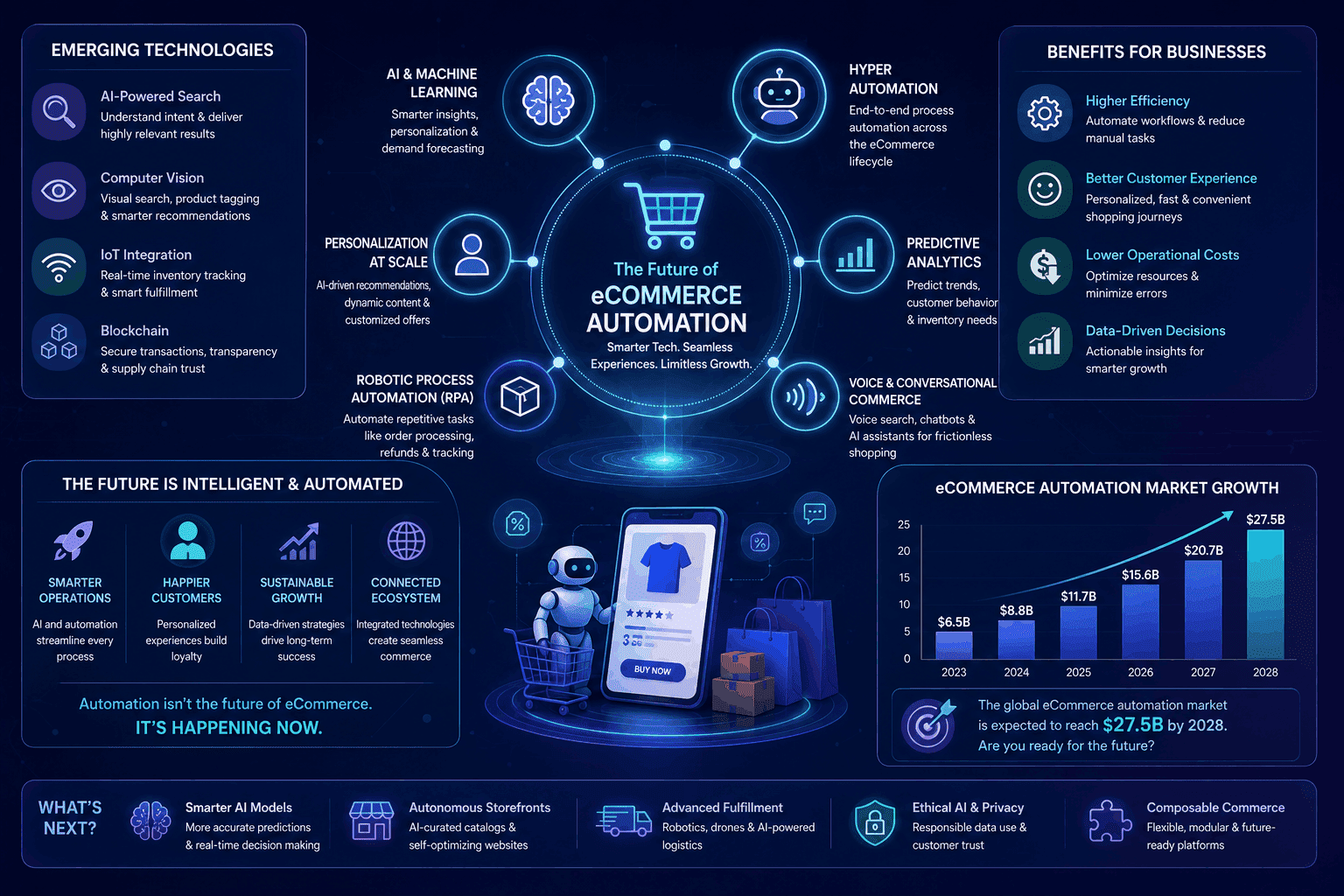
The Future of Automation in eCommerce
The future of eCommerce automation is closely connected to advances in artificial intelligence, machine learning, and predictive analytics. These technologies are making automation more intelligent and capable of handling increasingly complex tasks.
AI-powered recommendation engines are becoming more sophisticated, providing highly personalized shopping experiences based on customer preferences and behavior patterns. This level of personalization helps businesses increase conversions and customer loyalty.
Predictive analytics is also transforming inventory and demand forecasting. Businesses can anticipate customer demand more accurately, reducing waste and improving product availability.
Emerging Automation Trends
- AI-driven customer support
- Predictive inventory management
- Dynamic pricing automation
- Advanced personalization engines
- Automated fraud detection
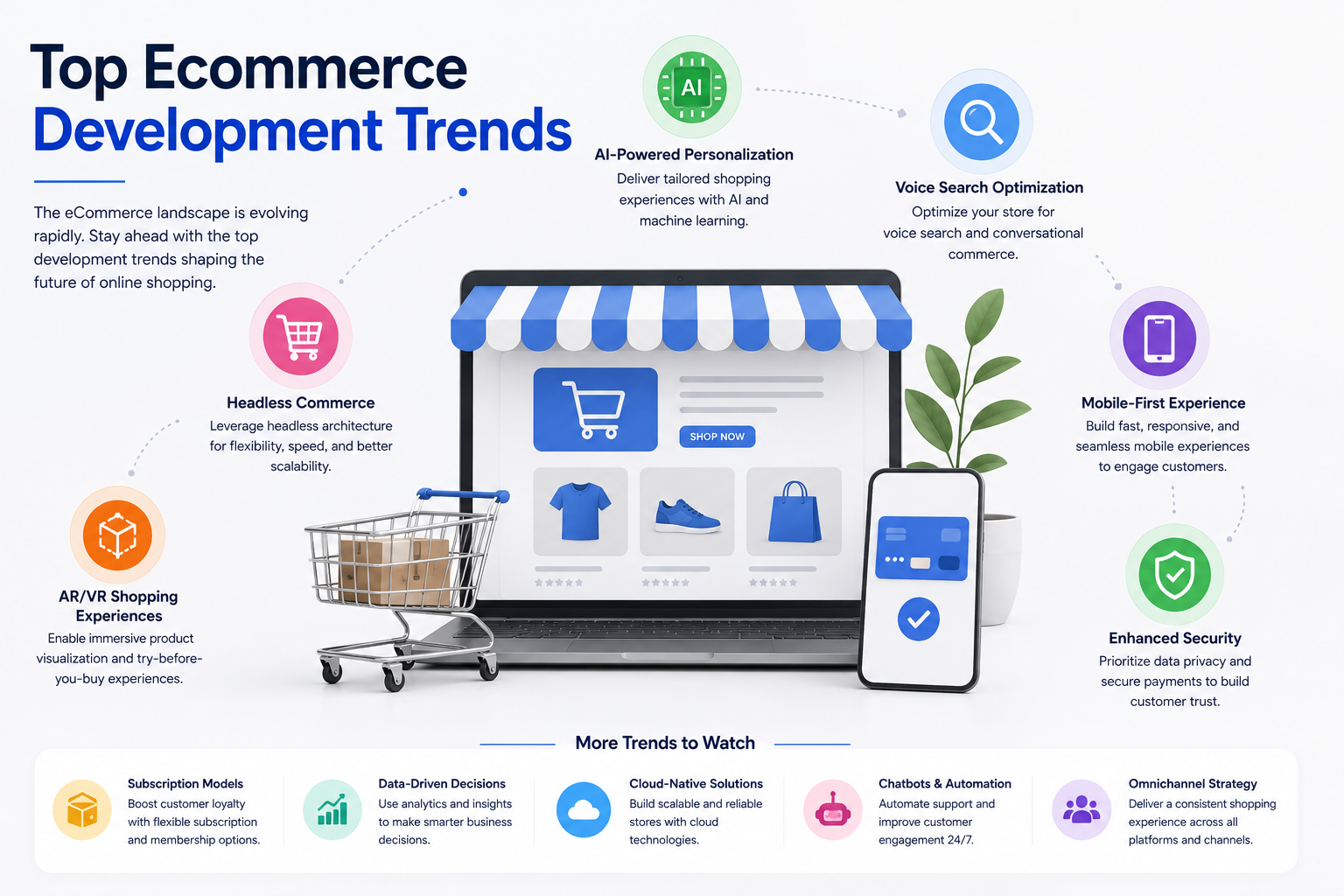
- Voice commerce integration
As these technologies continue to evolve, automation will become an even more important driver of eCommerce success.
Building a Balanced Automation Strategy
Successful businesses understand that automation should complement human expertise rather than replace it completely. The most effective approach combines technological efficiency with human creativity, empathy, and strategic thinking.
Customer service remains a strong example of this balance. Automated systems can handle routine inquiries, while human representatives focus on complex concerns that require deeper understanding and personalized attention.
Similarly, marketing automation can streamline campaign execution, but human marketers are still needed to develop creative strategies, understand market trends, and build authentic brand messaging.
A balanced automation strategy ensures businesses gain efficiency benefits while maintaining meaningful customer relationships and preserving the human touch that customers often value.
Measuring the Success of Automation Efforts
To maximize the benefits of automation, businesses must track performance regularly. Measuring results helps identify areas for improvement and ensures automation investments generate meaningful returns.
Important Metrics to Monitor
- Operational efficiency
- Order processing speed
- Customer satisfaction scores
- Conversion rates
- Customer retention
- Revenue growth
Businesses should also collect customer feedback regarding automated interactions. Understanding customer perceptions can help refine workflows and improve overall user experiences.
Continuous optimization is essential because customer expectations, market conditions, and technologies continue to evolve. Companies that regularly evaluate and adjust their automation strategies remain better positioned for long-term growth.
Conclusion
Automation has become one of the most powerful tools driving modern eCommerce growth. By improving efficiency, enhancing customer experiences, supporting marketing efforts, streamlining operations, and increasing sales opportunities, automation enables businesses to scale more effectively while controlling costs and maintaining service quality.
Whether you are managing a small online store or a large enterprise, adopting automation strategically can help eliminate repetitive tasks, improve decision-making, and deliver a more personalized customer experience. Businesses that embrace automation early are better equipped to respond to changing customer expectations and market dynamics.
As technology continues to advance, automation will play an even larger role in shaping the future of online commerce. Organizations that combine intelligent automation with skilled human expertise will be well-positioned to achieve sustainable growth, improve operational performance, and build long-term customer loyalty in an increasingly competitive digital marketplace.