+91 9898181101
 +1 (647) 971-4687

Why Website Performance in eCommerce Matters
The eCommerce industry has become one of the most competitive business environments in the world. Customers today have countless options available at their fingertips, making it easier than ever for them to switch from one online store to another. In such a competitive landscape, businesses need more than attractive products and competitive pricing to succeed. Website performance has emerged as one of the most important factors influencing online sales, customer satisfaction, and long-term growth.
When visitors land on an online store, they expect pages to load quickly, products to display properly, and the checkout process to be smooth. Even a small delay can create frustration and encourage shoppers to leave before completing a purchase. Studies consistently show that users prefer websites that provide a fast and seamless browsing experience. This means performance is no longer just a technical consideration—it is a critical business requirement.
For business owners, website performance directly affects revenue, customer retention, search engine rankings, and brand reputation. A high-performing eCommerce website helps create trust and confidence among shoppers, while a slow website can silently reduce conversions and profitability. Businesses looking to build scalable online stores often invest in custom eCommerce development solutions that prioritize speed, security, and user experience from the beginning.
Understanding Website Performance in eCommerce
Website performance refers to how efficiently a website loads, responds, and functions for users. It includes factors such as page loading speed, server response time, mobile responsiveness, image optimization, and overall user experience. Performance is not only about speed; it is about ensuring visitors can interact with the website without delays or interruptions.
In eCommerce, performance becomes especially important because customers move through multiple pages before making a purchase. They browse product categories, compare items, read descriptions, view images, and complete transactions. Every interaction contributes to their overall shopping experience. If any step feels slow or inconvenient, customers may abandon the process altogether.
Modern consumers have become increasingly impatient when shopping online. With fast internet access and advanced technology available, users expect websites to respond almost instantly. Businesses that fail to meet these expectations risk losing potential buyers to competitors who offer a smoother experience.
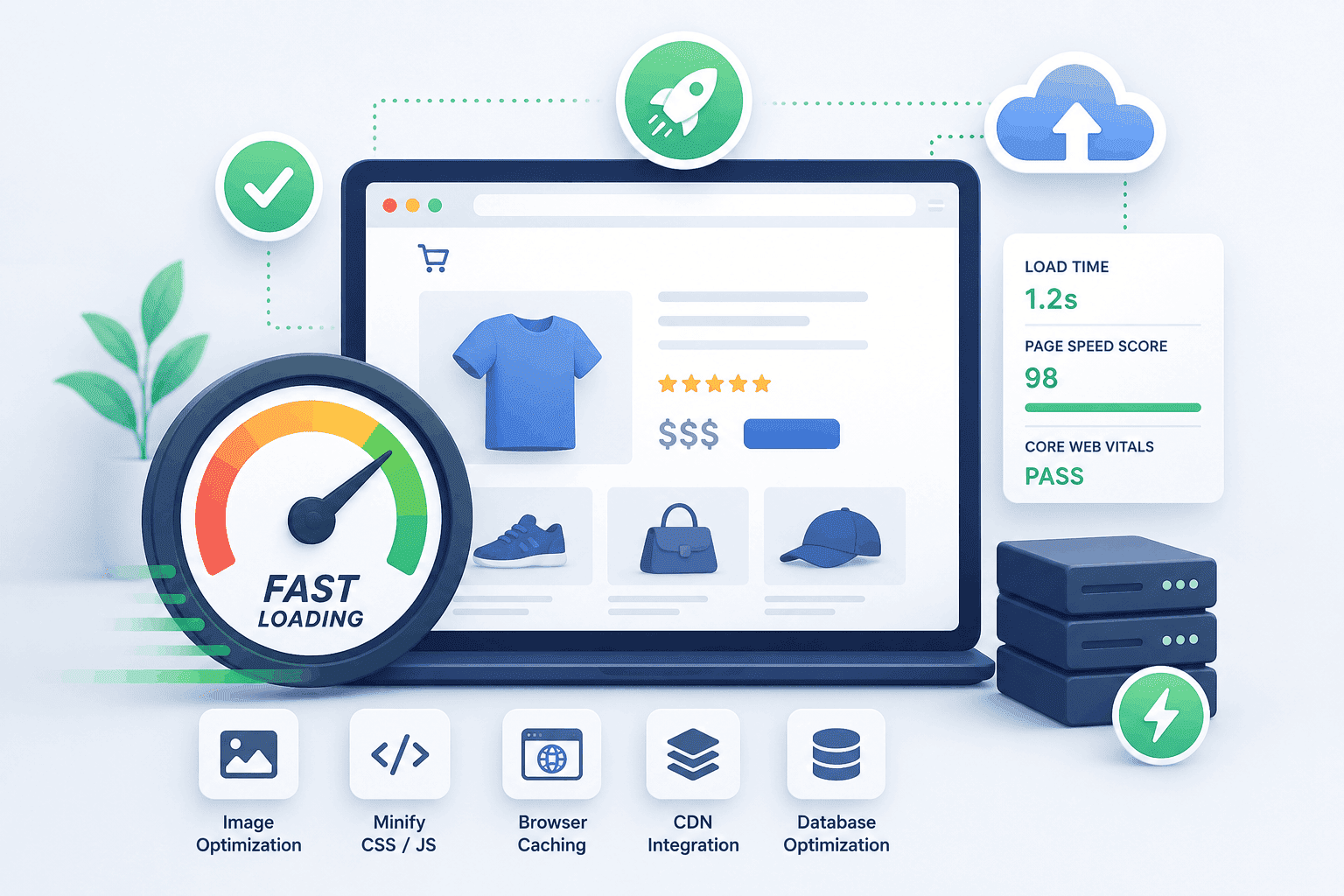
Performance also impacts how customers perceive a brand. A fast website often creates an impression of professionalism, reliability, and quality service. Conversely, a slow website can make even an established company appear outdated or untrustworthy. This psychological effect makes website performance a valuable component of brand building.
Businesses can also evaluate website performance using tools such as Google PageSpeed Insights, which provides recommendations for improving loading speed and Core Web Vitals.
How Website Speed Influences Customer Experience
Customer experience is one of the biggest factors determining success in eCommerce. Every interaction between a customer and a website contributes to their overall perception of the business. Website speed plays a major role in shaping that experience from the very first moment a visitor arrives.
When pages load quickly, customers can browse products comfortably without interruptions. They can move between categories, explore product details, and compare options with ease. This convenience encourages users to spend more time on the website and increases the likelihood of a purchase.
A slow-loading website creates frustration almost immediately. Imagine a shopper trying to view a product page that takes several seconds to appear. Instead of waiting, many users simply close the tab and visit another online store. This lost opportunity can have a significant impact on sales over time.
Fast websites also improve user confidence during checkout. Customers are more likely to complete transactions when pages load smoothly and payment processing appears reliable. Delays during checkout can create uncertainty and increase cart abandonment rates, reducing overall revenue.
Following Google’s Core Web Vitals recommendations can significantly improve user experience and overall website performance.
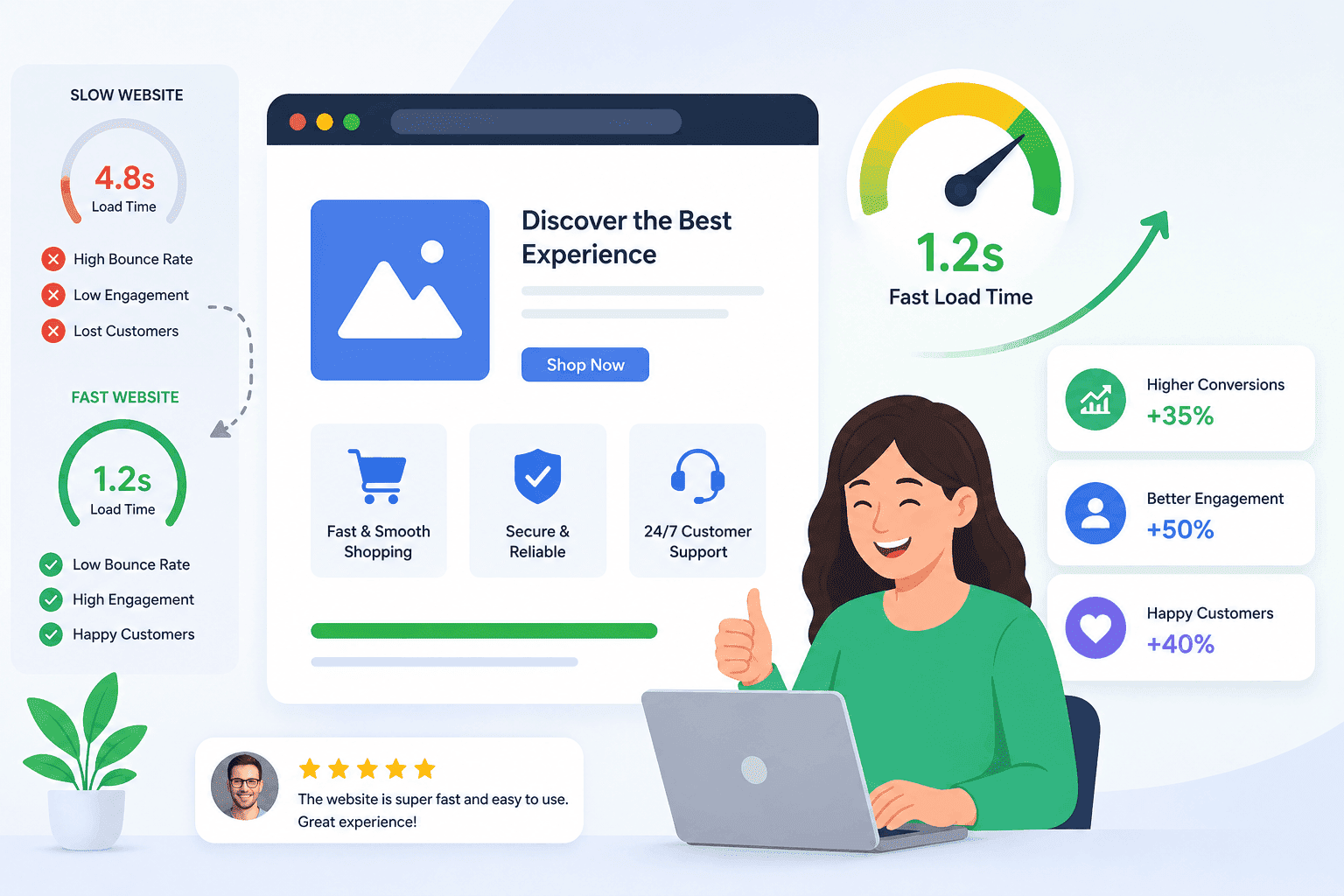
The Connection Between Website Performance and Conversion Rates
Conversion rates measure the percentage of visitors who complete a desired action, such as making a purchase or submitting an inquiry. Website performance has a direct influence on these conversions because it affects every stage of the buyer journey.
When customers encounter a fast and responsive website, they experience fewer obstacles while shopping. This smooth experience encourages them to continue browsing and ultimately make a purchase. Faster websites often generate higher conversion rates because customers remain engaged throughout the process.
Impact of Performance Issues on Conversions
- Slow performance disrupts buying decisions.
- Checkout delays increase customer frustration.
- Even minor lag creates purchase hesitation.
- Poor speed leads to cart abandonment.
Many successful online retailers continuously optimize website speed because they understand its impact on sales. Improvements that reduce loading times often lead to measurable increases in conversion rates. This demonstrates that performance optimization is not simply a technical upgrade—it is a revenue-generating investment.
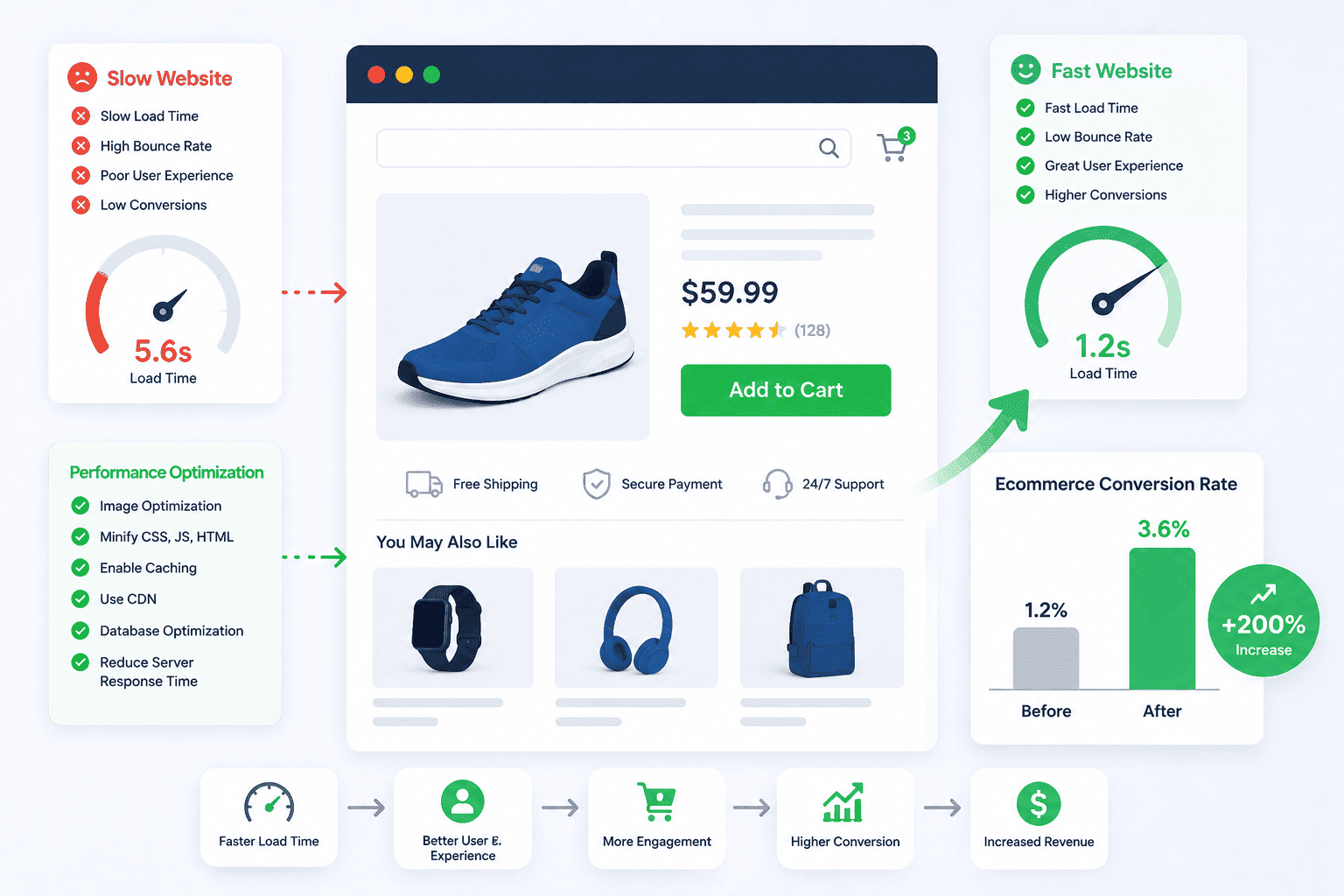
Businesses that focus on conversion optimization should therefore consider website performance as a foundational strategy. Improving speed and responsiveness often produces better results than investing heavily in additional traffic generation.
Why Search Engines Prefer Fast Websites
Search engines aim to provide users with the best possible experience. As a result, website performance has become an important ranking factor in search engine optimization (SEO). Faster websites are more likely to achieve stronger visibility in search results.
Search engines evaluate several performance-related metrics when determining rankings. Websites that load quickly and offer smooth user experiences tend to receive favorable treatment because they meet user expectations. Better rankings can lead to increased organic traffic and greater business opportunities.
A slow website can negatively affect SEO efforts, regardless of how valuable the content may be. If users leave the site quickly due to poor performance, search engines may interpret this behavior as a sign that the website is not providing a satisfactory experience.
Performance improvements often complement other SEO strategies. Businesses that optimize page speed, mobile usability, and technical efficiency can enhance both user satisfaction and search visibility simultaneously. This dual benefit makes performance optimization a highly valuable investment.
Higher search rankings also contribute to long-term marketing success. Organic traffic is often more cost-effective than paid advertising, making website performance an essential part of sustainable business growth.
The Impact of Mobile Performance on Online Sales
Mobile shopping continues to grow rapidly across global markets. Many customers now browse and purchase products directly from smartphones and tablets. Because of this shift, mobile website performance has become a major factor in eCommerce success.
Mobile users often access websites while traveling, commuting, or multitasking. They expect fast loading times regardless of network conditions. If a mobile website performs poorly, users may leave before viewing products or completing purchases.
Responsive design alone is not enough. Websites must also optimize images, scripts, and page elements specifically for mobile devices. This ensures visitors enjoy a smooth experience even on smaller screens and slower connections.
Businesses that prioritize mobile performance often see improvements in engagement and sales. A well-optimized mobile website can attract more customers, increase conversion rates, and strengthen customer loyalty.
As mobile commerce continues to expand, businesses that ignore mobile performance risk falling behind competitors. Delivering a fast mobile experience is no longer optional—it is a necessity for modern eCommerce success.
Key Factors That Influence eCommerce Website Performance
Several factors contribute to website performance. Understanding these elements helps businesses identify opportunities for improvement and maintain a competitive advantage. Regular optimization ensures faster load times, better user experience, and improved conversion rates.
Important Performance Factors
- Fast and reliable web hosting infrastructure.
- Optimized product images and multimedia files.
- Efficient website coding and development practices.
- Content delivery networks (CDNs) for faster content distribution.
- Mobile-friendly design and responsiveness.
Each of these factors plays a role in determining how quickly and efficiently a website serves content to users. When combined effectively, they create a seamless shopping experience that supports business growth.
The Financial Cost of Poor Website Performance
Poor website performance can have significant financial consequences that are not always immediately visible. Many businesses focus on acquiring traffic without realizing that slow performance may be preventing visitors from becoming customers.
Every abandoned cart represents lost revenue. When customers leave because pages load slowly or checkout processes become frustrating, businesses lose sales opportunities that were already within reach. Over time, these losses can become substantial.
Performance issues can also increase marketing costs. If paid advertising drives visitors to a slow website, conversion rates may decline, reducing the return on advertising investment. Businesses end up paying more for each customer acquisition.
Customer loyalty can suffer as well. Shoppers who experience delays may choose not to return, resulting in reduced lifetime customer value. Retaining existing customers is generally more cost-effective than acquiring new ones, making performance an important factor in long-term profitability.
Businesses that invest in performance optimization often discover that the financial benefits far outweigh the implementation costs. Improved conversions, customer retention, and operational efficiency contribute directly to revenue growth.
Common Website Performance Mistakes Businesses Make
Many eCommerce businesses unknowingly create performance issues that affect user experience and sales. Identifying these mistakes is the first step toward improvement. Addressing them early helps improve website efficiency, customer satisfaction, and overall revenue performance.
Common Mistakes
- Uploading large, uncompressed product images.
- Using excessive plugins or third-party integrations.
- Ignoring mobile optimization requirements.
- Failing to monitor website speed regularly.
- Neglecting software updates and maintenance.
These issues may appear minor individually, but together they can significantly impact website performance. Regular audits and proactive management help businesses avoid these common pitfalls while delivering a faster shopping experience for customers.
Future Trends in eCommerce Website Performance
The future of eCommerce performance will be shaped by evolving technologies and rising customer expectations. Businesses that adapt early will be better positioned to maintain competitive advantages.
Artificial intelligence is increasingly being used to optimize website performance automatically. AI-powered tools can identify bottlenecks, improve content delivery, and personalize experiences without compromising speed.
Progressive Web Applications (PWAs) are becoming more popular because they combine the benefits of websites and mobile apps. These solutions provide faster loading times and improved user engagement, particularly on mobile devices.
Edge computing and advanced Content Delivery Networks (CDNs) are also improving website responsiveness. By delivering content from locations closer to users, businesses can reduce delays and create smoother experiences worldwide.
Customer expectations will continue to rise as technology advances. Businesses that prioritize performance today will be better prepared to meet future demands and maintain customer satisfaction in an increasingly digital marketplace.
Building a Performance-First eCommerce Strategy
A performance-first strategy means considering speed and efficiency during every stage of website development and management. Rather than treating performance as an afterthought, successful businesses integrate it into their overall digital strategy.
This approach begins with selecting the right technology partners, hosting solutions, and development frameworks. Decisions made early in the project can have lasting effects on website performance and scalability.
Regular performance testing is equally important. Monitoring key metrics helps businesses identify potential issues before they impact customers. Continuous improvement ensures the website remains competitive as technology and user expectations evolve.
Collaboration between marketing, design, and development teams also supports performance goals. When all departments understand the importance of speed and usability, businesses can create more effective digital experiences that improve customer satisfaction and long-term business growth.
Organizations that adopt a performance-focused mindset often achieve stronger customer engagement, higher conversion rates, and improved business outcomes. Performance becomes a strategic advantage rather than simply a technical requirement.
Conclusion
Website performance plays a critical role in determining the success of an eCommerce business. From customer experience and conversion rates to SEO rankings and brand reputation, nearly every aspect of online growth is influenced by how quickly and efficiently a website operates. Businesses that prioritize performance create smoother shopping experiences that encourage customer trust and increase sales.
As competition in eCommerce continues to grow, website performance will remain a key differentiator. Investing in speed optimization, mobile responsiveness, and ongoing performance improvements is not simply a technical decision—it is a business strategy that delivers measurable results. Companies that make website performance a priority will be better equipped to attract customers, improve profitability, and achieve sustainable long-term growth.