+91 9898181101
 +1 (647) 971-4687
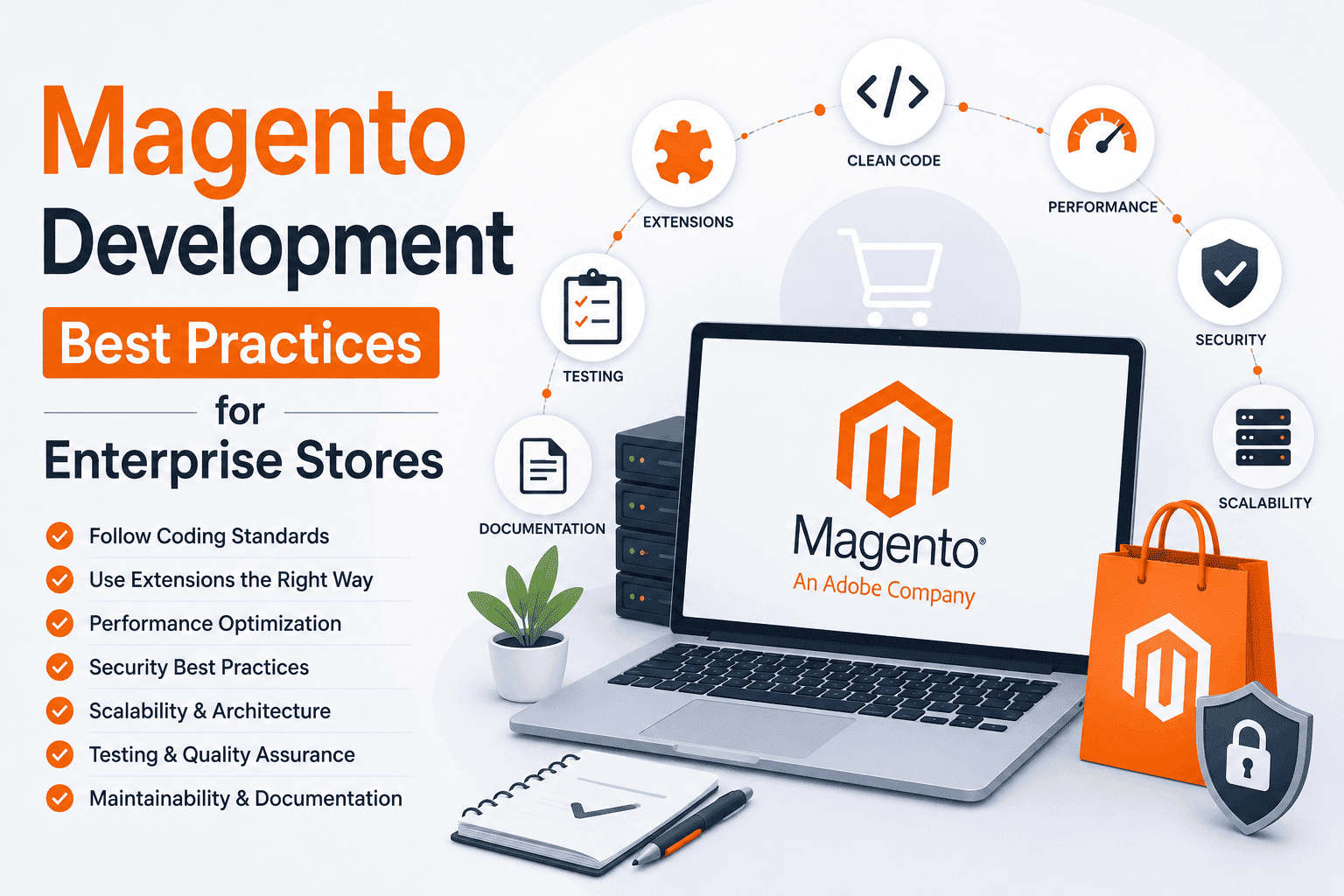
Magento Development Best Practices for Enterprise Stores
Enterprise eCommerce businesses operate in a highly competitive environment where customer expectations continue to rise. Customers expect fast-loading websites, smooth navigation, personalized shopping experiences, and secure transactions across every device. For organizations managing extensive product catalogs and handling high traffic volumes, choosing the right eCommerce platform is essential. Magento has become a preferred solution because of its flexibility, scalability, and powerful customization capabilities.
Magento enables businesses to create unique shopping experiences while managing multiple storefronts, international operations, and complex business requirements. However, implementing Magento alone is not enough. Following proven development practices ensures better performance, stronger security, and long-term scalability for enterprise stores.
Understanding the Importance of Magento for Enterprise Businesses
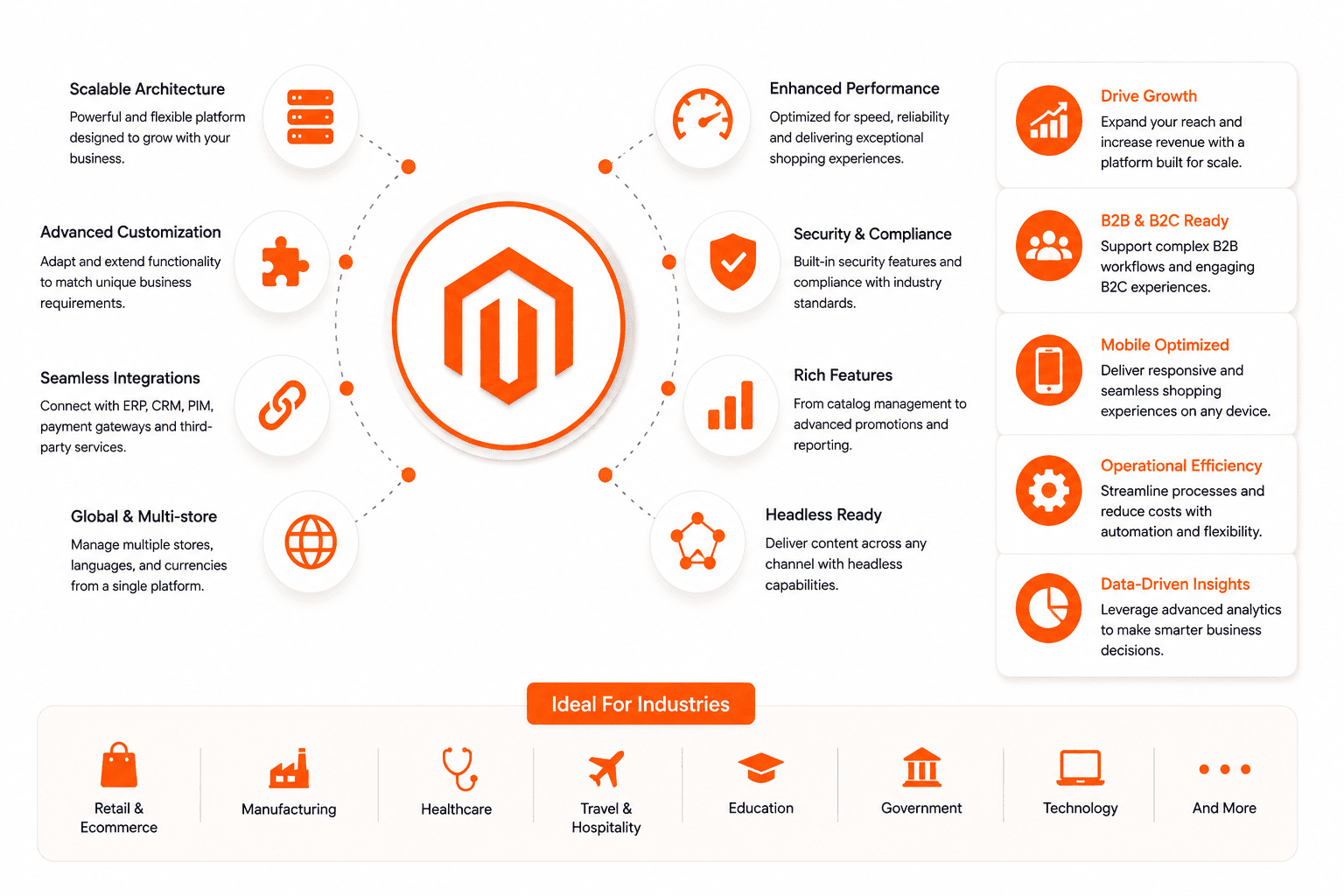
Enterprise businesses face challenges such as managing large inventories, supporting multiple currencies, integrating with ERP systems, and processing thousands of daily transactions. Magento is specifically designed to address these complex requirements through its flexible architecture.
One of Magento’s biggest advantages is its ability to deliver customized shopping experiences. Businesses can implement advanced pricing models, B2B purchasing workflows, and personalized recommendations without compromising performance. If you’re planning a customized eCommerce solution, explore our WordPress Development Services for scalable business websites.
Magento also offers excellent scalability, allowing businesses to handle seasonal traffic spikes and business growth without rebuilding their stores. According to the Adobe Experience League, Magento provides enterprise-grade commerce capabilities for growing businesses.
Start with Proper Business and Technical Planning
Every successful Magento project begins with careful planning. Business objectives, customer journeys, and technical requirements should be clearly defined before development starts. This minimizes delays, reduces costs, and ensures every feature supports business goals.
Business Planning Essentials
- Define clear business objectives.
- Understand customer expectations.
- Identify required integrations.
- Create a realistic project roadmap.
Technical planning should include infrastructure evaluation, scalability requirements, security expectations, and future expansion plans. Proper planning prevents expensive redevelopment after deployment.
Follow Magento Coding Standards
Maintaining clean, structured, and well-documented code improves maintainability and simplifies future updates. Enterprise stores frequently receive new features and integrations, making coding standards essential.
Benefits of Following Coding Standards
- Improves code readability.
- Enhances collaboration among developers.
- Reduces technical debt.
- Simplifies future maintenance.
Comprehensive documentation also helps development teams understand custom functionality, reducing maintenance complexity.
Prioritize Performance Optimization
Website speed directly impacts user experience, search visibility, and conversion rates. Enterprise Magento stores should optimize images, enable caching, minimize scripts, and reduce unnecessary database queries throughout development.
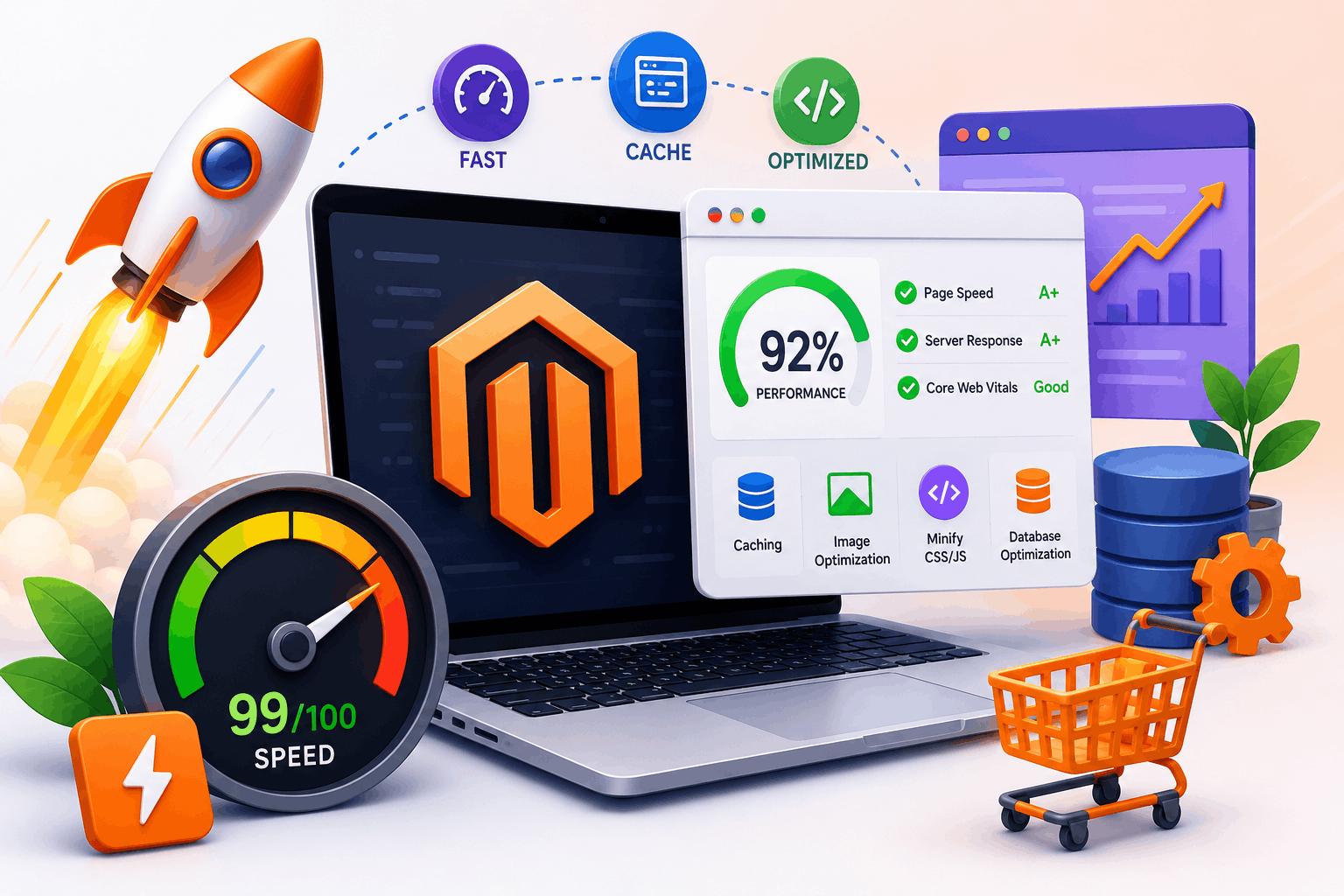
Performance Optimization Checklist
- Optimize images and media files.
- Enable full-page caching.
- Reduce unnecessary JavaScript and CSS.
- Optimize database performance.
- Monitor website speed regularly.
Implement Strong Security Practices
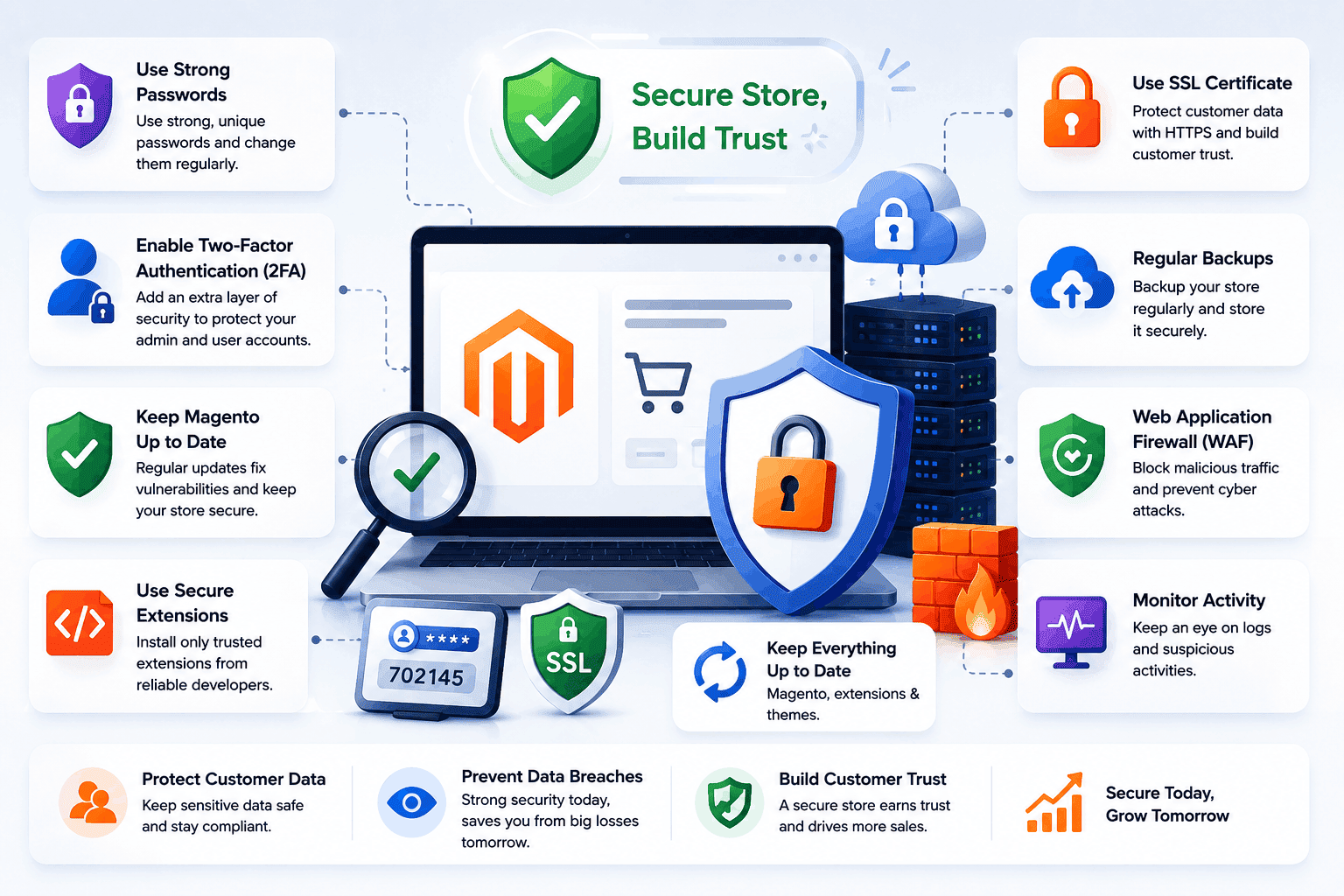
Security is essential because enterprise stores process sensitive customer and payment information. Businesses should regularly install Magento security updates, implement multi-factor authentication, restrict administrative access, and perform ongoing security audits.
Following recommendations from the OWASP Foundation can significantly improve application security and reduce vulnerabilities.
Focus on Scalable Architecture
Enterprise stores should be designed for long-term growth. Scalable architecture enables websites to handle increasing traffic, expanding product catalogs, and growing customer databases without sacrificing performance.
Advantages of Scalable Magento Architecture
- Supports business expansion.
- Handles increased website traffic.
- Improves long-term stability.
- Reduces redevelopment costs.
Cloud infrastructure and optimized databases further improve scalability while maintaining excellent performance during peak traffic periods.
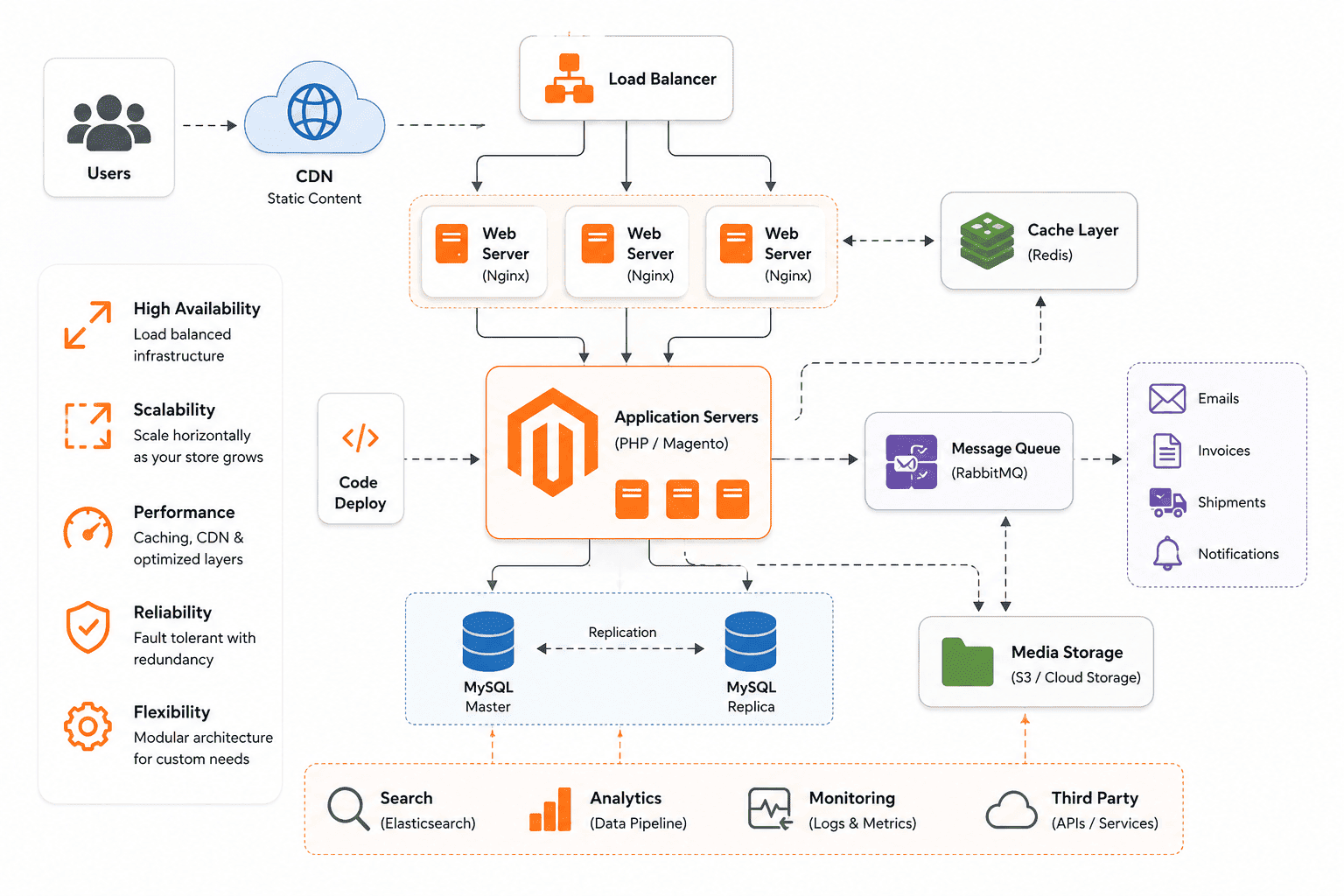
Optimize Third-Party Integrations
Enterprise businesses often integrate Magento with CRM systems, ERP software, payment gateways, and marketing platforms. Every integration should be carefully evaluated to avoid performance issues and compatibility problems.
Avoid installing unnecessary extensions. Instead, implement only integrations that deliver measurable business value and receive long-term vendor support.
Maintain a Mobile-First Development Approach
Mobile commerce continues to grow rapidly, making responsive design essential. Magento stores should provide smooth navigation, fast loading times, and consistent shopping experiences across smartphones, tablets, and desktops.
Benefits of Mobile-First Development
- Improves user experience.
- Supports higher mobile conversions.
- Enhances search engine visibility.
- Encourages customer retention.
Leverage Magento’s Native Features
Magento includes numerous built-in capabilities such as customer segmentation, catalog management, promotions, and multi-store functionality. Using native features reduces development costs while improving compatibility with future platform updates.
Common Magento Development Mistakes to Avoid
- Installing excessive third-party extensions.
- Ignoring performance optimization.
- Delaying security updates.
- Creating unnecessary custom functionality.
- Skipping thorough testing before launch.
- Neglecting future scalability planning.
Conclusion
Magento remains one of the leading enterprise eCommerce platforms because of its flexibility, scalability, and customization capabilities. By following best practices such as strategic planning, clean coding, performance optimization, robust security, and scalable architecture, businesses can build reliable online stores that deliver exceptional customer experiences while supporting long-term growth.