+91 9898181101
 +1 (647) 971-4687
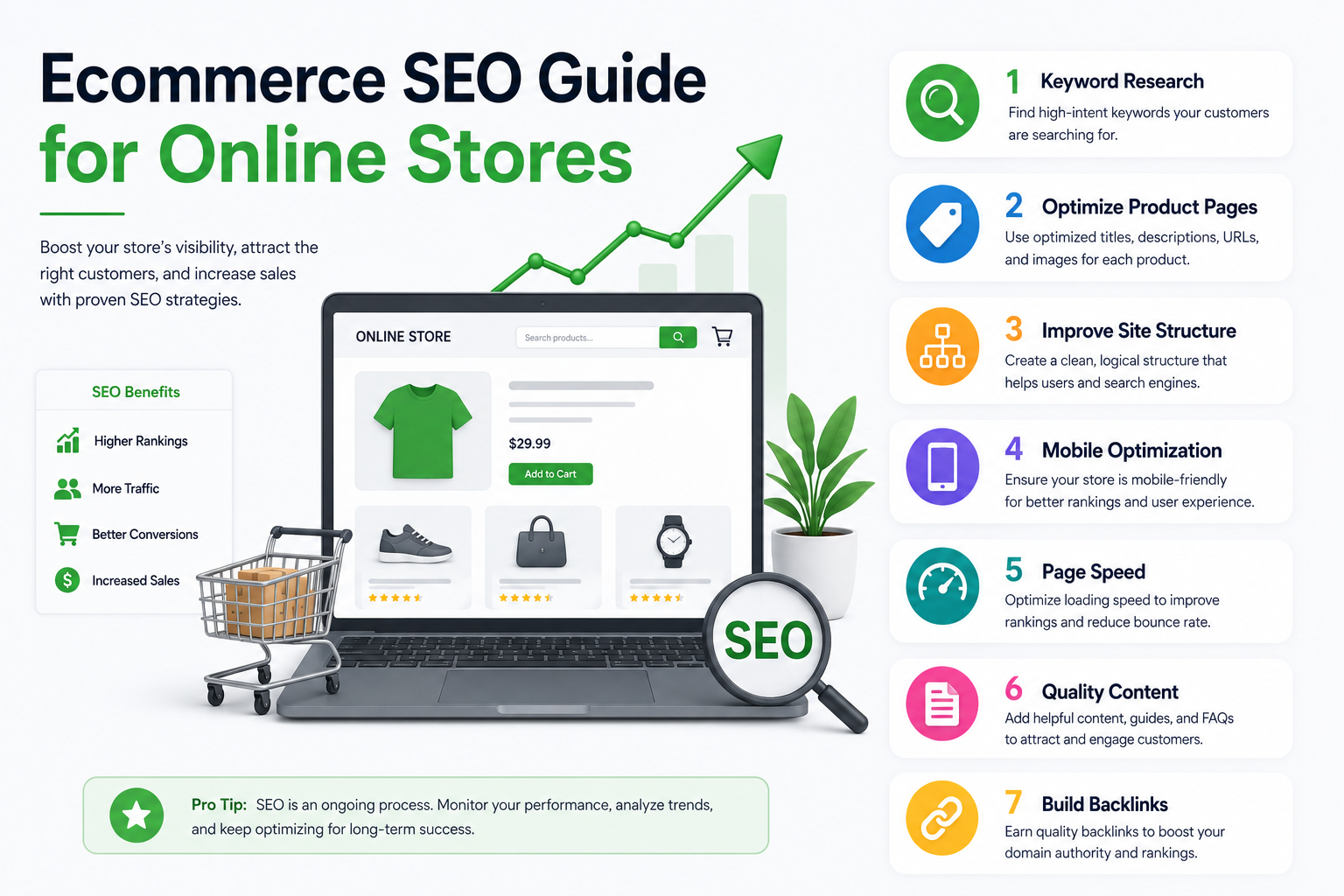
Ecommerce SEO Guide for Online Stores
Running an ecommerce store today is more competitive than ever. Thousands of online businesses compete for visibility, customer attention, and conversions every day. While paid advertising can generate immediate traffic, sustainable growth often comes from a strong organic search presence.
That’s where ecommerce SEO becomes essential. Search Engine Optimization helps online stores attract qualified visitors who are actively searching for products and solutions. Unlike paid campaigns that stop delivering results when budgets run out, SEO continues to generate value over time.
According to industry research, organic search remains one of the largest sources of website traffic worldwide. For ecommerce businesses, ranking higher in search results can directly impact product discovery, revenue growth, and customer acquisition costs.
In this comprehensive guide, we’ll explore the most effective ecommerce SEO strategies that help startups, SMEs, enterprises, and digital-first businesses improve visibility, increase organic traffic, and drive more online sales.
Why Ecommerce SEO Matters in 2026
The ecommerce landscape continues to evolve rapidly as consumer behavior shifts toward digital channels. Modern buyers rely heavily on search engines during every stage of the purchasing journey, from product research to final purchase decisions.
Studies show that a significant percentage of online shopping journeys begin with a search engine query. Whether customers are searching for specific products, comparing alternatives, or reading reviews, search visibility directly influences buying decisions.
A strong ecommerce SEO strategy helps businesses:
- Increase qualified organic traffic
- Reduce dependence on paid advertising
- Improve customer acquisition efficiency
- Build brand credibility and trust
- Generate long-term revenue growth
For organizations investing in digital transformation, SEO should be considered a foundational component of long-term ecommerce success.
Understanding Ecommerce SEO Fundamentals
Ecommerce SEO involves optimizing an online store’s structure, content, product pages, and technical performance to improve rankings in search engine results pages (SERPs).
Unlike traditional websites, ecommerce stores often contain hundreds or thousands of product pages. This creates unique SEO challenges such as duplicate content, crawl efficiency, product categorization, and inventory management.
A successful ecommerce SEO strategy typically combines technical SEO, on-page optimization, content marketing, user experience improvements, and authority building.
Start with Comprehensive Keyword Research
Every successful SEO campaign begins with understanding how customers search online. Keyword research helps identify the exact terms potential buyers use when looking for products or services.
Rather than focusing only on high-volume keywords, ecommerce businesses should prioritize search intent. Users searching for transactional keywords are often closer to making a purchase.
Types of Keywords for Ecommerce Stores
Product-focused keywords target specific items customers want to buy. Category keywords help users explore broader product groups. Informational keywords attract users researching products before making purchasing decisions.
Long-tail keywords are particularly valuable because they often have lower competition and higher conversion rates. A user searching for a highly specific product is usually much closer to buying than someone using a broad search term.
Tools like Ahrefs and SEMrush can help identify keyword opportunities, search volume trends, and competitor strategies.
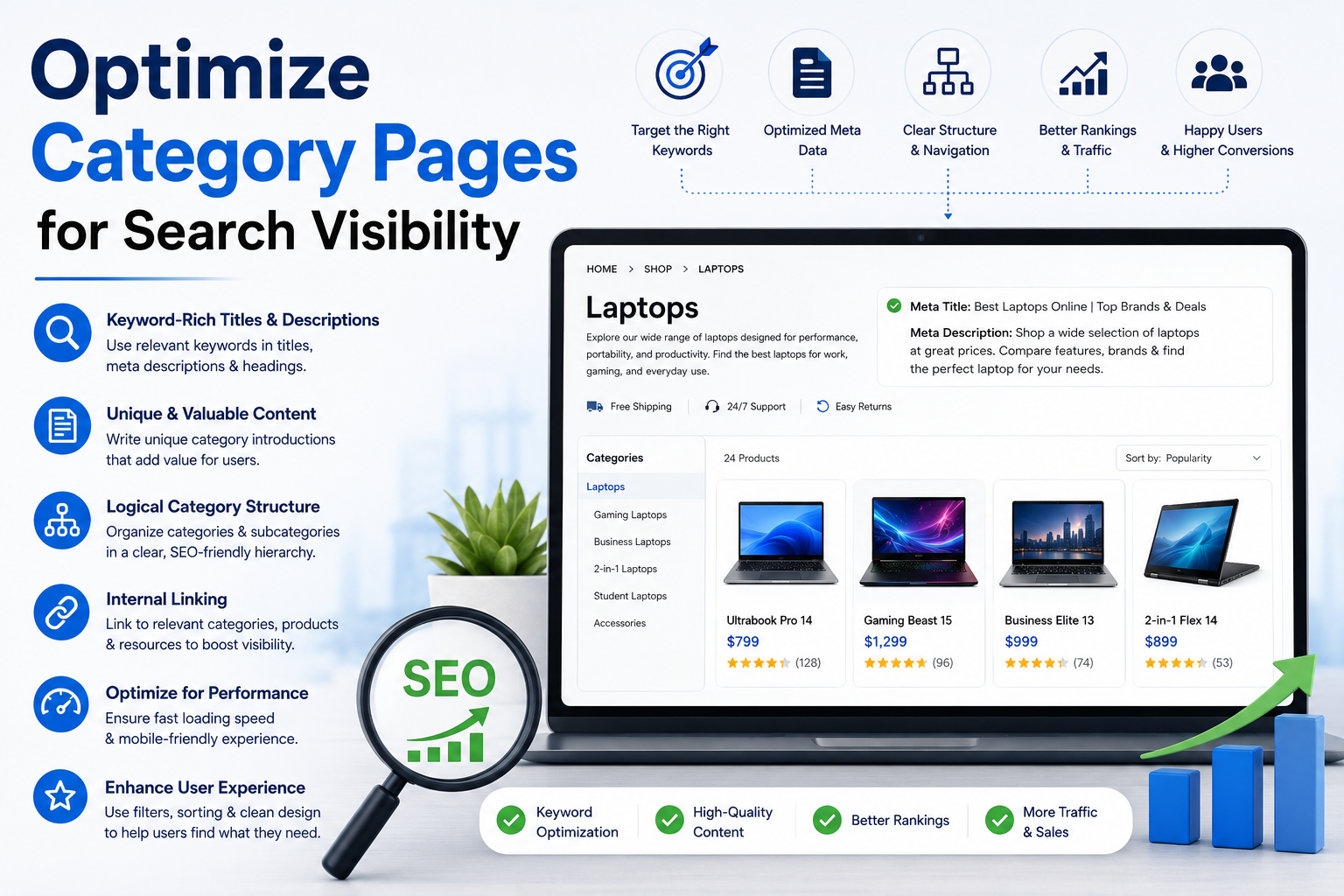
Optimize Category Pages for Search Visibility
Many ecommerce businesses focus heavily on product pages while overlooking category pages. In reality, category pages often drive significant organic traffic because they target broader, high-volume search queries.
A well-optimized category page should provide useful information, clear navigation, and relevant content that helps users discover products efficiently.
Best Practices for Category Page Optimization
Create unique title tags and meta descriptions for every category. Include descriptive content that explains the category and highlights key products. Avoid thin content that provides little value to users.
Category pages should also feature intuitive filtering options while ensuring search engines can properly crawl important content.
Create High-Converting Product Pages
Product pages are often the final destination before a purchase occurs. These pages must satisfy both search engines and potential customers.
Search engines evaluate product pages based on relevance, content quality, user experience, and technical performance. Customers evaluate them based on trust, clarity, and purchasing confidence.
Key Elements of an Optimized Product Page
Every product page should include unique product descriptions, optimized headings, high-quality images, customer reviews, pricing information, and relevant product specifications.
Avoid copying manufacturer descriptions because duplicate content can reduce search visibility. Instead, create original descriptions that explain benefits, use cases, and differentiators.
Structured data markup can also enhance search listings by displaying ratings, prices, availability, and other valuable information directly in search results.
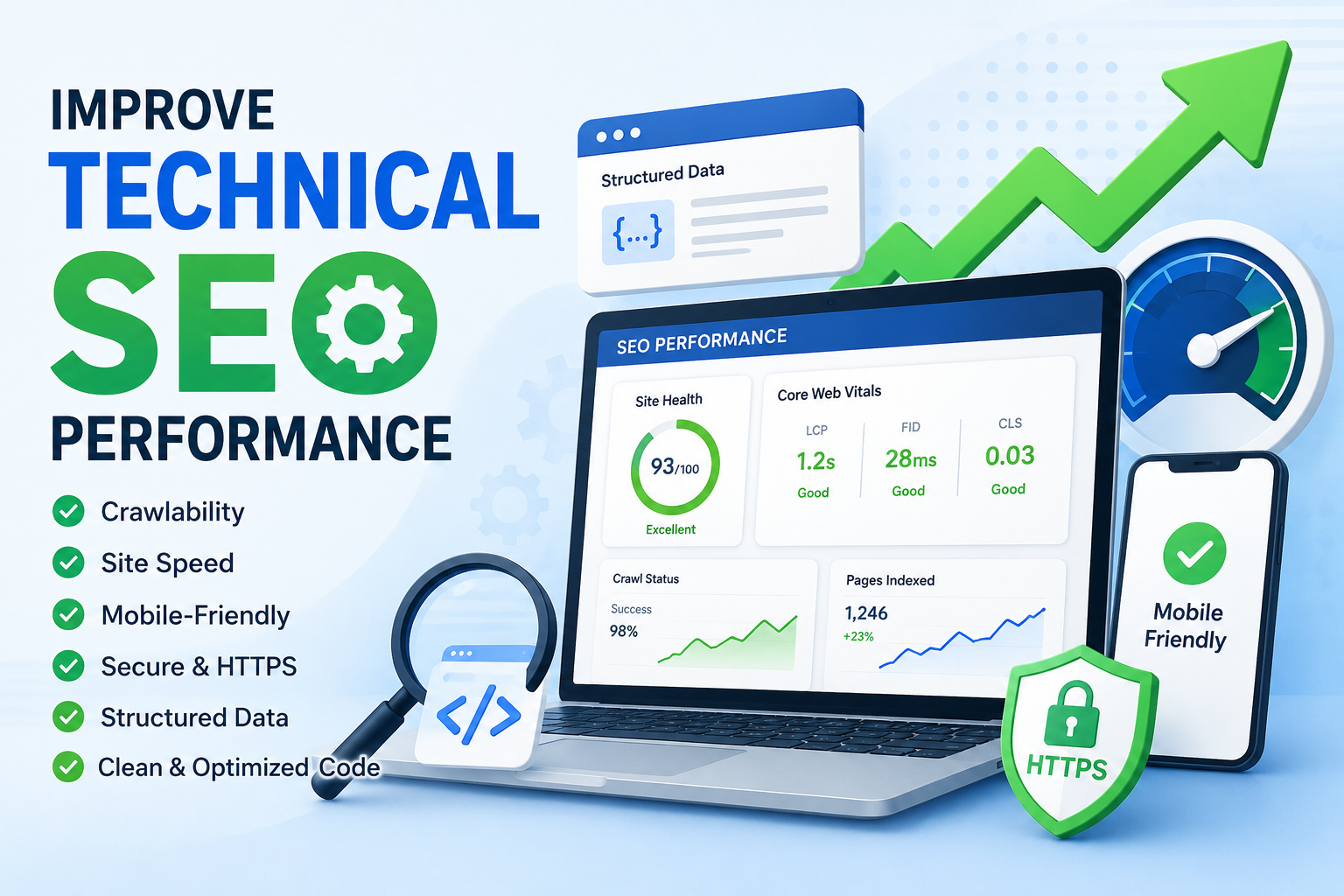
Improve Technical SEO Performance
Technical SEO forms the foundation of ecommerce search visibility. Even the best content may struggle to rank if search engines encounter crawling or indexing issues.
Modern search algorithms increasingly prioritize website performance, usability, and accessibility when determining rankings.
Site Speed and Core Web Vitals
Page speed directly impacts both user experience and SEO performance. Research consistently shows that slow-loading pages increase bounce rates and reduce conversion rates.
Optimize images, leverage browser caching, minimize unnecessary scripts, and implement modern performance practices to improve loading times.
Mobile-First Optimization
Mobile commerce continues to grow globally, making mobile optimization essential. Your ecommerce store should provide a seamless experience across smartphones, tablets, and desktops.
Responsive design, fast mobile performance, and intuitive navigation contribute significantly to both rankings and user satisfaction.
Site Architecture and Navigation
A logical website structure helps both users and search engines find content efficiently. Product pages should be accessible through clear category hierarchies and internal linking structures.
Well-organized navigation improves crawlability while helping customers discover relevant products more quickly.
Leverage Content Marketing for Ecommerce SEO
Content marketing remains one of the most effective ways to attract organic traffic throughout the customer journey. Educational content helps build authority while supporting product discovery.
Many successful ecommerce brands generate substantial traffic through blogs, buying guides, tutorials, product comparisons, and industry insights.
Content Ideas That Drive Traffic
Create buying guides that help customers choose products. Publish comparison articles that explain differences between options. Develop how-to content that demonstrates product usage and solves customer challenges.
Content should naturally support your ecommerce offerings while providing genuine value to readers.
If you’re planning a new online store, investing in professional ecommerce development services can help establish a scalable SEO-friendly foundation from day one.
Build a Strong Internal Linking Strategy
Internal linking helps search engines understand relationships between pages while guiding users toward relevant content and products.
Strategic internal links distribute authority throughout the website and improve the discoverability of important pages.
Link category pages to relevant products, connect related blog articles, and highlight complementary products where appropriate. The goal is to create a seamless user journey while strengthening overall SEO performance.
Optimize for User Experience and Conversions
SEO and user experience are closely connected. Search engines increasingly reward websites that provide positive user experiences and satisfy search intent.
Navigation should be intuitive, product information should be easy to understand, and checkout processes should be frictionless.

Trust Signals Matter
Customer reviews, secure payment options, transparent return policies, and contact information all contribute to trust and conversion optimization.
When users trust an online store, engagement metrics often improve, creating positive signals that can support search performance.
Earn High-Quality Backlinks
Backlinks remain one of the most influential ranking factors in SEO. When authoritative websites link to your content, search engines view those links as signals of credibility and relevance.
However, modern link-building focuses on quality rather than quantity. A few authoritative backlinks often provide more value than dozens of low-quality links.
Effective Ecommerce Link-Building Strategies
Publish original research, create valuable industry resources, collaborate with industry publications, and develop content worth referencing.
Businesses can also leverage digital PR initiatives to gain visibility from reputable publications and industry websites.
The Google Search Central Documentation offers valuable guidance on SEO best practices and sustainable optimization strategies.
Monitor SEO Performance Continuously
SEO is not a one-time project. Search behavior, competition, and algorithms continue evolving, requiring ongoing analysis and optimization.
Successful ecommerce businesses regularly monitor rankings, traffic sources, conversion metrics, user engagement, and technical performance indicators.
Consistent monitoring helps identify opportunities, uncover issues early, and maintain long-term search visibility.
Common Ecommerce SEO Mistakes to Avoid
Many online stores unknowingly limit their SEO potential through avoidable mistakes. Duplicate content, poor site architecture, slow performance, and thin product descriptions remain common challenges.
Ignoring technical SEO issues can also prevent search engines from properly crawling and indexing valuable pages.
Another frequent mistake is prioritizing search engines over users. Modern SEO success comes from balancing optimization with exceptional customer experiences.
Future Trends Shaping Ecommerce SEO
Artificial intelligence, voice search, personalization, and evolving search experiences are transforming how customers discover products online.
Search engines are becoming increasingly sophisticated at understanding user intent, contextual relevance, and content quality.
Businesses that prioritize helpful content, technical excellence, and customer-focused experiences will be best positioned for long-term success.
As ecommerce competition intensifies, organizations that invest strategically in SEO will gain a significant advantage in visibility, customer acquisition, and revenue growth.
Conclusion
Ecommerce SEO is one of the most valuable long-term investments an online business can make. A well-executed strategy improves search visibility, attracts qualified traffic, enhances user experiences, and supports sustainable revenue growth.
From keyword research and product optimization to technical SEO and content marketing, every component plays a critical role in helping online stores compete effectively in today’s digital marketplace.
Whether you’re a startup launching your first ecommerce platform, an SME looking to scale online sales, or an enterprise pursuing digital transformation, a comprehensive SEO strategy can create lasting competitive advantages.